So I’m sure based on last week’s SNL that many of you have already heard of Foster the People. Now touring with sold out shows across the country, the band is a perfect example of Indie resonating with the masses. Based in Los Angeles, California, Foster the People is composed of the trio Mark Foster, Mark Pontius and Cubbie Fink. With the break through single “Pumped Up Kicks”, the band’s sound is sort of an effortless cool. Not quite hipster but not quite mainstream, Foster the People manages to appeal to a variety of audiences. What I like most about the group is not only their catchy lyrics or calming electronic beats. Rather, despite their alarming popularity, Foster the People has not appeared to sell out. No longer under the radar, the band has risen to the ranks organically with zero pretension.
Heres the band performing my personal favorite, “Houdini” on SNL
“Perfection is achieved, not when there is nothing more to add, but when there is nothing left to take away”. I heard this quote somewhere a few years ago. I believed it to be true the moment I heard it, but never really did apply it to my life per say. In the past week or so however, I realized that it can apply to almost every aspect of life. Whittled down simply to the idea that the activities you do everyday can be systematically eliminated until only the ones that make you happy and cater to you who you are remain, this quote has immediate sprung relevance. You need to clean out the closet once in a while.
****
I don’t listen to much hard rock. I filled out that niche for myself early in my life and adding any more like-bands to my repertoire would be redundant. If anyone remembers my Fall of Troy post, yes that is one of them. But today I want to talk about the other major one, which creates rock music in a much different fashion.
The Mars Volta is a band which has been famed for its beautiful progressive rock. Incorporating influences from krautrock, jazz fusion, Latin American music, and mathrock, their music is melodic, groovy and downright rockin. The band’s lead singer, Cedric Bixler-Zavala, has the most unique and talented voice you will hear. The debut 2003 album, De-Loused in the Comatorium, was the band’s best selling album and earned them critical acclaim. I’ll be bringing it to you today.
The song Son et Lumiere creates a short lead into Inertiatic Esp, sort of like the sound of dread at an abandoned train station at night time. The vocals are eerie and distorted, the lyrics nonsensical yet frightening. The short drum build falls into a crash of musical ecstasy, as almost every instrument this band employs can be heard blaring away skillfully. “Now I’m lost” Cedric wails, as the song quickly changes displaying the technical side of the math-rock influence. It switches back and forth, not losing a beat… that is until the verses melt away at about 2 minutes.
This music takes heavy influences from past bands like Pink Floyd in employing a level of pure trippyness. The psychotic guitar lines are from none other than Omar Rodriguez-Lopez, and display a level of musical creativity unparalleled by anyone. The song ends on a very creepy almost theatrical sounding note. But this is only the first song on the album.
Cicatriz ESP is a 12 beast and my favorite song on the album. This song starts with beautiful melody. The lyrics are in my opinion random one liners which are strung together to create maximum confusion upon listeners. “We’ll drag your halo through the mud, ash of Pompeii. Erupting in a statue’s dust, shrouded in veils. Because these handcuffs hurt too much.” The drum line is repetitive yet completely amazing. The song seems to float along like a river of honey, stopping once in a while to pick up the tension and remind you that this is still rock.
3:50 is my favorite part. The song just disassembles into a sort of pure bliss. The guitar and piano just create the grooviest jazz atmosphere I have ever heard. Like psychedelic lounge music it lulls you away from this planet as it then itself falls apart into nothing. This Pink Floyd esque nothingness has the sounds of creatures emulated by guitars and slowly builds back into a downright epic return of the main verse. Truly amazing in my opinion.
Televators is arguably the trippiest and most psychedelic song on this album. The beginning has the sounds of tropical jungle animals but is slowly overrun by this strange miasma and a classical guitar. “Just as he hit the ground, they lowered a tow that stuck in his neck to his gills”. This is the one song on the album where Cedric’s vocals stay relatively relaxed all throughout. The song is slow and chill, like sailing down a river somewhere in the Amazon, yet retains a certain level of creeping dread reminding you of any dangers that can befall you.
De-loused in the Comatorium is a masterpiece in every sense. Every song on this album can stand entirely on its own, yet as a whole it creates a story. The album actually tells a story of a friend of the band. Nicknamed “Cerpin Taxt”, a poet and an artist, he overdosed purposely on drugs and fell into a coma for several years. Upon waking up he committed suicide a few weeks later. The way they tied the tragic story in while maintaining the beauty just speaks of their insurmountable skill.
The Mars Volta has released 4 albums since this first one, each one maintaining the same level of artistic skill as the previous. I will most surely return to them at some point in time. In the meantime be sure to mentally make room for them by removing similar but sub-par bands.
-oko
P.S. Oh and here is the last song on the album Take the veil, Cerpin Taxt. Beware. The part starting right before 4 minutes might put you in a coma.
I’d like to pay homage to some bands that I haven’t quite gotten to talk about, not because of any faults with these bands, but because they each bring something different to the table. Whether it be through interesting instrumentation, unique song structure or unique influences, I couldn’t quite fit the following bands into any other category. Here goes nothing.
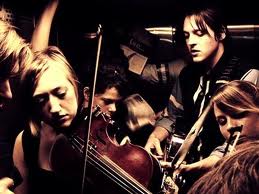
They may have recently garnered a Grammy for Album of the Year and yet it’s still not the Arcade Fire’s best album. Don’t get me wrong, the winning album is good, but it gets away from their baroque roots in favor a more modern rock sound. “Neon Bible” and “Funeral” both sound like complete orchestras as many of the band members play multiple instruments, accentuated as band members switch up what they play during songs (compared to the new album which is more guitar heavy). The varied instrumentation and the influences of multiple styles of music makes Arcade Fire more than a band that keeps churning out similar sounding albums, but a group of musicians that creates many different cool sounds.
Beirut also features a full band but centers really on a single particular influence not normally heard. I mean, who listens to Eastern European folk music (like polka) and decides they want to start a band with it? If you didn’t get the hint, that’s what the members of Beirut did, fusing Eastern European folk music with indie pop sensibilities, highlighting such a global span with songs in other languages, notably French. Like Arcade Fire, Beirut does not rely upon the guitar and instead mixes up instrumentation to create music corresponding to their influences.
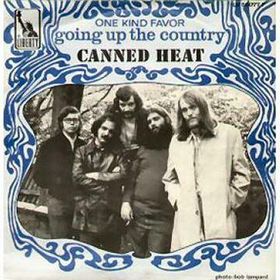
If you have been viewing this blog for a while, you know that a post about “Going up the Country” by Canned Heat has become synonymous with my trips up to Binghamton. What started as a quick and short post just to alert readers that I was driving four hours north to Binghamton (and could not post that day because of it), became a tradition, a sort-of good luck charm, declaring safe passage up to Binghamton University. I graduated from Binghamton last Spring and I am now settled into the world of commuting, but, as the title of this post suggests, I will be visiting the Ol’ Alma Mater this weekend, and therefore “Going up the Country” returns.
Canned Heat’s “Going up the Country” struck it big because of its appearance in the Woodstock movie. Because of its bluesy and rhythmic bustle, and apt message (for the journey to Woodstock was a trip up the New York country), the song became that Woodstock song. Alan Wilson’s trademark high-pitched and possessed croon just assisted in the song’s overall aura.
I have posted about this song too many times. How can I possibly make this any different? Well, hmm, today I believe I will do my favorite cover version of the song.
Here is “Going up the Country,” the 50’s shuffle version.
The band is Kitty Daisy & Lewis and this country/rock-a-billy/all-around twang sibling throwback play music in London. This version of the song has gained over one million views on YouTube, which is a pretty extraordinary feat. It moves. It’s cool. A well-put together and filmed cover.
But my favorite version (that is not the original) is not a cover at all. Instead, it is actually what the song is based on (or completely stolen from, matters who you ask). Alan Wilson is listed as the writer of the song, but Henry Thomas recorded the song with different lyrics in 1928. So, yeah, it’s stolen (not the lyric, but the entire melody) “Bull Doze Blues” is “Going up the Country.” Enjoy the quills!
Have you not voted in the poll “What is the Catchiest Song Ever” yet? Click here to cast your vote!
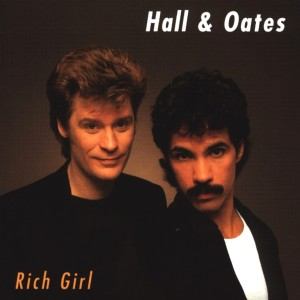
I was not surprised to see that the winner of the poll was that exceptionally catchy song “Other.” No, other is not a song, just an option. There are so many catchy songs out there and everyone has a different musical palatte. The list that I provided did have some masterpieces of catchy theater, so some of the songs did receive votes. Among the top vote getters was “Rich Girl” by Hall and Oates, which gets my vote for catchiest song ever. Why? Because you’re a rich girl, and you’ve gone too far, cause’ you know it don’t matter anyway. You can rely on the old man’s money, you can rely on the old man’s money. Over and over and over again! AHHHHH get it out of my head!
So why is this song so damn catchy. First, let’s explore what the song is about. Easy, right? A rich girl who’se gone to far but it doesn’t matter anyway. Stop! According to Daryl Hall, the song is actually about an ex-boyfriend of his girlfriend at the time. The guy’s father was rich and he acted strange and Hall thought that this person could do whatever he wanted because his dad would get him out of anything. He can relay on the old man’s money. But, he’s a rich guy didn’t sound good, so Hall changed the sex of our wealthy individual and, well, people have been singing about the rich girl ever since.
The song has some immediate things going for it. First off, it’s only a little under 2:30 in length. Catchy songs should be short. The point of a song like this is to barge into your mind, lay eggs, and leave quickly. Then, after it is gone, the eggs hatch and a million tiny memories of the song get stuck up there and you are forced to think about Daryl Hall singing about the rich girl all day. Not a very pleasant or accurate description, but this is how it seems to happen to me.
The song begins with the chorus over an east-to-follow staccato piano rhythm. In 20 seconds Hall has repeated the chorus twice and has implanted the lyric into the listener. Following the introductory chorus is an exceptionally simple guitar riff that leads into what can I guess be considered the bridge (there is really no verse in this song and perhaps that even adds to its catchiness). The bridge portion is marked by vocal harmonies and longer phrasing. Hall’s voice is exactly the “catchy” kind, according to the study of catchy songs that I mentioned in the poll article. According to the article, a male vocalist with a higher, passionate voice attracts listeners. Hall has that voice. It fits the mold perfectly. The sing-songy classic keeps up the pace until it ends. But does it really end? Or are you humming it to yourself at your desk right now? Yeah, that’s what I thought.




 The Music Court