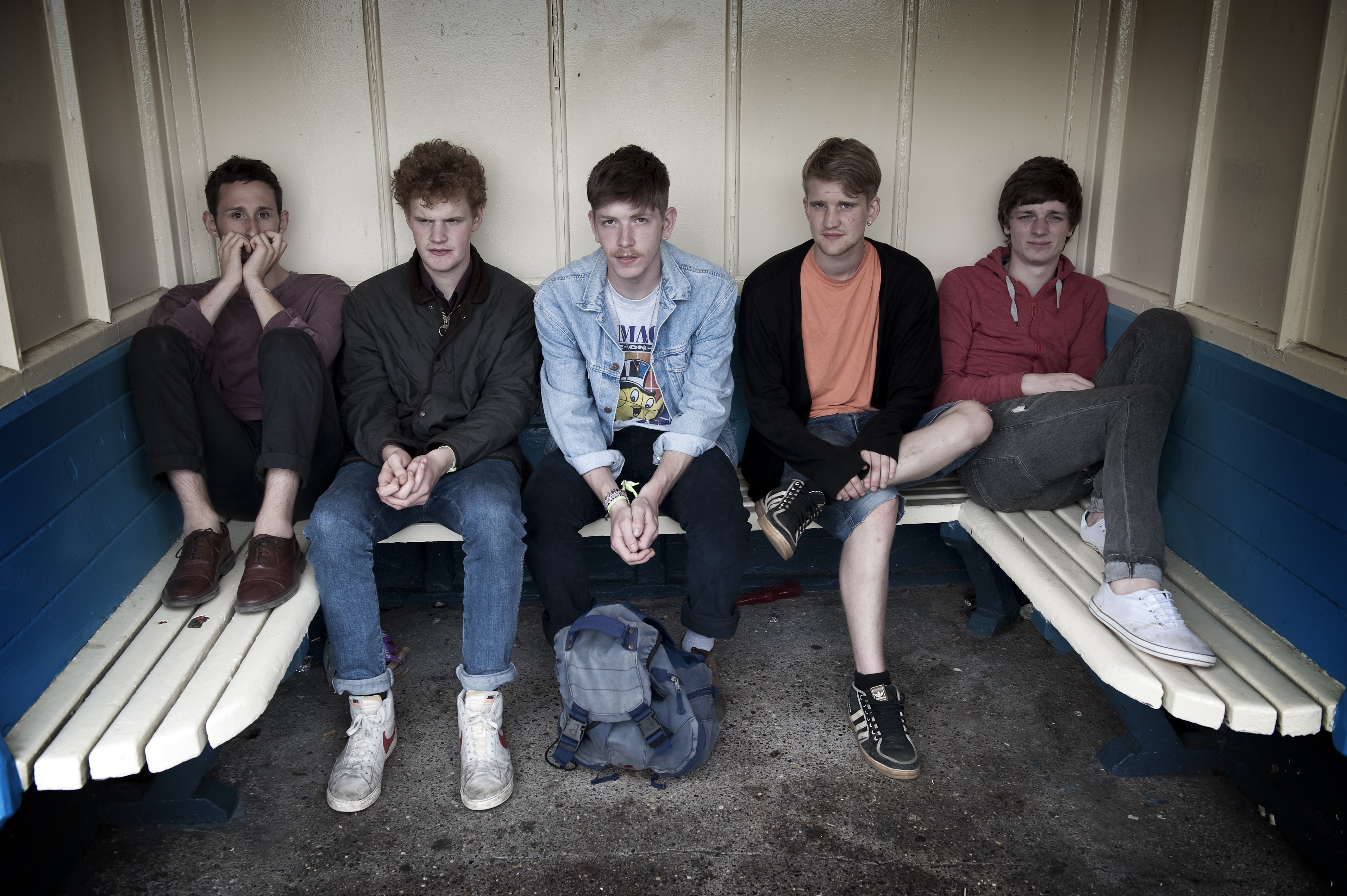
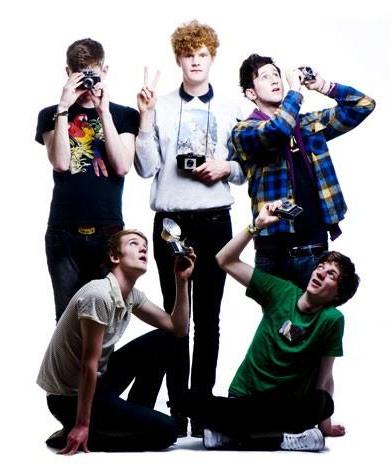
Dog is Dead is not exactly a new band, having released their first EP in 2009, but the five member indie/pop band has started gaining some well-deserved attention recently. Their skilled amalgamation of catchy rhythms and jazz influences makes them a force to be reckon with in the voluminous indie/pop world.
Dog is Dead formed in Nottingham, England, and is currently represented by Atlantic Records, the first band on our list that has signed to a major record company. Three members of the band met at co-educational school called West Bridgford School and the other two members latched on after the band met one at a party and the other at a play rehearsal. The five members started playing together in 2008.
While they released their first EP in 2009, their recently released EP Your Childhood is garnering more attention because, frankly, it’s better. The four songs on the May released EP demonstrate tighter and more mature sounds. Here is “Glockenspiel Song,” the band’s first single.
The song teases listeners with a near-identical MGMT “Kids” opening, but this chorus of desultory children is quickly replaced by a smooth saxophone and a fun riff. The bright opening seamlessly erupts into a tasteful harmony. I love bands like Dog is Dead because talent just oozes out of every pore. Not only can each individual play an instrument, but also the members of the band can strike appropriate vocal notes with precision. The chorus is anthem-like and this is a great example of powerful pop. My favorite portion of the song is when the band strips everything down three minutes in and focuses on raw vocal energy. The entire song is manufactured well.
“Young,” another song off of Your Childhood, sounds a bit different then the version I am providing you with. I wanted to highlight the “stripped down” acoustic sound because it portrays the talent of the act. The song is vocally pleasing and acoustically beautiful.
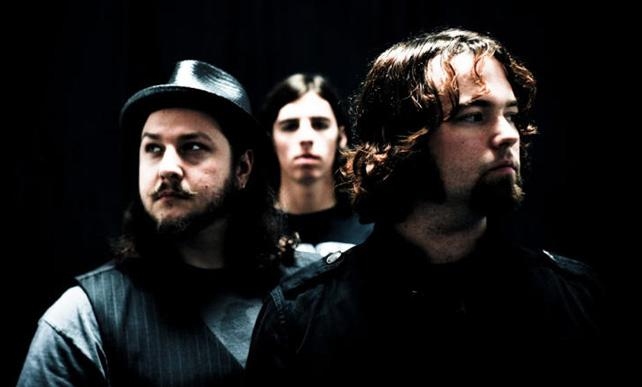
On June 23 of last year I profiled Heavy Glow on the New Band Palace. It is sheer coincidence that I am bringing the band back on the blog today. Something about June and Heavy Glow, I guess. Never heard of Heavy Glow? Click on their name above for last year’s post on the three-man hard rock group. Their new nine-track release Midnight Moan treads the line between hard blues rock and heavy metal. But not the heavy metal that you may immediately think of. Heavy metal traces its roots back to the late 1960s when blues rock and psychedelic rock collided and formed a genre of massive sounds and heavy distortion. The genre immediately focused on heavy guitar and hard drumming, hence heavy metal. Heavy Glow, an apt band name, is just that. They play to the sounds of the progenitors of the genre, i.e. Deep Purple and Black Sabbath. Yes, their music is highly modernized. Heavy Glow uses several recent distortion techniques and the electric hard guitar sounds much more like recent metal guitar than early 70’s rock, but they are familiar with their roots, even experimenting with some acoustic blues at the end of the album.
Right out of the gate Heavy Glow demonstrates their grasp of classic rock blues. “Lose My Mind” entraps listeners with its traditional blues feel mixed with a hard-hitting rhythm and a clean, but raw solo. I particularly enjoyed its shortness. The song only takes up 2:45 of the album. Like a book’s first sentence, the first song of an album should be representative of the material you will experience throughout and it should be intriguing. “Lose My Mind” makes you want to listen to more.
Track two, “Slave Dance,” is modern blues/metal. The riff is effectively slow and monstrously well struck. It is a pump-up riff that acts as a drawn-out head banger, a perfect compliment to the celerity of the first song. “Slave Dance” develops small verses and more rock experimentation culminating in a planned solo attack that acts as a solid firework before the song’s ending.
“All My Money” which falls in the fourth spot on the album is the most catchy track and I will mark it as my favorite because of its carefree rock flavor that is refreshing when you are trapped in a sea of near-metal explosion. Check it out:
While track four may be my favorite, I particularly enjoyed the last few tracks on the album, where Heavy Glow decided to experiment with some old-fashioned acoustic blues, an unexpected but welcome transformation from the modern heavy rock we hear at the album’s outset.
“Smithereen” is an unusual tune, melancholic but melodious. The acoustic guitar work is appreciated and vocals are not to shabby. By the way, the following track “Midwestern Lullaby” is a 1:42 pure instrumental treat and it leads into the plus seven-minute finale.
Solid effort by the young band and an enjoyable album indeed.
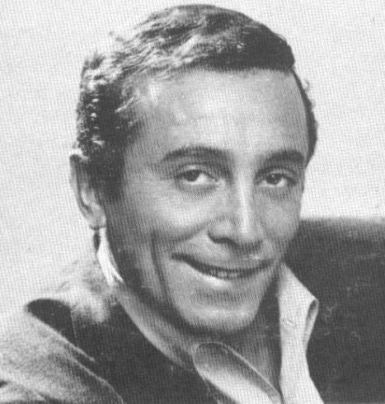
This is the first time I am including a video prior to writing a 60’s Band post. Al Martino, the guest on today’s weekly section, is best known for this 1966 hit. And since he is a vocalist who performed from the early 1950’s to the 2000’s, prior to his passing in 2009, I thought it was important to place him in the rich 60’s vocalist culture. I present to you Al Martino.
Artist: Al Martino (Born Alfred Cini – Martino was adopted from his maternal grandfather)
Origin: Philadelphia, Pennsylvania
Genre: Italian Pop Crooner
History:
Al Martino will forever be known as one of the greatest Italian-American pop crooners. His trademark deep voice and voluble Italian helped him hit the charts in the 50s, 60s and 70s, an impressive feat for any artist. Martino, or Johnny Fontane for those who recognize him from his role in The Godfather, had to deal with real-life mob implications that slowed down his career, but this did not prevent him from becoming popular three times. Let me explain.
Martino first hit success with his 1952 debut single “Here in My Heart.” He got the recoding gig with BBS, a Philadelphia-based label, after garnering exposure from a first place finish on the Arthur Godfrey’s Talent Scouts show. The song shot up both the U.S. and U.K. charts. It was number one on the first-ever U.K. singles chart earning a spot in the Guinness Book of World Records. The song also went number one on the U.S. pop charts for three weeks. The record sold over a million copies and Martino was immediately picked up by Capitol records where he recorded three more hits through 1953, all of which hit the top 40. And then the records stopped dropping.
The mafia took over Martino’s contract and ordered Martino to pay a $75,000 fee upfront which he did to ensure his family’s safety. He then fled to England to avoid the mafia. I guess it was an offer he couldn’t refuse. That was awful, I’m sorry. Luckily, the mafia would not wreck his career any longer, and after a few productive years in England, Martino was able to return to the U.S. in 1958. The next time the mafia came knocking it was fake and he made profit.
It took a few years before Martino was able to establish himself in the U.S. again. He recorded for 20th Century Fox and didn’t do that poorly, but they dropped him. He then got a new deal with Capitol Records in 1962. The music climate had changed significantly in 10 years. Instead of competing with other crooners, Martino was now faced with Booker T., Ray Charles and Chubby Checker. Rock n’ Roll was the rage and Martino was far from this genre. But there was still room for powerful crooners, and Martino was one of them. He started charting again through the early 60s and then in 1966 released “Spanish Eyes,” an adaptation of an instrumental piece by Bert Kaempfert. While the song did only reach 15 on the pop charts it spread like wildfire throughout Europe. The song is no synonymous with Martino.
And when his career began to slow down again, Martino’s friend Phyllis McGuire (one of the McGuire Sisters) alerted him of Paramount’s decision to make a film version of Mario Puzo’s The Godfather. She also told him he’d be great for the role of Johnny Fontane, a fading pop idol who needs the mob to land a film role. Martino didn’t need the mob’s help on this one. The real mob taketh, but the movie mob giveth back. The role propelled him to visibility again and he recorded two popular songs in the mid 70s, including a disco version of “Volare,” which is awful, but Europe enjoyed it.
Think about it. Martino was able to transcend music genres. Not many musicians can say they did that. Give the man credit. He overcame obstacles, but still marked himself as a legendary pop crooner.
Thank you to everyone who participated in last Friday’s first edition of Music Trivia. We received a good amount of answers. Unfortunately, only one participant posted a comment with his answers. So before I get to the answers, I can officially crown Anthony Zampardi winner of the first edition of Music Trivia. Anthony got one answer correct. Did you do better than Anthony and feel disrespected because you are not being recognized? Well, remember, during each Music Trivia you answer the questions in the poll format and then post your answers (a,b,c,d,a – for example) in a comment with your name. You can discuss the questions in the comment section as well. Comments can be accessed by pressing the quote button with the number next to the post’s title. On to the answers!
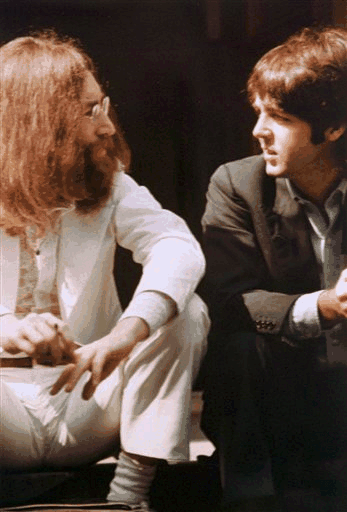
1.) “Hey Jude” is arguably the Beatles‘ best and most emotional song. When Paul McCartney first played the track for bandmate John Lennon, Paul stopped after a line and told John he was meaning to change the particular lyric. Lennon said that he wouldn’t and it was the best line in the song. What is that line? Answer – C.) “The movement you need is on your shoulder”
Yes, the answer choice that garnered the least attention is the correct answer. I admit, this was a difficult first question. It is a small piece of Beatles’ trivia. This line gathered 10 percent of the vote. The answer choice that gained the most clicks at 40 percent was “For well you know that it’s a fool who plays it cool.” I guess we know what line Music Court readers think is dumb!
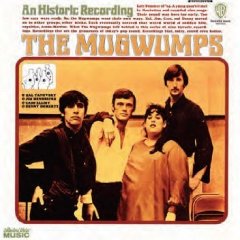
In all of their Mugwumps splendor
2.) The Mamas & The Papas is still considered one of the best folk/vocal groups ever. Cass Elliot and Denny Doherty were truly the vocal superstars of the band. Before they joined The Mamas & The Papas they were both members of an unsuccesful New York band called The Mugwumps in the mid-60′s. The other two members of that band went on to form a famous American band after the break-up. What band did they form?
Most fared better on this question. The Lovin’ Spoonful gained 40 percent of the votes. Even if you did not know the answer to the question, process of elimination could have helped formulate an educated guess. The Byrds were formed in California in 1964, The Turtles in California in 1965, and Jefferson Airplane in San Francisco in 1965. John B. Sebastian and Zal Yanovksky were both based in Greenwich Village at the time of the Mugwump’s formation. The Mugwumps were not successful, but this was in partly because they were such a short-lived group. If they stuck it out, perhaps they would have even usurped the future popularity of the Lovin’ Spoonful and The Mamas and The Papas. Who knows.
3.) Soul Asylum released “Runaway Train,” a song about runaways, with a corresponding video that featured pictures and names of missing children. Because of the song’s popularity many children featured in the video were actually returned to their homes. The song was pretty good too. It took home the Grammy for Best Rock Song in what year?
Answer: A.) 1994
Who expected a 90’s music question? I told you, no genre/time period discrimination. I actually thought of this question while at the gym. The music video for the song started playing on VH1 and I started talking to a trainer about when the song was released. I swore it was mid-late 90s, but he said it was when he was a teenager (early 90s). I looked it up and he was right. The song was released in 1993 (answer choice D and the choice that received 33.3 percent of the vote – tied with 1991). But if you look carefully the question is what year did the song receive the Grammy for Best Rock Song and that was 1994. Congrats to the 22.2 percent of you that got this trick question correct.
4.) In Canned Heat‘s “On The Road Again” what instrument helps create the buzzing sound that follows the song like a swarm of bees.
Answer: C.) Tambura
For those not fluent in the rich tradition of Indian instrumentation, I cannot blame you for getting this wrong. A tambura is a sitar-like instrument with a long neck. It distinguishes itself from a sitar because it has no frets. Its open strings are plucked in a regular pattern in order to create a resonating sound. You can use the instrument for drone music and this is exactly what Canned Heat does with “On The Road Again.” Alan Wilson added the tambura to give the song a hypnotic feel. He definitely accomplished his goal.
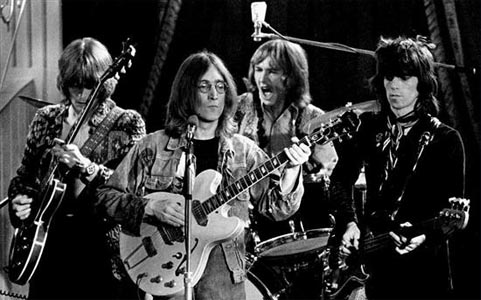
5.) The Dirty Mac was a one-time supergroup formed exclusively for the TV Special “The Rolling Stones Rock n’ Roll Circus” in 1968. The band featured John Lennon on rhythm guitar and vocals, Keith Richards on bass guitar, Mitch Mitchell (drummer for the Jimi Hendrix Experience) on drums and what famous lead guitarist?
Answer: B.) Eric Clapton
I am often asked who my favorite supergroup is. Okay, maybe it is not a constant question but I have been asked it more than once. Without fail, despite my allegiance to King Crimson, I target the one-time performers The Dirty Mac as my favorite supergroup. Yes, their only performance was at The Rolling Stones Rock n’ Roll Circus, but the group consisted of John Lennon, Mitch Mitchell, Keith Richards and Eric Clapton (the answer to the question). The band didn’t just ooze talent, it flat-out blew it out like an active volcano. Their performance of “Yer Blues” is mind-altering. 57.14 percent of you got this one correct, so great job. Until next time, here is”Yer Blues” by The Dirty Mac.
The Music Court has now officially been around for over two years! Time does fly when your posting about music. Now that the blog has grown up in blog years, I think it deserves a makeover. As you can see the old theme is no more. I’m happy with this new theme. It is bolder and wider. I feel like it is more inviting and a little easier to read. All of the content is still there. Categories are now listed on the left-hand side of your screen.
The Music Court categories have also undergone a transformation. This change will continue over the next week. The new category ARCHIVES houses antiquated categories that have been moves to the back vault. Some categories have received name changes and all categories have received a blurb written about their content which can be unlocked by hovering your pointer over the category name.
Summer is a great time for the Music Court. For the past two years it has meant that I have more time on my hands. This summer should be no different. Therefore, I am embarking on the 60’s Band of the Week challenge once again. Let me break this down for some newer readers. In High School, I compiled a tremendous binder of materials about every 60s band I could find. The binder is not genre biased. It is made up of both bands and solo artists. Of course it does not represent the whole of 60s music. That is practically impossible. But I can confidently say that I have compiled a solid list of musicians, some well known and some underground. Starting next week this category will be back up and running.
Three new Music Court categories will be revealed tomorrow. If you have any ideas for categories feel free to e-mail me at musiccourt@gmail.com. New bands or artists can also e-mail that address for a chance to be featured on the blog. There are bands currently on the list! Follow the Music Court on twitter (@musiccourt) and on Facebook (The Music Court Blog).
Until tomorrow, here is one of my favorite summer songs for your listening pleasure: