I want to take a second out of my morning to wish my father, and all of the fathers out there, a very happy father’s day. I wish I could spend more time on this post, but I have to get ready for work. But, this will not stop me from providing a song for this day.
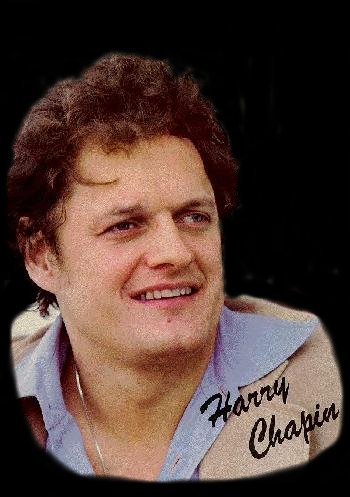
“Cats in the Cradle,” is too perfect of a song to pass up. It was released by Chapin on his 1974 album Verities and Balderdash. The song profiles growing up in a story told through each ageing verse. The lyrics to the song’s verses were originally written as a poem by Sandy Chapin, Harry’s wife, and she is co-credited in the song.
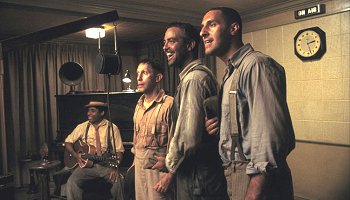
In 2000, “O Brother Where Art Thou” hit movie theaters and immediately became a big hit. Set in Mississippi during the Great Depression, the film profiles three escaped convicts on a fictional journey towards freedom, money and home. It’s a great movie that effectively uses witty satire and good acting to portray its play on Homer’s “Odyssey”. In a hilarious scene, the three convicts, after meeting a young guitarist named Tommy Johnson at a crossroads – Johnson claims that he sold his soul to the devil for guitar skills, which is a play on the Robert Johnson rumor (but that is a different story for a different day) – record the famous folk tune, “Man of Constant Sorrow” at a studio for easy cash. Their version, recorded under the group name, The Soggy Bottom Boys, becomes a huge hit.
While the movie is obviously fictitious, the cover was actually recorded in 2000 by Dan Tyminski, Harley Allen and Pat Enright, and, it gained similar notoriety. It received a Country Music Award for “Single of the Year” and a Grammy for “Best Country Collaboration with Vocals.” The song, that had basically been forgotten about, minus an impromptu recording of it by Jackson Browne in 2000, and another by Jerry Garcia in 1993, was revitalized and placed back on the market for consumption. Since then, the song has been recorded numerous more times and has remained popular enough that if someone was to play it, most people could recognize it as that song from that movie. Or, at least I hope so. What many people often forget about “Man of Constant Sorrow” is that, like with most traditional folk music, there is a rich history behind the song. In this case, the history presents a humorous case of folk telephone.
We all know the game telephone, where one person thinks of a sentence and whispers it to the next person who whispers it to the next person and so on. When the original sentence reaches the last person, the sentence has often changed into an unrecognizable mess. This is the case with how most verbal stories and songs are passed on. Eventually, the large crane turns into a fire-breathing dragon. And, the transformation of story elements reflects similarly on the natural change of song lyrics. “Man of Constant Sorrow” is no different. Let’s look at the lyrics of “Man of Constant Sorrow” by the Soggy Bottom Boys, and, we will then travel back in time and see the progression of the song to the modern day.
Listen:
I am a man of constant sorrow,
I’ve seen trouble all my day.
I bid farewell to old Kentucky,
The place where I was born and raised.
(The place where he was born and raised )
For six long years I’ve been in trouble,
No pleasures here on earth I found.
For in this world I’m bound to ramble,
I have no friends to help me now.
(He has no friends to help him now.)
It’s fare thee well my old lover.
I never expect to see you again.
For I’m bound to ride that northern railroad,
Perhaps I’ll die upon this train.
(Perhaps he’ll die upon this train.)
You can bury me in some deep valley,
For many years where I may lay.
Then you may learn to love another,
While I am sleeping in my grave.
(While he is sleeping in his grave.)
Maybe your friends think I’m just a stranger
My face, you’ll never see no more.
But there is one promise that is given
I’ll meet you on God’s golden shore.
(He’ll meet you on God’s golden shore.)
The Man of Constant Sorrow
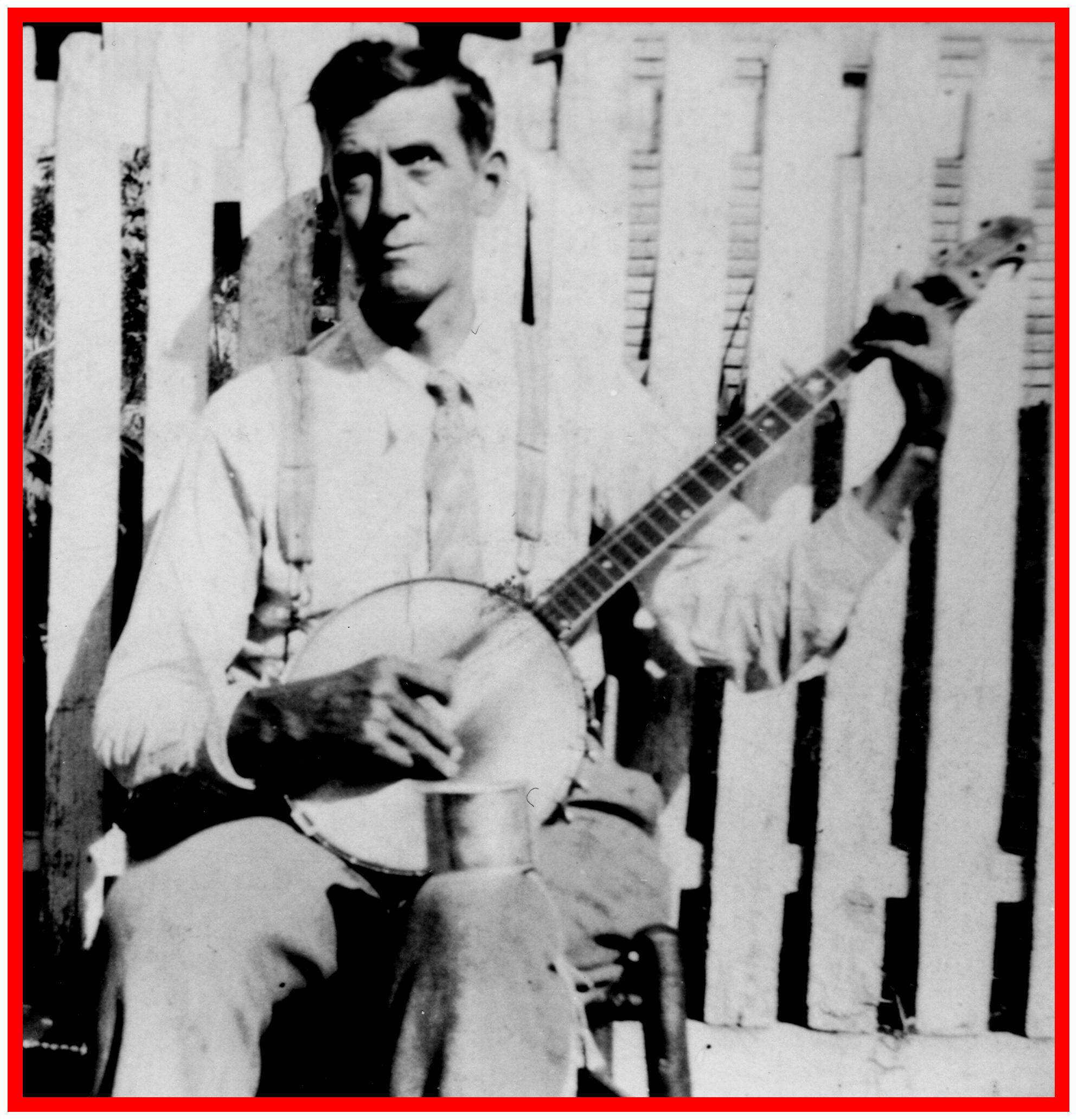
This is Dick Burnett. He is the man of constant sorrow. Around 87 years before the real-life Soggy Bottom Boys went into a recording studio and recorded “Man of Constant Sorrow,” Burnett wrote the song on paper and entitled it “Farewell Song.” Burnett, born in 1883, was a Kentucky-based fiddler who was blind in one eye. He lived into his 90’s and died in 1977. Before his death, he was asked in an interview whether or not he had written “Man of Constant Sorrow.” His answer, “No, I think I got the ballad from somebody — I dunno. It may be my song.” It is a common belief that, like most traditional folk songs, Burnett just adjusted the song to fit his own state and instead simply adapted an old hymn. But, unless anyone finds an earlier version scribbled on the back of some famous document (it’s Nicolas Cage time), we will never know for sure. Burnett’s version of the song reads like this:
I am a man of constant sorrow,
I’ve seen trouble all of my days;
I’ll bid farewell to old Kentucky,
The place where I was born and raised.
Oh, six long year [sic] I’ve been blind, friends.
My pleasures here on earth are done,
In this world I have to ramble,
For I have no parents to help me now.
So fare you well my own true lover,
I fear I never see you again,
For I’m bound to ride the Northern railroad,
Perhaps I’ll die upon the train.
Oh, you may bury me in some deep valley,
For many year [sic] there I may lay.
Oh, when you’re dreaming while you’re slumbering
While I am sleeping in the clay.
Oh, fare you well to my native country,
The place where I have loved so well,
For I have all kinds of trouble,
In this vain world no tongue can tell.
Dear friends, although I may be a stranger,
My face you may never see no more;
But there’s a promise that is given,
Where we can meet on that beautiful shore.
The lyrics show both some minimal and large changes. An entire verse of Burnett’s original has been removed, the last line is different and parents have turned into friends. But, it is also remarkable how much was kept from the original. This was aided by other recordings of the song before the 2000 version.
Another Man of Sorrow
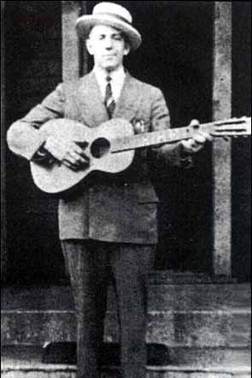
In 1928, Emry Arthur, recorded a version that stayed pretty consistent with Burnett’s lyric. Arthur’s guitar and vocal inflections changed the melody of the song slightly. In my opinion, this 1928 recording is perhaps the best ever of “Man of Constant Sorrow.” I just love Arthur’s translation of the piece.
Listen:
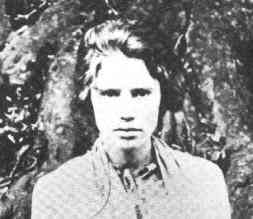
A Girl of Constant Sorrow (Man, old pictures are freaky)
1928 passed, and eventually the rocking year of 1936 fell upon the United States. Okay, the Great Depression still hovered over the country. “O Brother Where Art Thou” is set in 1937 to give you some perspective. Sarah Gunning, a NYC woman, re-wrote the classic and replaced man with “girl.” The song reflected her expected grief over her ill husband’s fast-coming death. Gunning stated that she remembered the song from an old 78 rpm hillbilly record she had heard previously in the mountains. Her version maintains the first verses concept and even Burnett’s reference to parents (mother in Gunning’s case) in the second verse. But, the song changes tremendously after that. We have a group of two brothers to thank for bringing a close-to-original version back to popularity.
The...wait for it...men of constant sorrow
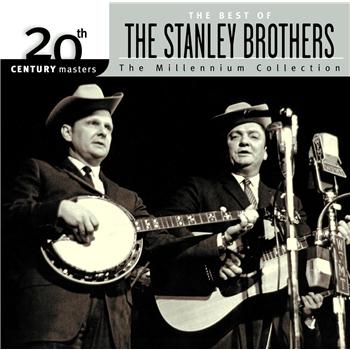
Dr. Ralph Stanley, the famous bluegrass artist and Stanley Brother’s member, said of, “Man of Constant Sorrow”:
“Man of Constant Sorrow” is probably two or three hundred years old. But the first time I heard it when I was y’know, like a small boy, my daddy- my father- he had some of the words to it, and I heard him sing it, and we- my brother and me- we put a few more words to it, and brought it back in existence. I guess if it hadn’t been for that it’d have been gone forever. I’m proud to be the one that brought that song back, because I think it’s wonderful.”
Ralph, and his brother Carter Stanley, did bring the song back. Besides Gunning’s version 15 years before, the song had strayed away from its original lyric for 23 years, before the Stanley Brothers did a rendition of the classic in 1951. Their version saw success when it was recorded on Columbia Records, and it sparked a whole world of new recordings that lasted into the 70’s before the song took a sabbatical. Their version is perhaps the neatest combination of Burnett’s original and the Grammy winning 2000 hit. It retains the verse that the 2000 version cut out, but, it also uses the ending “God’s golden shore” as opposed to Burnett’s, “that beautiful shore.” Like Stanley said, “we put a few more words to it.” This is the beauty of the folk hymn. It is a big ol’ game of musical telephone. “Man of Constant Sorrow” keeps changing, but, it has luckily maintained some of its roots that may date even further back than the early 20th century.
This week Lady Gaga caused quite the stir, showing up at a graduation at her former high school in a characteristically eccentric get up. Complete in beekeeper hat and see-through lace pants, many cried foul that Gaga was trying to once again upstage the rest of attendees.
But Gaga would be the first to refute accusations of cheap attention ploys. Formerly Stefani Germanotta, Gaga maintains that fashion is an expression of identity, and a full embrace of her true inner freak. The odd style of dress is a protest of conformity, as well as the standards and conventions regularly impressed upon free thinking in school days.
Lady Gaga in Highschool
When coming across these eye-popping images of Gaga, I couldn’t help but draw comparison to Janis Joplin, who pulled a similar stunt some 40 years ago.
Though she did not attend a ritzy private school for Manhattan elite, like Gaga, Joplin’s adolescence was very much defined by an outsider status. Her feeling of pain, rejection, alienation and damning heartbreak would come to define her music. Joplin reflected on her high school days as some of the darkest in her life, exclaiming that she had been “laughed out of class, out of school, out of town, out of the state”.
And indeed, Joplin would leave her small Texas town and seek liberation in the colorful Haight-Ashbury of San Francisco. In 1963, at the age of 20, the Joplin’s lost soul would encounter vibrant waves of Hippism and Blues. Unfettered in an atmosphere of freedom and love, Joplin would channel her sensitivity and torment into song.
Joplin in High School
Eventually gaining both critical and commercial success in the incredibly competitive record industry, Joplin re-visited the Texan town of Port Author for her ten year high school reunion. Like Gaga, Joplin was a spectacle, dressed in flamboyant garb and followed by cameras. Yet despite her popular following, Joplin was received coldly by her former classmates. Her own family rejected her, refusing to even acknowledge the advent of her visit. Rather than an opportunity to boast at former bullies, Joplin’s visit to her former high school was yet another display of her outsider status. Joplin’s chronic history of emotional pain and isolation eventually lead to her demise, as she would die, alone, through drug overdose.
There is no mistake that Gaga and Joplin are two very different characters in music. Gaga may have felt freakish in her adolescent years, but it is safe to say that it was Joplin who suffered severe internal devastation, coming from family and peers alike.
Nevertheless, at their former high schools both Gaga and Joplin took the opportunity to live out a popular fantasy. Being able to gloat at former naysayers is a victorious moment that one may often hope to experience, with some of us even eagerly practicing potential scenarios in daily life.
While some of us may never get to enjoy this kind of glory, or feel it as we would have imagined, it is no question that adversity powers great music. The woe of the freak will continue to fuel our most cherished art, regardless of what popular views may govern.
Rock n’ Roll top 100 lists are obviously arbitrary. If you do a quick search on Google you can find links to the top 100 guitarists, vocalists, bassists, roadies (okay, maybe not roadies) of all time. And, in a crunched list of only 100, there are sure to be a list of snubs that will make people angry. But, take these top 100 lists for what they are. An effort to appease the masses searching for a top 100 list so they can see where their favorite lands and then…well…probably complain. Now, it can be misconstrued that this is what I will be doing in this post, but please do not misinterpret. I am simply asking the question, does Mitch Mitchell deserve a better spot than 23 on the list of top drummers of all time?
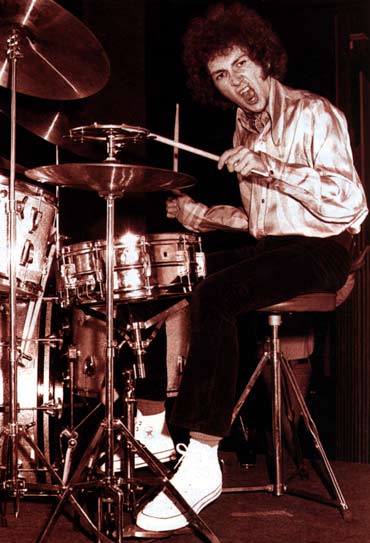
Mitch Mitchell is an often forgotten about drummer. He may not have had the flare of a Keith Moon (The Who) or the skill of Neil Peart (Rush) or John Bonham (Led Zeppelin), but, when you enter the realm of fusion drumming, Mitchell must be placed up there with the best of them. We will get into the fusion style in a little bit. Mitchell is best known for his library of work with Jimi Hendrix and his Experience (Noel Redding and Mitchell). Mitchell actually won the drummer position on a coin flip, beating out Aynsley Dunbar (who according to Experience manager Chas Chandler, was their other choice). Dunbar’s career did not take much of a hit from the decision. He flourished into an accomplished drummer and has played with a tremendous list of diverse rock acts. In case you were wondering, he is 27th on the rock n’ roll drummers top 100 list.
Mitchell=23 and Dunbar=27; I bet you are wondering who is smacked in the middle of these skilled drummers. Well, none other than Michael Shrieve, who, at 20 years old, took the stage with Santana on day two of the Woodstock music festival (Mitch Mitchell would come on to close out the festival with Jimi less than two days later) and blasted through a drum solo during an extended version of “Soul Sacrifice,” which, may just be one of the greatest solos of all time. For those that think differently, one must look at the circumstances. Similar to DeWayne Wise’s catch to save Mark Buehrle’s perfect game in the ninth, Shrieve’s drum solo was incredibly clutch. He was an inexperienced drummer who, because of the performance, may have very well propelled a lesser known Santana into the spotlight.
Like Shrieve's solo...Awesome!
I got sidetracked. Let’s move on. With the Experience, Mitchell released several albums and recorded numerous impressive drum tracks that provided the classic Hendrix blues/psychedelic sound a large boost. Mitchell, in 1969, played with the one-off collaboration of The Dirty Mac, who I talked about yesterday. He also performed with the short-lived Jack Bruce and Friends band which featured Mitchell, Bruce, keyboardist Mike Mandel and frontman Larry Coryell.
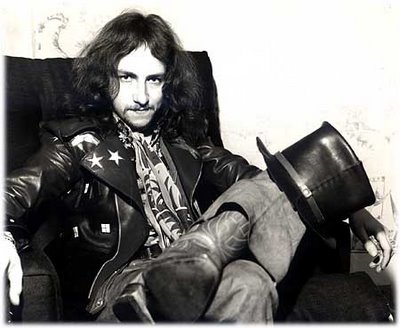
Demonstrating his devotion to Hendrix’s work, Mitchell helped with the posthumous releases of both The Cry of Love and Rainbow Bridge. He then went on to form an unsuccesful, but ambitious act named Ramatam, with guitarists Mike Pinera (Iron Butterfly) and April Lawton (who some consider to be the female Jimi Hendrix). Ramatam actually opened for Emerson, Lake & Palmer. When ELP was forming Mitchell and Hendrix were offered spots in the supergroup that Keith Emerson and Greg Lake were creating, but this never came to fruition. Wow, if Hendrix stayed alive and Mitchell and Hendrix ended up combining with Emerson and Lake, oh my goodness what a band. But, Carl Palmer – who is one of the greatest drummers of all time (ranked 4th on the ultimate list) – ended up receiving the spot.
Mitchell continued performing through the years, and passed away after the 2008 Experience Hendrix Tour. He died on November 12, 2008. Yet, Mitchell’s incredible sound lives on through his sensational performances with the Experience.
Mitchell blended jazz and rock drumming styles (fusion) and successfully developed an interesting interplay with Hendrix’s lead guitar, thereby creating “lead drums,” a rare concept in an emerging rock scene. Lead drums, of course, was not a new concept in the world of jazz. Mitchell, a jazz drummer at heart, was inspired by the work of Elvin Jones, Joe Morello and Max Roach, all famous jazz percussionists. Mitchells drumming, consistent with the jazz style of making a melody with the drums, made heavy use of jazz patterns, fast rolls and snare rudiments. Now, all of these drumming terms may confuse anyone who does not play or know the drums well (I am raising my hand at this as well). So, the best way to learn is through hearing and seeing. For that, I am going to take you out to Woodstock in 1969. Listen here for the rudiment-heavy fills in “Hey Joe” and think, does Mitch Mitchell deserve a higher spot on the top 100 drummers list?
Billy Gillespie, frontman for the band Primal Scream, has announced a one-night-only supergroup called Silver Machine that will take the stage at London’s 1234 festival in Shoreditch on July 24. The band consists of Gillespie, Zac Starkey, who plays drums for The Who and, if you do not know, is also the son of one Ringo Starr, Sex Pistols’ bassist Glen Matlock and Primal Scream guitarists Andrew Innes and Barrie Cadogan.
When Silver Machine takes the stage they will immediately be in the pool of one-off collaborations competing with The Dirty Mac for best one-time rock combination. The Dirty Mac consisted of Starr’s bandmate John Lennon, guitarist Eric Clapton, Rolling Stone’s guitarist Keith Richards, and Jimi Hendrix Experience’ drummer Mitch Mitchell. They played at the The Rolling Stones’ TV special entitled “The Rolling Stones Rock and Roll Circus,” which was recorded on December 11, 1968. This is a great opportunity to show you all one of the coolest rock videos ever.
Anyway, Silver Machine is planning on playing covers of some of their favorite songs from their favorite artists. This includes bands like The Troggs, MC5, The Creation and an often looked over band, The Chocolate Watchband.
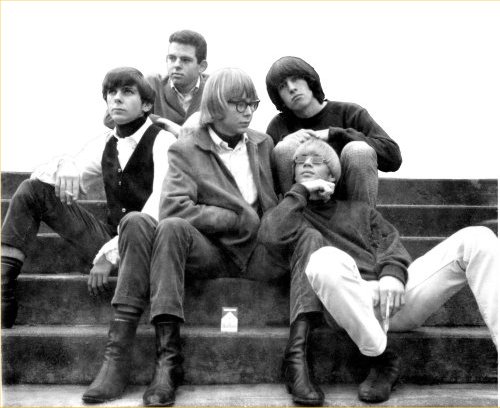
The Chocolate Watchband were a garage rock and psychedelic band formed in San Jose, California in 1965. The music was a mix of the blues/psychedelic sound that was swirling around San Francisco, California at the time. In 1967 the band, already having experienced a line-up change, released their first LP entitled, No Way Out. This album is not talked about much, but is a true gem of the late 60’s burgeoning psychedelic experimentation. “Dark Side of the Mushroom,” – 6 years before the moon – is a fantastic piece of instrumental psychedelia.