Tag Archives: Music

A Whiter Shade of Aqualung: Classical Style

13 Jun
Jones Beach Theater

Last Friday, my dad, brother and I went to go see Jethro Tull and Procol Harum in a double-bill show at the Jones Beach Theater in Wantagh, NY.  Our annual trip to Jones Beach Theater has become a constant in our summer plans. Sometimes, we even make the pilgrimage twice. Without fail, Jones Beach Theater always holds interesting concerts and this provides us with the opportunity to enjoy great music and discuss rock n’ roll (something I am obviously passionate about doing).

Jethro Tull performing

The opening set by Procol Harum was a fantastic mood setter and it was great to hear Gary Brooker and his sensational croon effortlessly pound out Harum’s hits. Jethro Tull, led by the ultimate eccentric showman Ian Anderson, put on an energetic show of great eclat. Both Harum and Tull combined to form a powerful duo of skilled musicianship and heavy classical music undertones. That’s right, classical music. Actually, if you read on you will find out how both Tull and Harum’s most famous songs were influenced by classical music. By the way, classical music is not the only thing that Tull and Harum have in common.
Oh, yes, it’s time for another installment of music knowledge off the back wall. Harum’s current bassist is Matt Pegg. Pegg’s father, Dave, was invited to play with Tull in 1979 when former bassist, John Glascock, was ailing (he would die not long after, at the age of 28, as a result of a congenital heart defect). Dave Pegg played with Ian Anderson (back when Anderson’s hair was wild and…long) and long-time guitarist Martin Barre, when his son, Matt, was a wee lad. Dave Pegg is also the longest serving member of the electic-folk band, Fairport Convention, which set the stage for the true electic-folk genre with their 1969 release Liege and Lief…and now I am prattling. Let’s close the door leading to the back wall and move on.

As I was saying, classical music is a large part of both Jethro Tull and Procol Harum’s greatest hits. To prove this to you, I will profile both of the band’s most famous pieces in a warped installment of song of the day. So, let’s hop to it.

Procol Harum’s biggest hit is “A Whiter Shade of Pale.” This goes without contention. I can only imagine the many who just went to themselves, “Oh, that’s who Procul Harum is.” “A Whiter Shade of Pale,” recently came under the attention of
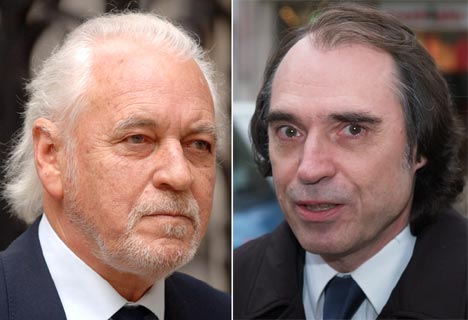
Brooker (left), Fisher (right)

the High Court in England. In 2005, former Harum organist Matthew Fisher filed a lawsuit against singer and pianist, Gary Brooker, claiming that he co-wrote the song with Brooker and lyricist Keith Reid. After much deliberation, and multiple appeals, the case finally was closed last summer after a unanimous ruling from the Law Lords of the House of Lords awarded Fisher co-writing credits for the song.

Now that we have thrown around the term “lord” we can get into some classical discussion. “A Whiter Shade of Pale,” written by Brooker, Reid, and Fisher, was released on May 12, 1967. The song was an immediate hit that has had major staying power. According to a chart compiled for BBC Radio 2 by the licensing firm PPL, the song is the most played song in UK public places in the past 75 years. The song is also 57th on Rolling Stone Magazine’s 500 Greatest Songs of All Time list. And, whenever anybody thinks of the song, their mind most likely goes to the song’s anagogic organ riff that is both celestial and greatly catchy. The Hammond organ riff was inspired by Johann Sebestian Bach’s, “Sleeper’s Wake!” and “Air on a G String.” A classical reference, indeed.

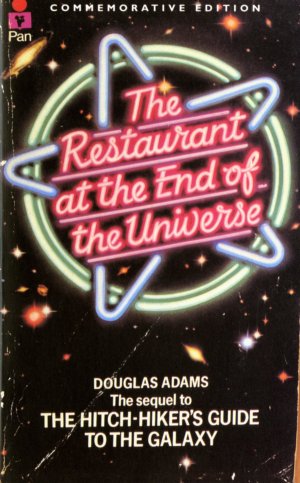
By the way, did you know that novelist Douglas Adams’s second novel in the “Hitch-hiker’s Guide to the Galaxy” book series, “Restaurant at the End of the Universe” was inspired by the explosion of sound as Mick Grabham’s guitar comes in before the final verse of the song, “Grand Hotel.”
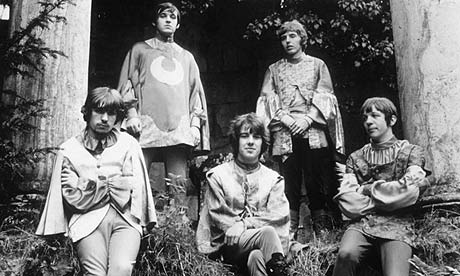
Procol Harum was here

Jethro Tull’s, “Aqualung,” the title track of their first U.S. Top 10 Album, Aqualung (released March 19, 1971), features some of the most famous opening notes in rock history. The riff (phonetically translated as ba ba ba ba ba ba *drum beat*) certainly evinces Ian Anderson’s knowledge and admiration of Ludwig Van Beethoven and his fifth symphony.

Classical music is alive and well folks, and it can be heard in relatively modern music. It are those artists who notice and take advantage of classical music’s appearance in rock music by studying and implementing it into their own music succesfully, that often find a wide world of positive recognition and praise among fellow musicians, and hopefully fans with a keen ear to great music.

“Whiter Shade of Pale”:

“Aqualung”:

And, for good measure:

Sleepers, Wake!”:

and…the incomparable

Beethoven’s Fifth:

World Cup of Glasba (music in Slovenian) Click the Link for your Country!

11 Jun

Let’s just throw out the months of June and the first part of July and instead call it World Cup. The event, which occurs every four years, provides an opportunity for participating nations to unite in support of their soccer team. It’s an exciting tournament and for sports fans in the United States, it is an excuse to watch the true world’s sport, soccer.

Baseball may be America’s past time, but soccer is a universal sport. I, though, am part of the large group of Americans who enjoy the World Cup every four years and then forget about soccer until the Cup rolls around again. Why? Well, I did not grow up a soccer fan. Neither did the majority of Americans. But, the World Cup is different. It is a pride tournament, focusing on Olympic-like sport battles. But, it is only one sport. It is a true battle of specified skill, allowing for an almost war-like concentration on the soccer field. It is a pleasure to watch these athletes defend their countries’ name. And, if our United States team can put on a show, we may see a rise in soccer popularity even after the World Cup is finished.

But, for now, let’s enjoy the buzzing sound of the vuvuzela which provides an annoying, but kind of cool, background to the broadcast. Let’s enjoy the excited fans, the delicacy and patience of soccer, and the passion of the sport. After four years of waiting, the players are giving their complete all. This is what they have trained for. Oh, and let’s also enjoy the South African anthropomorphised World Cup mascot, Zakumi.

While surfing the web for World Cup online material, I came across something I just had to share with you guys. It is called the World Cup Song 2010. The competition is free and for anyone who has an original song about the World Cup 2010 in general, or their specific country. Right now, out of the 367 entries, the USA is represented twice in the top 100 at 67 and 73. England is represented as four of the top five songs. What is going on guys? How will we win on the soccer field if we can’t win in the world of music. I must call for a campaign. I will include the links of the two American contributions below. Click and watch.

“The Surface” – 2010 World Cup Song – Team USA

http://www.youtube.com/watch?v=Gmzw2-va-dM&feature=player_embedded#!

US SOCCER SONG ANTHEM VIDEO by Frank Morrison (World Cup 2010)

http://www.youtube.com/watch?v=0LmodV7HlSs&feature=player_embedded

Celine Dion may need water from the moon

10 Jun

Diva Water Fun Park

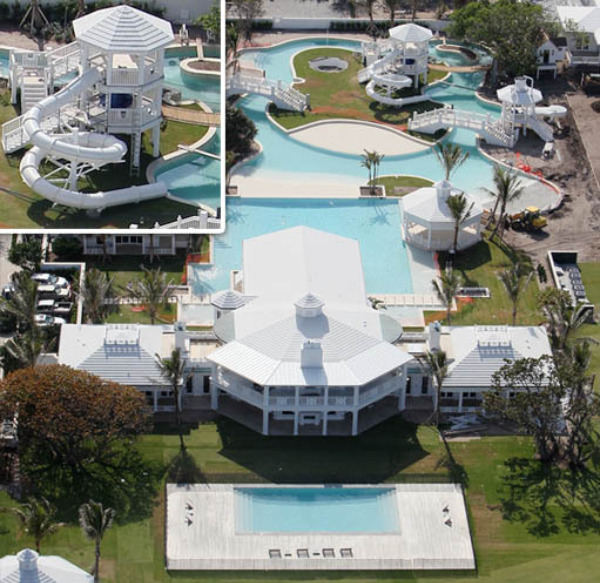
Well, nobody ever said Celine Dion wasn’t outrageous. The 42-year-old prima donna has build a pool water park in the backyard of her $20 million Jupiter Island, Fla, estate that she shares with her husband and manager René Angélil. The Dion theme park features two huge pools, water slides, a lazy river and no icebergs in sight. This aquatic shangri-la is a good example of how far someone can take the phrase, “If you have the money spend it.” Because, sometimes you may build an environmental monstrosity.

Dion’s backyard pool just happens to hold 500,000 gallons of water, which actually caused a drought on Jupiter Island. That’s right folks, she caused a drought. Neighbors were not pleased when they had to deal with water restrictions because of Dion’s god-like creation. Dion, facing fines because of her pool, built six wells on her property. Six wells and horrendous heating costs combine to use up a lot of energy, which for the Mother Nature Network (MNN) is a big no-no.

Read: http://www.mnn.com/your-home/green-building-remodeling/blogs/celine-dions-eco-impact-will-go-on-and-on

The True Foundling: Mary Gauthier

9 Jun

When you’re applying to college (undergraduate or graduate) a common question on each application is some variation of “describe yourself.” A very broad and surprisingly tough question. I remember sitting for a long period of time thinking how can I possibly make a quasi life story interesting. My childhood was rather sheltered and I was horribly spoiled (blame my parents). You here that. I want it and I want it now. But, seriously, when I was 17 I could not think of much to write about. Now, times have certainly changed and I like to think of myself as a more mature, well-rounded individual. Let’s put things in perspective though.

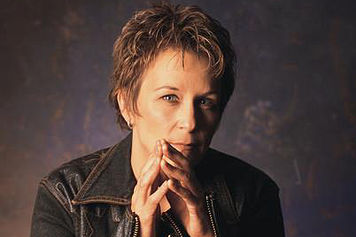
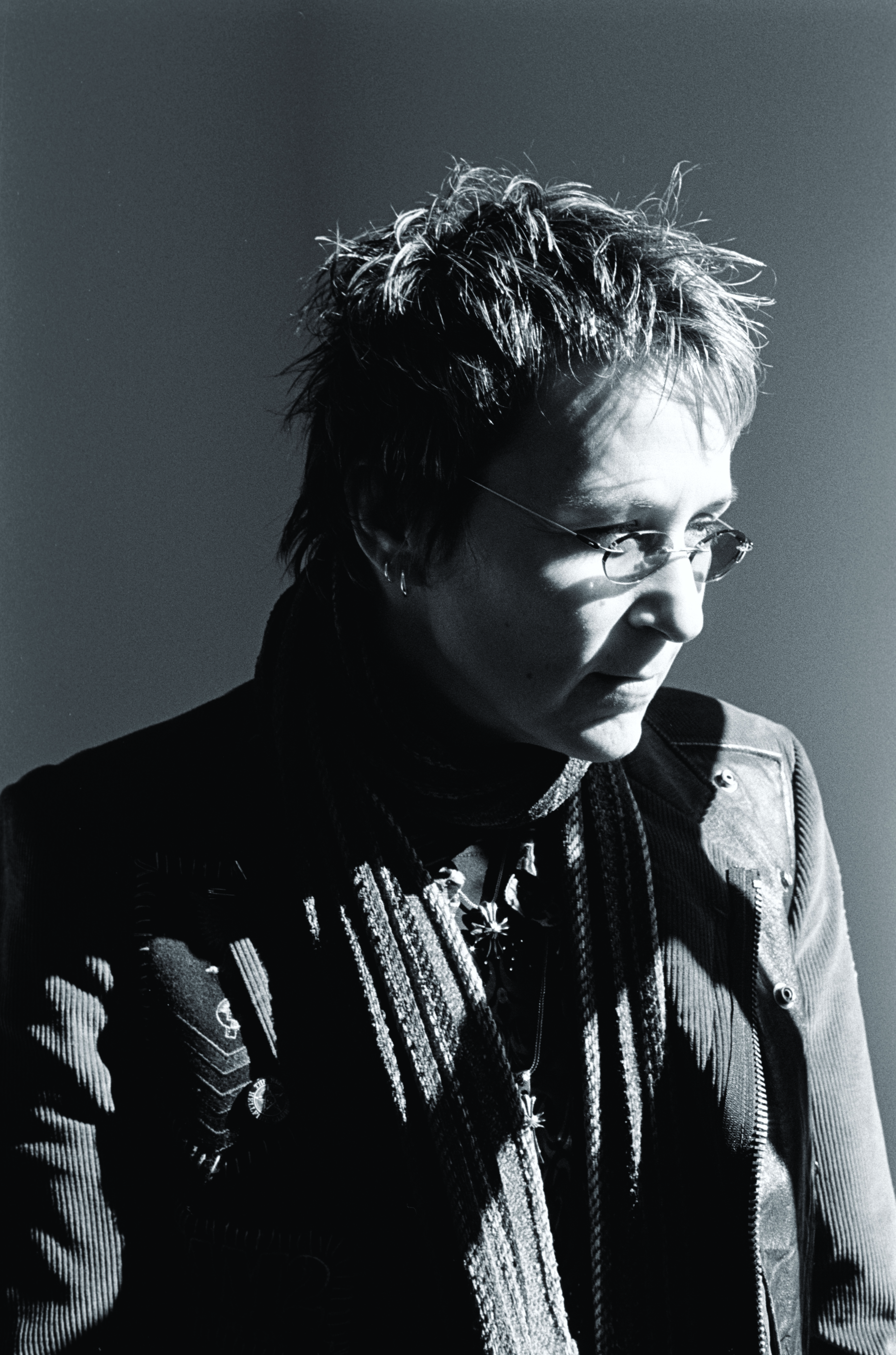
At 15 years old, Mary Gauthier stole her adopted parents’ car and left home. The next 20 years of her life – before she released her first song and found herself as a gifted songwriter – brought about drug abuse and rehabilitation, a struggle with her sexuality, and an overall theme of running away.  She consistently found herself travelling a personal road to quoz on tortuous roads without direction. As Mary states in her artist notes from her recent release The Foundling (released May 18), “I wandered for years looking for, but never quite finding a place that felt like home.” The Foundling documents Mary’s attempt to find home. It is an autobiographical triumph, exploring the deep emotions that are innate in an itinerant, Homer-esque journey.

Mary was born to an unwed mother in 1962 and orphaned at St. Vincent’s Infants Home on Magazine Street in New Orleans. She was adopted by an Irish/Catholic family. Her adopted father was an alcoholic and both of her parents were, “suicidal.” After stealing a car and skipping town at 15 she found herself in a vertiginous quagmire, where drug and substance abuse controlled her life. After getting herself enrolled at LSU as a philosophy major, Mary dropped out in her senior year and moved from Baton Rouge to Boston. She sobered up, enrolled at the Cambridge School of Culinary Arts, and opened a successful Cajun restaurant in Back Bay called Dixie Kitchen. But, her perambulating shoes caught up with her again, and she left the restaurant to pursue a music career, one that has spawned into the creation of a lyrical master.

In a way, Mary never stopped running. While she settled in as an exciting new musician, her insatiable need to find her birth mother overwhelmed her, and, she finally hired someone to find her mother. Mary writes, “She was located in three days, but it took me 6 months to muster up the courage to call her.”

This abetted the creation of a new, autobiographical release. As I stated above, any type of autobiography is not easy. It is especially hard to document your life when you are molding pure emotion into song like Mary does in The Foundling. One of the most famous autobiographical concept album comes from Elton John and Bernie Taupin. Their Captain Fantastic and The Brown Dirt Cowboy (released in 1975) explores both of their early musical careers. Albums like Elton and Mary’s do not come along often, and there is an even finer line between trite and original when entering the autobiographical realm. But, Mary’s album rides the line with skill. Her songs are original folk masterpieces and her voice is true and endearing.

When Mary finally mustered up the courage to call her, her worst fears were realized. Mary writes, “Almost fifty years later, I was still her shameful secret. She had no desire to meet me. It was too much for her.” It was an obviously painful experience. Yet, now looking back on the search and recently released album, Mary finds comfort. The album has the feel of a strong emotional release that gave Mary the opportunity to truly exhale.

She writes, “As I look, listen and reflect on what I’ve learned by writing this record and completing the search for my birth mother, I’ve discovered we are all wanderers of sorts, looking for meaning in lives that contain no guarantees. My birth mother and my adopted family loved me the very best they could and I am grateful for their sacrifices. I do have a good life. It has been a long road and it’s taken me longer than I am proud of, but these days I find myself at peace, grateful for each borrowed day.

Buy the album: http://www.amazon.com/Foundling-Mary-Gauthier/dp/B003CLAN24/ref=sr_1_2?ie=UTF8&s=music&qid=1276103435&sr=8-2

Information: http://www.marygauthier.com/ or http://www.myspace.com/marygauthier

Fareed Haque Group at The Cubby Bear- 6/18

8 Jun

Name some fantastic guitarists. A music aficionado may mention names like Elmore James, Robert Johnson and Mark Knopfler (of Dire Straits), but, even the most ignorant music fans can name Jimi Hendrix and Eric Clapton. The list of top guitarists is certainly not set in stone, and attempting to narrow down the top 50 or 100 is completely arbitrary and practically impossible. But, in the select world of fantastic guitarists, some inevitably fall between the cracks. One example is Fareed Haque.

Fareed Haque; That may be the coolest guitar in the world (Photo Credit: Brad Walseth: http://www.jazzchicago.net/reviews/2008/FareedH.html

Who is Fareed Haque? Let me go through some of his credentials. He has received multiple Chicago Music Award nominations for his contributions to World Music. He was named the Best World Guitarist 2009 by Guitar Player Magazine. And, he has been selected twice as a Talent Deserving Wider Recognition by Downbeat Magazine. I agree with Downbeat Magazine.

At 8:30 p.m., on June 18, Haque will bring his eclectic Group to The Cubby Bear, 1059 W. Addison, Chicago. If you are in the area I really urge you to check the concert out.

Haque lives in Illinois, and in addition to being an accomplished musician and composer, he also is a professor of jazz and classic guitar at Northern Illinois University. His band features diverse instrumentation, including guitar, electronics, tabla, keys and numerous percussion instruments.

Haque will also treat guests to a special performance of jazzed-up rendition of Crosby Still and Nash’ “Déjà vu” from Haque’s days as a Blue Note artist.

Check Out Haque:

Website: www.fareed.com

Myspace: www.myspace.com/fareedhaquegroup