I’m sure that if you are even slightly familiar with the hip-hop scene you have heard of Nicki Minaj. The Queens native has collaborated with the likes of Mariah Carey, Usher and Diddy, often featured alongside staple counterparts Drake and Lil’ Wayne.
Nicki "Barbie" Minaj
She’s been the focus of attention as of late, partially because of the summer release of a solo album and a hyped-semi feud with rapper Lil’ Kim (Kim maintains that Minaj has not paid enough respect and “homage” to her position as an artist).
Currently Minaj, a self declared modern day Barbie, is thought by many to have taken the place of Lil’ Kim in the rap scene. Fresh blood and new perspective has lent the up and coming artist waves of attention. With her ultra decadent music video Massive Attack, Minaj seems to affirm a permanent position in the music biz.
But with the supposed beef between Minaj and Kim, one must wonder is there only one spot for a female in hip-hop? What is the source of competition and animosity?
Rap music has such a reputation as hard edged, fueled by the tough grit of masculine energy. I think that Minaj’s flair of aggressive confidence and feminine eccentricity is a perfect complement to the scene. I don’t, however, believe that only one woman should merit the spotlight. Minaj is a fascinating artist, but should not be the only “token” girl rapper on a track.
Minaj and Drake
Yes, there has been others (Eve, Remy Ma, and as aforementioned, Lil’ Kim, to name a few) to make there names known. But as of now, Minaj seems to be taking the lead. But, before asking Barbie to contribute to another song, maybe a few artists should look into other female talent out there.
Time for another instalment of the song/word of the day.
Today’s Word: Heliolatry
Oh...Now the post title makes sense
Heliolatry (noun): Worship of the sun.
Musical Example:
For those who reside in the Northern Hemisphere the concept of heliolatry was quite prevalent yesterday. Summer solstice, the longest day of the year, occurred yesterday and with it brought sunshine, warm weather (at least on Long Island, NY) and the welcomed beginning of summer. Trust me, I would know. I was out yesterday reporting on how people were spending their solstices around Long Island.
And, to help welcome in summer, I could not think of a better song than “Here Comes the Sun.” I wonder if there will ever be a word like Beatlolatry. The worship of the Beatles (in case you did not realize what I was getting at). I may suffer from a taste of this. Luckily, Beatlolatry won’t lead to eventual skin cancer. Though it may lead to a serious case of Beatles’ lyricitis (a condition which provokes constant singing of Beatles’ songs). Anyway, moving away from my stupid comments, here is what you all came here for. Quality George Harrison (who wrote “Here Comes the Sun” on one of Eric Clapton’s guitars, by the way) playing “Here Comes the Sun” with some other talented musicians.
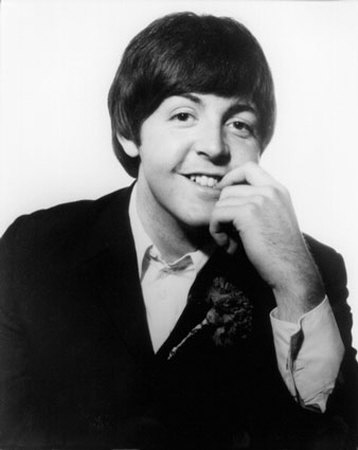
There is something about Paul McCartney and John Lennon that makes them music magnets. Could it be that they were members of the greatest band to ever release an album, take the stage, talk, walk, sing and eat? Maybe. Or, could it be that Paul’s infectious personality intertwines with his limitless musical talents and John’s magical aura that surrounds his memory still provides listeners with a sense of attachment? Whatever this fascination may be caused by is pretty much unimportant. What is essential is that McCartney and Lennon still remain a tremendous force in the music world today, and this is most definitely reflected in today’s Court Links.
Paul McCartney often finds his way on Music Court’s links posts. The 68-year-old superstar (who celebrated his birthday on June 18) is not just a shoe-in because of the lore that surrounds his name. McCartney finds his way onto these posts because he is constantly diversifying and honing his trade (even at 68) and these endeavors are most definitely news worthy.
Recently, McCartney was asked to write music for a ballet (nothing is known about the ballet or who commissioned McCartney to do it) and, in typical McCartney fashion, he agreed.
“I’m interested in doing things I haven’t done before. That offer came up and I love writing music, the two went together and I said, ‘Yeah,’ so I just accept things before I even know what I’m doing,” McCartney said. “I don’t really know that much about it yet. I’m just writing music for it, but it’s a switch!”
I think this is just wonderful. It is exciting to see McCartney, sharp as ever, still producing various types of music. He seemed to have accomplished everything a musician can dream to accomplish (and more). And, who knows, maybe Paul McCartney can become like the Beatles of ballet writing. Oh wait!
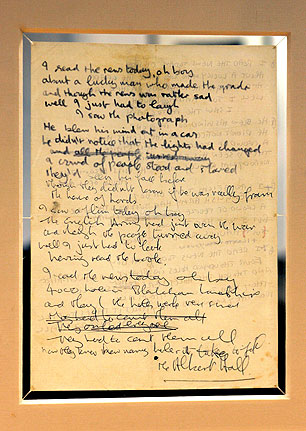
The Holy Grail of lyrical efforts (Photo: De Souza/AFP/Getty)
In other news, John Lennon handwritten lyrics to “A Day in the Life,” which is often regarded to as the best overall Beatles’ piece ever, sold on June 18 at Sotheby’s in New York. The price tag. A modest $1.2 million. Frighteningly, this does not beat the record for highest-priced Beatles’ sheet music. That crown belongs to the hand-written lyrics to “All You Need is Love,” which went for $1.25 million.
The sheet originally belonged to Beatles road manager, Mal Evans, and they represent the song as a work in progress. Yes, surprisingly John Lennon did make initial writing errors. His work was not innately inerrant. Shocker! I am not surprised the work went for that much. Wait, yes I am; that is $1.2 million. Oh my goodness. What a price. Well, I guess in some skewed way it is totally worth it. I think I will stick to listening to the song on my vinyl player
I want to take a second out of my morning to wish my father, and all of the fathers out there, a very happy father’s day. I wish I could spend more time on this post, but I have to get ready for work. But, this will not stop me from providing a song for this day.
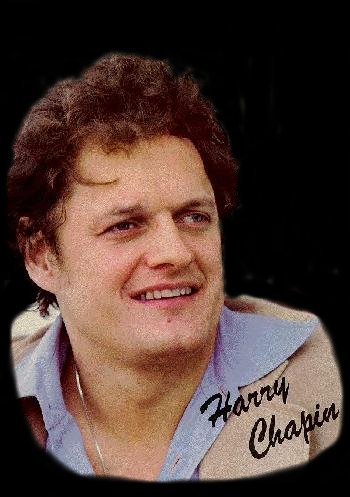
“Cats in the Cradle,” is too perfect of a song to pass up. It was released by Chapin on his 1974 album Verities and Balderdash. The song profiles growing up in a story told through each ageing verse. The lyrics to the song’s verses were originally written as a poem by Sandy Chapin, Harry’s wife, and she is co-credited in the song.
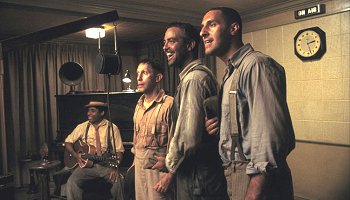
In 2000, “O Brother Where Art Thou” hit movie theaters and immediately became a big hit. Set in Mississippi during the Great Depression, the film profiles three escaped convicts on a fictional journey towards freedom, money and home. It’s a great movie that effectively uses witty satire and good acting to portray its play on Homer’s “Odyssey”. In a hilarious scene, the three convicts, after meeting a young guitarist named Tommy Johnson at a crossroads – Johnson claims that he sold his soul to the devil for guitar skills, which is a play on the Robert Johnson rumor (but that is a different story for a different day) – record the famous folk tune, “Man of Constant Sorrow” at a studio for easy cash. Their version, recorded under the group name, The Soggy Bottom Boys, becomes a huge hit.
While the movie is obviously fictitious, the cover was actually recorded in 2000 by Dan Tyminski, Harley Allen and Pat Enright, and, it gained similar notoriety. It received a Country Music Award for “Single of the Year” and a Grammy for “Best Country Collaboration with Vocals.” The song, that had basically been forgotten about, minus an impromptu recording of it by Jackson Browne in 2000, and another by Jerry Garcia in 1993, was revitalized and placed back on the market for consumption. Since then, the song has been recorded numerous more times and has remained popular enough that if someone was to play it, most people could recognize it as that song from that movie. Or, at least I hope so. What many people often forget about “Man of Constant Sorrow” is that, like with most traditional folk music, there is a rich history behind the song. In this case, the history presents a humorous case of folk telephone.
We all know the game telephone, where one person thinks of a sentence and whispers it to the next person who whispers it to the next person and so on. When the original sentence reaches the last person, the sentence has often changed into an unrecognizable mess. This is the case with how most verbal stories and songs are passed on. Eventually, the large crane turns into a fire-breathing dragon. And, the transformation of story elements reflects similarly on the natural change of song lyrics. “Man of Constant Sorrow” is no different. Let’s look at the lyrics of “Man of Constant Sorrow” by the Soggy Bottom Boys, and, we will then travel back in time and see the progression of the song to the modern day.
Listen:
I am a man of constant sorrow,
I’ve seen trouble all my day.
I bid farewell to old Kentucky,
The place where I was born and raised.
(The place where he was born and raised )
For six long years I’ve been in trouble,
No pleasures here on earth I found.
For in this world I’m bound to ramble,
I have no friends to help me now.
(He has no friends to help him now.)
It’s fare thee well my old lover.
I never expect to see you again.
For I’m bound to ride that northern railroad,
Perhaps I’ll die upon this train.
(Perhaps he’ll die upon this train.)
You can bury me in some deep valley,
For many years where I may lay.
Then you may learn to love another,
While I am sleeping in my grave.
(While he is sleeping in his grave.)
Maybe your friends think I’m just a stranger
My face, you’ll never see no more.
But there is one promise that is given
I’ll meet you on God’s golden shore.
(He’ll meet you on God’s golden shore.)
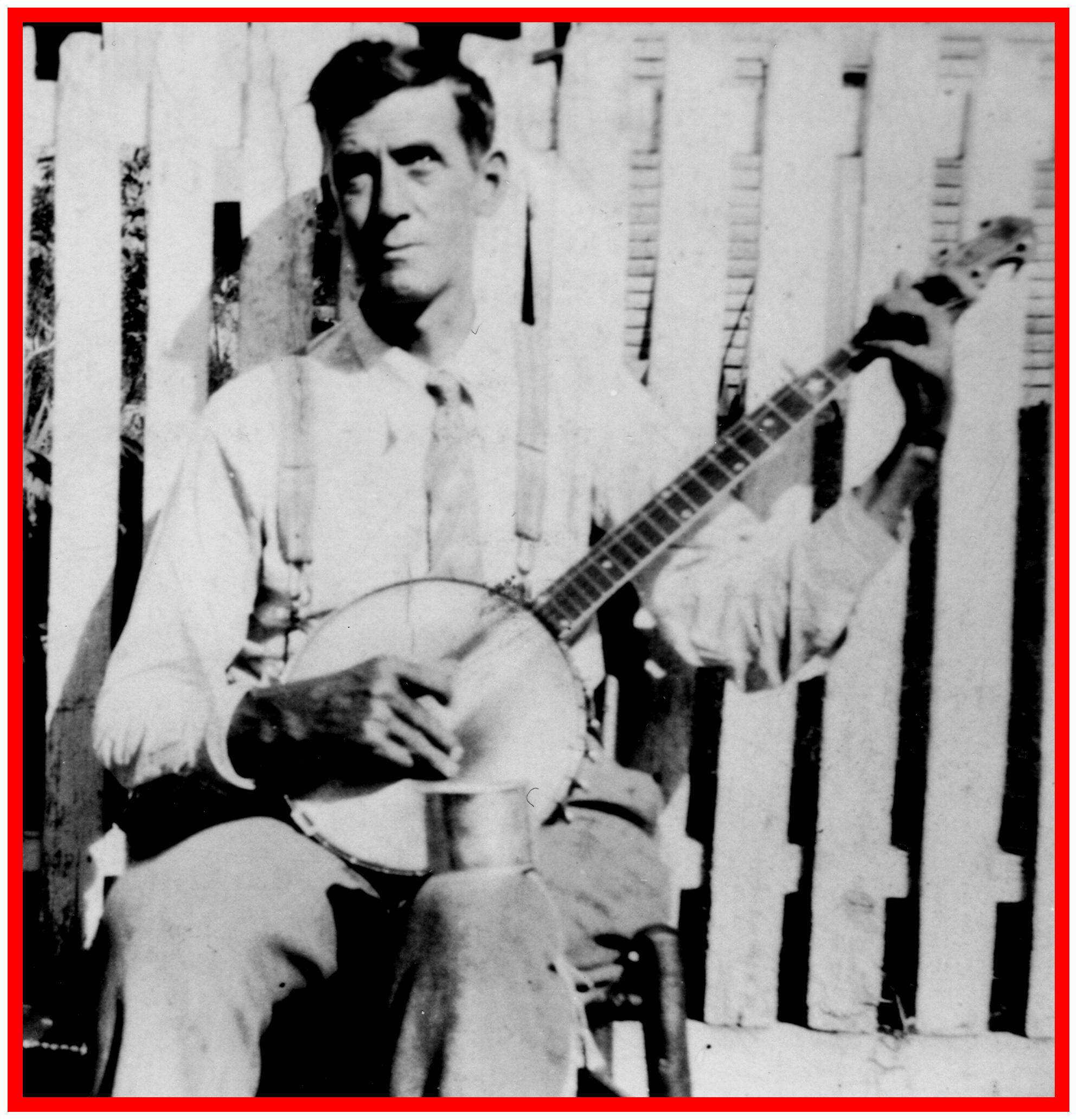
The Man of Constant Sorrow
This is Dick Burnett. He is the man of constant sorrow. Around 87 years before the real-life Soggy Bottom Boys went into a recording studio and recorded “Man of Constant Sorrow,” Burnett wrote the song on paper and entitled it “Farewell Song.” Burnett, born in 1883, was a Kentucky-based fiddler who was blind in one eye. He lived into his 90’s and died in 1977. Before his death, he was asked in an interview whether or not he had written “Man of Constant Sorrow.” His answer, “No, I think I got the ballad from somebody — I dunno. It may be my song.” It is a common belief that, like most traditional folk songs, Burnett just adjusted the song to fit his own state and instead simply adapted an old hymn. But, unless anyone finds an earlier version scribbled on the back of some famous document (it’s Nicolas Cage time), we will never know for sure. Burnett’s version of the song reads like this:
I am a man of constant sorrow,
I’ve seen trouble all of my days;
I’ll bid farewell to old Kentucky,
The place where I was born and raised.
Oh, six long year [sic] I’ve been blind, friends.
My pleasures here on earth are done,
In this world I have to ramble,
For I have no parents to help me now.
So fare you well my own true lover,
I fear I never see you again,
For I’m bound to ride the Northern railroad,
Perhaps I’ll die upon the train.
Oh, you may bury me in some deep valley,
For many year [sic] there I may lay.
Oh, when you’re dreaming while you’re slumbering
While I am sleeping in the clay.
Oh, fare you well to my native country,
The place where I have loved so well,
For I have all kinds of trouble,
In this vain world no tongue can tell.
Dear friends, although I may be a stranger,
My face you may never see no more;
But there’s a promise that is given,
Where we can meet on that beautiful shore.
The lyrics show both some minimal and large changes. An entire verse of Burnett’s original has been removed, the last line is different and parents have turned into friends. But, it is also remarkable how much was kept from the original. This was aided by other recordings of the song before the 2000 version.
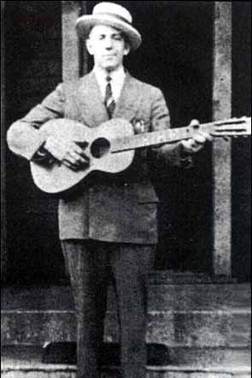
Another Man of Sorrow
In 1928, Emry Arthur, recorded a version that stayed pretty consistent with Burnett’s lyric. Arthur’s guitar and vocal inflections changed the melody of the song slightly. In my opinion, this 1928 recording is perhaps the best ever of “Man of Constant Sorrow.” I just love Arthur’s translation of the piece.
Listen:
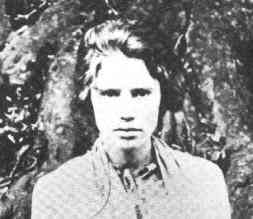
A Girl of Constant Sorrow (Man, old pictures are freaky)
1928 passed, and eventually the rocking year of 1936 fell upon the United States. Okay, the Great Depression still hovered over the country. “O Brother Where Art Thou” is set in 1937 to give you some perspective. Sarah Gunning, a NYC woman, re-wrote the classic and replaced man with “girl.” The song reflected her expected grief over her ill husband’s fast-coming death. Gunning stated that she remembered the song from an old 78 rpm hillbilly record she had heard previously in the mountains. Her version maintains the first verses concept and even Burnett’s reference to parents (mother in Gunning’s case) in the second verse. But, the song changes tremendously after that. We have a group of two brothers to thank for bringing a close-to-original version back to popularity.
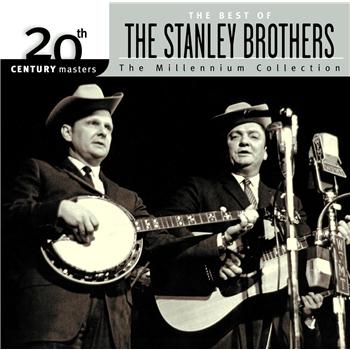
The...wait for it...men of constant sorrow
Dr. Ralph Stanley, the famous bluegrass artist and Stanley Brother’s member, said of, “Man of Constant Sorrow”:
“Man of Constant Sorrow” is probably two or three hundred years old. But the first time I heard it when I was y’know, like a small boy, my daddy- my father- he had some of the words to it, and I heard him sing it, and we- my brother and me- we put a few more words to it, and brought it back in existence. I guess if it hadn’t been for that it’d have been gone forever. I’m proud to be the one that brought that song back, because I think it’s wonderful.”
Ralph, and his brother Carter Stanley, did bring the song back. Besides Gunning’s version 15 years before, the song had strayed away from its original lyric for 23 years, before the Stanley Brothers did a rendition of the classic in 1951. Their version saw success when it was recorded on Columbia Records, and it sparked a whole world of new recordings that lasted into the 70’s before the song took a sabbatical. Their version is perhaps the neatest combination of Burnett’s original and the Grammy winning 2000 hit. It retains the verse that the 2000 version cut out, but, it also uses the ending “God’s golden shore” as opposed to Burnett’s, “that beautiful shore.” Like Stanley said, “we put a few more words to it.” This is the beauty of the folk hymn. It is a big ol’ game of musical telephone. “Man of Constant Sorrow” keeps changing, but, it has luckily maintained some of its roots that may date even further back than the early 20th century.





 The Music Court