Archive | June, 2010

Lady Gaga and Joplin:High School Days

18 Jun

This week Lady Gaga caused quite the stir, showing up at a graduation at her former  high school  in a characteristically eccentric get up. Complete in beekeeper hat and see-through lace pants, many cried foul that Gaga was trying to once again upstage the rest of attendees.

But Gaga would be the first to refute accusations of cheap attention ploys. Formerly  Stefani Germanotta, Gaga maintains that fashion is an expression of identity, and a full embrace of her true inner freak. The odd style of dress is a protest of conformity, as well as the standards and conventions regularly impressed upon free thinking in school days.

Lady Gaga in Highschool

When coming across these eye-popping images of Gaga, I couldn’t help but draw comparison to Janis Joplin, who pulled a similar stunt some 40 years ago.

Though she did not attend a ritzy private school for Manhattan elite, like Gaga, Joplin’s adolescence was very much defined by an outsider status. Her feeling of pain, rejection, alienation and damning heartbreak would come to define her music. Joplin reflected on her high school days as some of the darkest in her life, exclaiming that she had been “laughed out of class, out of school, out of town, out of the state”.

And indeed, Joplin would leave her small Texas town and seek liberation in the colorful Haight-Ashbury of San Francisco. In 1963, at the age of 20, the Joplin’s lost soul would encounter vibrant waves of Hippism and Blues. Unfettered in an atmosphere of freedom and love, Joplin would channel her sensitivity and torment into song.

Joplin in High School

Eventually gaining both critical and commercial success in the incredibly competitive record industry, Joplin re-visited the Texan town of Port Author for her ten year high school reunion. Like Gaga, Joplin was a spectacle, dressed in flamboyant garb and followed by cameras. Yet despite her popular following, Joplin was received coldly by her former classmates. Her own family rejected her, refusing to even acknowledge the advent of her visit. Rather than an opportunity to boast at former bullies, Joplin’s visit to her former high school was yet another display of her outsider status. Joplin’s chronic history of emotional pain and isolation eventually lead to her demise, as she would die, alone, through drug overdose.

There is no mistake that Gaga and Joplin are two very different characters in music. Gaga may have felt freakish in her adolescent years, but it is safe to say that it was Joplin who suffered severe internal devastation, coming from family and peers alike.

Nevertheless, at their former high schools both Gaga and Joplin took the opportunity to live out a popular fantasy. Being able to gloat at former naysayers is a victorious moment that one may often hope to experience, with some of us even eagerly practicing potential scenarios in daily life.

While some of us may never get to enjoy this kind of glory, or feel it as we would have imagined, it is no question that adversity powers great music.  The woe of the freak will continue to fuel our most cherished art, regardless of what popular views may govern.
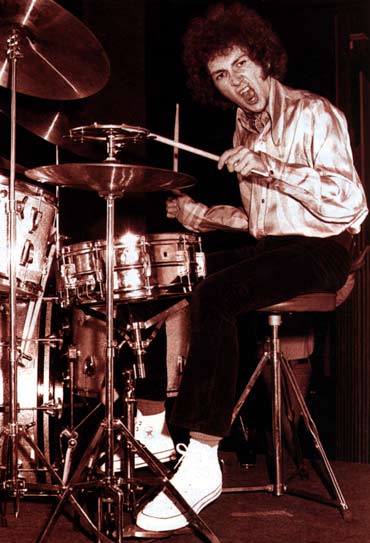
Mitch Mitchell – Better than 23?

17 Jun

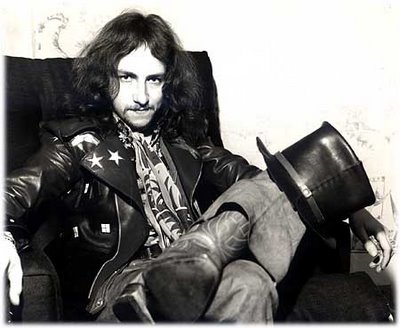
Rock n’ Roll top 100 lists are obviously arbitrary. If you do a quick search on Google you can find links to the top 100 guitarists, vocalists, bassists, roadies (okay, maybe not roadies) of all time. And, in a crunched list of only 100, there are sure to be a list of snubs that will make people angry. But, take these top 100 lists for what they are. An effort to appease the masses searching for a top 100 list so they can see where their favorite lands and then…well…probably complain. Now, it can be misconstrued that this is what I will be doing in this post, but please do not misinterpret. I am simply asking the question, does Mitch Mitchell deserve a better spot than 23 on the list of top drummers of all time?

Mitch Mitchell is an often forgotten about drummer. He may not have  had the flare of a Keith Moon (The Who) or the skill of Neil Peart (Rush) or John Bonham (Led Zeppelin), but, when you enter the realm of fusion drumming, Mitchell must be placed up there with the best of them. We will get into the fusion style in a little bit. Mitchell is best known for his library of work with Jimi Hendrix and his Experience (Noel Redding and Mitchell). Mitchell actually won the drummer position on a coin flip, beating out Aynsley Dunbar (who according to Experience manager Chas Chandler, was their other choice). Dunbar’s career did not take much of a hit from the decision. He flourished into an accomplished drummer and has played with a tremendous list of diverse rock acts. In case you were wondering, he is 27th on the rock n’ roll drummers top 100 list.

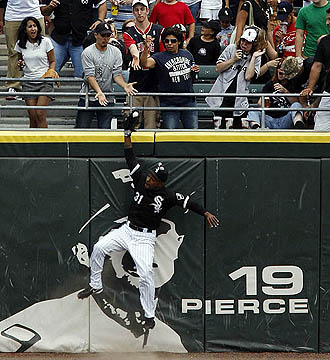
Mitchell=23 and Dunbar=27; I bet you are wondering who is smacked in the middle of these skilled drummers. Well, none other than Michael Shrieve, who, at 20 years old, took the stage with Santana on day two of the Woodstock music festival (Mitch Mitchell would come on to close out the festival with Jimi less than two days later) and blasted through a drum solo during an extended version of “Soul Sacrifice,” which, may just be one of the greatest solos of all time. For those that think differently, one must look at the circumstances. Similar to DeWayne Wise’s catch to save Mark Buehrle’s perfect game in the ninth, Shrieve’s drum solo was incredibly clutch. He was an inexperienced drummer who, because of the performance, may have very well propelled a lesser known Santana into the spotlight.

Like Shrieve's solo...Awesome!

I got sidetracked. Let’s move on. With the Experience, Mitchell released several albums and recorded numerous impressive drum tracks that provided the classic Hendrix blues/psychedelic sound a large boost. Mitchell, in 1969, played with the one-off collaboration of The Dirty Mac, who I talked about yesterday. He also performed with the short-lived Jack Bruce and Friends band which featured Mitchell, Bruce, keyboardist Mike Mandel and frontman Larry Coryell.

Demonstrating his devotion to Hendrix’s work, Mitchell helped with the posthumous releases of both The Cry of Love and Rainbow Bridge. He then went on to form an unsuccesful, but ambitious act named Ramatam, with guitarists Mike Pinera (Iron Butterfly) and April Lawton (who some consider to be the female Jimi Hendrix). Ramatam actually opened for Emerson, Lake & Palmer. When ELP was forming Mitchell and Hendrix were offered spots in the supergroup that Keith Emerson and Greg Lake were creating, but this never came to fruition. Wow, if Hendrix stayed alive and Mitchell and Hendrix ended up combining with Emerson and Lake, oh my goodness what a band. But, Carl Palmer – who is one of the greatest drummers of all time (ranked 4th on the ultimate list) – ended up receiving the spot.

Mitchell continued performing through the years, and passed away after the 2008 Experience Hendrix Tour. He died on November 12, 2008. Yet, Mitchell’s incredible sound lives on through his sensational performances with the Experience.

Mitchell blended jazz and rock drumming styles (fusion) and successfully developed an interesting interplay with Hendrix’s lead guitar, thereby creating “lead drums,” a rare concept in an emerging rock scene. Lead drums, of course, was not a new concept in the world of jazz. Mitchell, a jazz drummer at heart,  was inspired by the work of Elvin Jones, Joe Morello and Max Roach, all famous jazz percussionists. Mitchells drumming, consistent with the jazz style of making a melody with the drums, made heavy use of jazz patterns, fast rolls and snare rudiments. Now, all of these drumming terms may confuse anyone who does not play or know the drums well (I am raising my hand at this as well). So, the best way to learn is through hearing and seeing. For that, I am going to take you out to Woodstock in 1969. Listen here for the rudiment-heavy fills in “Hey Joe” and think, does Mitch Mitchell deserve a higher spot on the top 100 drummers list?

The Silver Machine likes Chocolate

16 Jun

Billy Gillespie, frontman for the band Primal Scream, has announced a one-night-only supergroup called Silver Machine that will take the stage at London’s 1234 festival in Shoreditch on July 24. The band consists of Gillespie, Zac Starkey, who plays drums for The Who and, if you do not know, is also the son of one Ringo Starr, Sex Pistols’ bassist Glen Matlock and Primal Scream guitarists Andrew Innes and Barrie Cadogan.

Article: http://www.spinner.com/2010/06/16/primal-scream-supergroup-covers-band/

When Silver Machine takes the stage they will immediately be in the pool of one-off collaborations competing with The Dirty Mac for best one-time rock combination. The Dirty Mac consisted of Starr’s bandmate John Lennon, guitarist Eric Clapton, Rolling Stone’s guitarist Keith Richards, and Jimi Hendrix Experience’ drummer Mitch Mitchell. They played at the The Rolling Stones’ TV special entitled “The Rolling Stones Rock and Roll Circus,” which was recorded on December 11, 1968. This is a great opportunity to show you all one of the coolest rock videos ever.

Anyway, Silver Machine is planning on playing covers of some of their favorite songs from their favorite artists. This includes bands like The Troggs, MC5, The Creation and an often looked over band, The Chocolate Watchband.

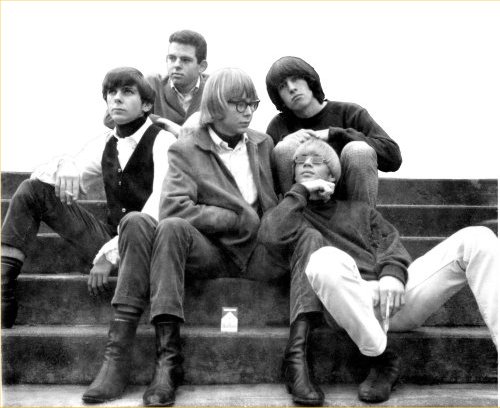
The Chocolate Watchband were a garage rock and psychedelic band formed in San Jose, California in 1965. The music was a mix of the blues/psychedelic sound that was swirling around San Francisco, California at the time. In 1967 the band, already having experienced a line-up change, released their first LP entitled, No Way Out. This album is not talked about much, but is a true gem of the late 60’s burgeoning psychedelic experimentation. “Dark Side of the Mushroom,” – 6 years before the moon – is a fantastic piece of instrumental psychedelia.

A Whiter Shade of Aqualung: Classical Style

13 Jun
Jones Beach Theater

Last Friday, my dad, brother and I went to go see Jethro Tull and Procol Harum in a double-bill show at the Jones Beach Theater in Wantagh, NY.  Our annual trip to Jones Beach Theater has become a constant in our summer plans. Sometimes, we even make the pilgrimage twice. Without fail, Jones Beach Theater always holds interesting concerts and this provides us with the opportunity to enjoy great music and discuss rock n’ roll (something I am obviously passionate about doing).

Jethro Tull performing

The opening set by Procol Harum was a fantastic mood setter and it was great to hear Gary Brooker and his sensational croon effortlessly pound out Harum’s hits. Jethro Tull, led by the ultimate eccentric showman Ian Anderson, put on an energetic show of great eclat. Both Harum and Tull combined to form a powerful duo of skilled musicianship and heavy classical music undertones. That’s right, classical music. Actually, if you read on you will find out how both Tull and Harum’s most famous songs were influenced by classical music. By the way, classical music is not the only thing that Tull and Harum have in common.

Oh, yes, it’s time for another installment of music knowledge off the back wall. Harum’s current bassist is Matt Pegg. Pegg’s father, Dave, was invited to play with Tull in 1979 when former bassist, John Glascock, was ailing (he would die not long after, at the age of 28, as a result of a congenital heart defect). Dave Pegg played with Ian Anderson (back when Anderson’s hair was wild and…long) and long-time guitarist Martin Barre, when his son, Matt, was a wee lad. Dave Pegg is also the longest serving member of the electic-folk band, Fairport Convention, which set the stage for the true electic-folk genre with their 1969 release Liege and Lief…and now I am prattling. Let’s close the door leading to the back wall and move on.

As I was saying, classical music is a large part of both Jethro Tull and Procol Harum’s greatest hits. To prove this to you, I will profile both of the band’s most famous pieces in a warped installment of song of the day. So, let’s hop to it.

Procol Harum’s biggest hit is “A Whiter Shade of Pale.” This goes without contention. I can only imagine the many who just went to themselves, “Oh, that’s who Procul Harum is.” “A Whiter Shade of Pale,” recently came under the attention of

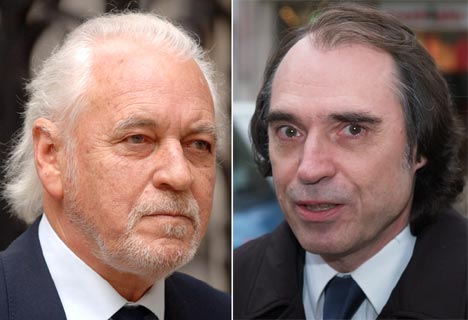
Brooker (left), Fisher (right)

the High Court in England. In 2005, former Harum organist Matthew Fisher filed a lawsuit against singer and pianist, Gary Brooker, claiming that he co-wrote the song with Brooker and lyricist Keith Reid. After much deliberation, and multiple appeals, the case finally was closed last summer after a unanimous ruling from the Law Lords of the House of Lords awarded Fisher co-writing credits for the song.

Now that we have thrown around the term “lord” we can get into some classical discussion. “A Whiter Shade of Pale,” written by Brooker, Reid, and Fisher, was released on May 12, 1967. The song was an immediate hit that has had major staying power. According to a chart compiled for BBC Radio 2 by the licensing firm PPL, the song is the most played song in UK public places in the past 75 years. The song is also 57th on Rolling Stone Magazine’s 500 Greatest Songs of All Time list. And, whenever anybody thinks of the song, their mind most likely goes to the song’s anagogic organ riff that is both celestial and greatly catchy. The Hammond organ riff was inspired by Johann Sebestian Bach’s, “Sleeper’s Wake!” and “Air on a G String.” A classical reference, indeed.

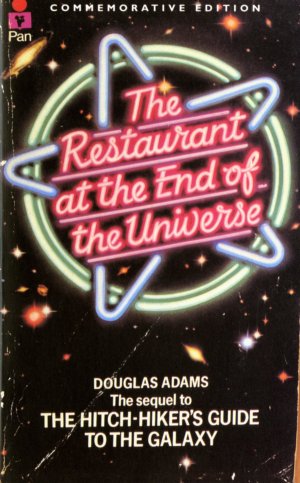
By the way, did you know that novelist Douglas Adams’s second novel in the “Hitch-hiker’s Guide to the Galaxy” book series, “Restaurant at the End of the Universe” was inspired by the explosion of sound as Mick Grabham’s guitar comes in before the final verse of the song, “Grand Hotel.”

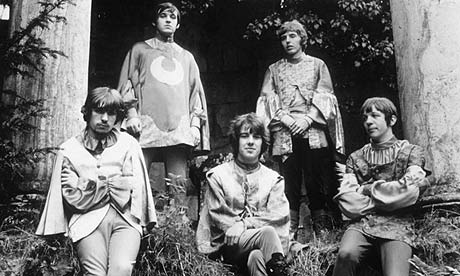
Procol Harum was here

Jethro Tull’s, “Aqualung,” the title track of their first U.S. Top 10 Album, Aqualung (released March 19, 1971), features some of the most famous opening notes in rock history. The riff (phonetically translated as ba ba ba ba ba ba *drum beat*) certainly evinces Ian Anderson’s knowledge and admiration of Ludwig Van Beethoven and his fifth symphony.

Classical music is alive and well folks, and it can be heard in relatively modern music. It are those artists who notice and take advantage of classical music’s appearance in rock music by studying and implementing it into their own music succesfully, that often find a wide world of positive recognition and praise among fellow musicians, and hopefully fans with a keen ear to great music.

“Whiter Shade of Pale”:

“Aqualung”:

And, for good measure:

Sleepers, Wake!”:

and…the incomparable

Beethoven’s Fifth:

World Cup of Glasba (music in Slovenian) Click the Link for your Country!

11 Jun

Let’s just throw out the months of June and the first part of July and instead call it World Cup. The event, which occurs every four years, provides an opportunity for participating nations to unite in support of their soccer team. It’s an exciting tournament and for sports fans in the United States, it is an excuse to watch the true world’s sport, soccer.

Baseball may be America’s past time, but soccer is a universal sport. I, though, am part of the large group of Americans who enjoy the World Cup every four years and then forget about soccer until the Cup rolls around again. Why? Well, I did not grow up a soccer fan. Neither did the majority of Americans. But, the World Cup is different. It is a pride tournament, focusing on Olympic-like sport battles. But, it is only one sport. It is a true battle of specified skill, allowing for an almost war-like concentration on the soccer field. It is a pleasure to watch these athletes defend their countries’ name. And, if our United States team can put on a show, we may see a rise in soccer popularity even after the World Cup is finished.

But, for now, let’s enjoy the buzzing sound of the vuvuzela which provides an annoying, but kind of cool, background to the broadcast. Let’s enjoy the excited fans, the delicacy and patience of soccer, and the passion of the sport. After four years of waiting, the players are giving their complete all. This is what they have trained for. Oh, and let’s also enjoy the South African anthropomorphised World Cup mascot, Zakumi.

While surfing the web for World Cup online material, I came across something I just had to share with you guys. It is called the World Cup Song 2010. The competition is free and for anyone who has an original song about the World Cup 2010 in general, or their specific country. Right now, out of the 367 entries, the USA is represented twice in the top 100 at 67 and 73. England is represented as four of the top five songs. What is going on guys? How will we win on the soccer field if we can’t win in the world of music. I must call for a campaign. I will include the links of the two American contributions below. Click and watch.

“The Surface” – 2010 World Cup Song – Team USA

http://www.youtube.com/watch?v=Gmzw2-va-dM&feature=player_embedded#!

US SOCCER SONG ANTHEM VIDEO by Frank Morrison (World Cup 2010)

http://www.youtube.com/watch?v=0LmodV7HlSs&feature=player_embedded