
Archive by Author

American Idol Switch (For Better or Worse?). Who Will Judge Next?

16 Jul

If American Idol was a version of its reality show counterpart, Survivor, Ryan Seacrest may have just won the competition. The Fox singing competition has certainly transformed since it premiered in 2002. Long-term judges Simon Cowell and Paula Abdul left the show two years ago to pursue other endeavors (The X Factor), and the Idol producers quickly scooped up Aerosmith leadman Steven Tyler and pop superstar Jennifer Lopez. After two seasons of the new judge configuration, Lopez and Tyler are out, and even steadfast Randy Jackson, who I think has become a bit of a tired act, may leave the judges table. In that case, the producers are going to have their hands full refilling a table of musical talking heads to sit behind the prominent Pepsi cups.

Randy Jackson’s departure is not official, but it could certainly happen. I believe that is time to cut ways with Jackson’s dog house and “in it to win it.” He attempted to take the role of Simon Cowell’s honest critic, but he provided inconsistent commentary and criticism.

Who would be the ideal crew to judge? It’s a difficult choice. The show’s viewership has steadily declined and gotten older. That suggests that American Idol may have a loyal base, but the show is not attracting the 13-year-old screaming girl subgroup. After a relatively unsuccessful first season, The X Factor shedded judges Paul Abdul and Nicole Scherzinger in favor of the younger Demi Lovato and superstar Britney Spears. The show went younger in order to attract younger viewers. That is a good strategy, but, like all things, there needs to be homeostasis. I think The X Factor will demonstrate a rise in viewership this year (especially if they choose a good host).

What does American Idol need? It needs a mixture. If I was given the responsibility of choosing a panel, I would start with an anchor that loyal Idol fans have been calling for since he premiered as an advisor, Jimmy Iovine. He was perhaps the only judge of talent that consistently made sense during last season. He would be the knowledgeable record producer who could help steer young musicians. His role of advisor would only transform slightly. Would he want to be judge? I don’t know, but if he expressed any interest in the position he would be my first choice.

I would then choose a young idol whom everyone would recognize (much like the X-Factor did with Britney Spears), and an older, more experienced musician who knows the industry well and has had a ton of success. The older judge would naturally attract an older population of music fans.

Mariah Carey has been a name floated out there and she would certainly fit the motherly older judge. Aretha Franklin reportedly sent an e-mail to CNN saying she wanted in on American Idol season 12. I would be overjoyed if American Idol let the Queen of Soul sit on the panel. She is not an idol. She is a legend. She also seems like she would give kind, but truthful advice to the contestants.

As for the younger judge, musicians like Katy Perry and Nicki Minaj have been propositioned. I’ve also heard Miley Cyrus. At this point, people could simply be shouting out reasonable names. Since money is no concern for the super-show, the judgeship could come down to whoever accepts the necessary time commitment. I think the show would be happiest with Katy Perry. She is at the peak of her popularity and is beloved by teenage girls. But would Perry even be interested? If she is, Idol producers better scoop her up. I think an outside musician would be better than bringing in Jennifer Hudson or Adam Lambert (two Idol alumni). Long time friend of the Idol stage, will.i.am would also be a good choice, but he currently is involved with the Voice UK. Lady Gaga…that would certainly turn the show into a spectacle. I don’t think she has been mentioned because I don’t think there would be a chance of hooking her.

Who do you want to see judge the show?
The Five Americans – Fifteen Cents a Word to Read

13 Jul

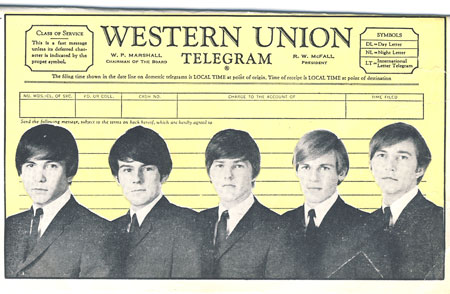
When The Five American’s released “Western Union” in the latter half of the 1960’s no one threw the record on the floor (to partially quote the song’s lyric). Much on the contrary, listeners scratched the infectious single on the record player. It received that many plays. The catchy tune about the delivery of some bad news by way of a Western Union telegram rocked the charts, reaching the sixth spot on Billboard (three in Cashbox) and selling in excess of one million records. It was the band’s biggest hit, and the product of some years of hard work.

The band formed in Durant, Oklahoma at Southeastern Oklahoma State University in 1962. The five musicians founded the Mutineers and played some bars and frat dances. Boy has frat music changed over the years! Honestly, as a member of a college fraternity for three out of my four years at school, I can confidently say that I would have enjoyed the Mutineers more than the majority of the junk that spewed out from the thumping speaker system with the jacked subwoofer. Anywho, after a move to Texas to try to make tuition money, the band became quite popular in a Dallas bar called The Pirate’s Nook, and they were discovered there by John Abdnor, the president of a local record label called Abnak Records. It was Abnak that gave the band the initial opportunity to work on their craft. At this time, they also changed their name to something a little more American (in response to the burgeoning British invasion). There was absolutely no question that The Five Americans were, well, American. So, who were the Five Americans? Well, here is a convenient list taken from the band’s current website:

Jimmy Wright – drummer extraordinaire (1947-2012)
John Durrill – organ, vocals, and co-writer
Mike Rabon – vocals, lead guitar and co-writer of all the groups songs
Norman Ezell – rhythm guitar, vocals, and co-writer (1941 – 2010)
Jim Grant – bass guitarist (1943 – 2003)

As you can see, unfortunately three members of the band have passed away recently. The band split in 1969, and the members went on to other professions (teacher, minister, photographer). Jim Grant actually became a logo designer and one of his designs is the Chili’s restaurant logo. Who knew? Well, now you do! John Durrill was hired as the organ player for The Ventures and he became a songwriter. Mike Rabon initially continued with music and had a succesful touring band, Michael Rabon And Choctaw, in the 70s.

The Five Americans did release other material before “Western Union”. In fact, their 1965 song, “I See The Light” hit 26th spot on the Billboard charts. However, the band will be most known for their ode to Western Union, a song that is still played today (5,000 times per month in the US and Canada, according to the band’s website), and I know it is played almost daily on the Sirius 60s on Six radio station. It’s not like anyone will complain. It is an excellent song.

It is just so damn catchy. The small guitar hook and sticky harmonies. The brief falsetto followed by the repetition of “dit, dit, dit,” just flies around your head. You must give the Five Americans some credit for creating a pop smash with such staying power. I think its important, though, to also look into the piece. When you get deeper into the song you can hear some neat keyboard riffs and a very capable rhythm section holding the song together. It’s a great song and will always be associated with big hits of the 1960s.

Mike Rabon released a memoir entitled “High Strung” which is available on the band’s website. With purchase of the book, you can receive a copy of the CD.

I’m Not Joking – Kongos To Storm U.S. Charts with Release

11 Jul

Kongos – In classic shoeless Beatles fashion

Let this be a propitious post, because I am about to make a claim. It is difficult to predict what will stick with listeners and what will not. Today, though, I present to you a band that with their new release Lunatic on July 24 will break the uncertainty of success like it is weak glass. Listen up, because Kongos may be finding a cozy spot on the Fall charts.

While Kongos is based in Arizona, the band, which is made up of four brothers, grew up in London and South Africa. If you recognize the last name, you are not going crazy. The father of the four musicians is South African rocker John Kongos whose 1971 hit single “He’s Gonna Step on You Again” had the whole world moving to the drum beat.

There it is. Kongos’ boys (Johnny, Jesse, Dylan and Danny) grew up in music because of their father and are now proving that the apple truly doesn’t fall far from the tree. The brothers have established their own rock act that blends African beats, Eastern European influences, and pure unbridled driving rock. The eye-opening combination is so refreshingly different it is difficult not to get excited about the band of brothers. For a lover of music, it is so intriguing to come across an act that is creating music dissimilar to anything currently being released…and, most importantly, is doing it exceptionally well.

While the band is currently based in the dry heat of Arizona, they have been mainly heralded in their former hot home of South Africa, where their debut release in 2007 found a single in the top 10 of the Tuks FM Top 30, a South African rock chart. That is not to say that the band lacked success in Arizona. It was named the Best Rock Band of Phoenix by the Phoenix New Times a few years back. After partnering with their father to form Tokoloshe Records in 2010, the band started releasing singles that appear on Lunatic. Their first single “I’m Only Joking” hit number one on all three Tuks charts, and several songs from the rest of the album started receiving tremendous airplay in South Africa. It received such play that when the band toured South Africa they encountered sold out venues wherever they went. Like I said above, July 24 is the US/World release.

BUT…The Music Court has some previews from the new album. Be ahead of the swarm with this sneak peek, and, in true hipster fashion, know about Kongos before all those tuneless regular Joes. 🙂

“I’m Only Joking” is the first major single from the new album, and it will surely be the first to stick to the charts like honey. Take a listen while we go through all the positives of this hard-hitting, lustful, manly, burly, genre-splicing, rocker. Enough adjectives for you? The rising drum beat in the introduction gives off an immediate Muse feel (think “Uprising”), but instead of moving into the realm of Muse’s symphonic/alternative rock, Kongos enters into sinister darkness. While Muse plays to the arena, Kongos plays to the underground. The verse is carried by a story-telling voice placed on top of an accordion. It is almost burlesque in a sense, so odd and different that the listener is left in a theater of red and black wondering what they are about to travel into. The chorus takes the verse up a level, while the constant beat remains. It is certainly infectious and will stay in your head. At the end of the chorus (around 1:00), the instruments drop and the vocals echo and then follow a baleful, even pernicious, note progression that can best be described as unreal. I have become quite obsessed with the drum beat and the almost disjointed instrumentation at around 2:10. By the way, they are chanting “Wadu-aidu-wadaidu,” in a cult-like fashion, and I have no clue what it means (I thought originally it was why do I do what I do). The full chorus at the end boils the song over. It is an impressive piece and will hit the charts like a bat out of hell.  

Kongos

Next up for you I have a song entitled “Come With Me Now,” which does an excellent job accentuating the accordion more (it sets the beat). Take a listen.

The beat itself certainly hints at African influences. The song then shifts into a head-bopping rock hit with a catchy repetition of the first line, yelled melodiously by the chorus of brothers. I think one of the great elements of this song is the clear connection that the band has. You can almost tell they are brothers. All instruments (including voices) are coordinated in an almost innate sense. Not to mention, this song features a portion at 1:30 that completely transforms the piece. It is Keane-like, very British piano rock. The song then falls back into the rhythm and even adds a Western-like guitar riff before the Balkan accordion comes back. The amount of influences this band pours into their songs is remarkable.

The last track I want to expose to you is slower and more intimate. “This Time I Won’t Forget” is a mid-album slow-down piece that displays the curiosity and orchestral diversity of the band. The rhythm is worldly in its spaciousness. The song is open in a Fleet Foxes sort of way, but it is a bit louder and more diverse.

Do you ever have that initial moment with an album where you realize you like all of the songs? Well, Kongos has given that to me. Like what you hear? Check out the bands website and connect with them on Facebook and Twitter.

50 Years Ago The Girl from Ipanema Went Walking

10 Jul

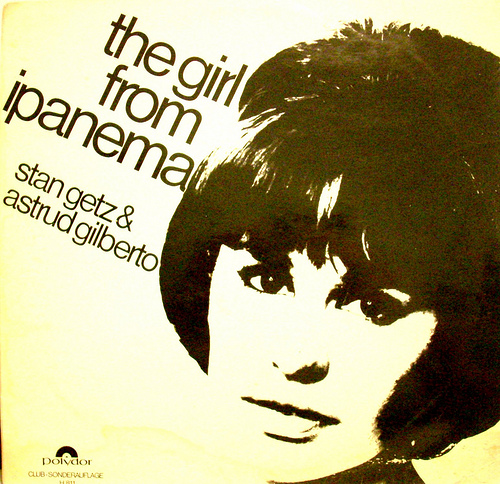
I read a great article earlier today from the Wall Street Journal profiling the odd journey of the mega Brazilian bossa nova hit “Garota de Ipanema.” Read it here. The song celebrates its 50th anniversary this year, even though the tremendously popular English version (the one everyone knows) was actually released in 1964. It has taken an almost mythical path garnering a boat-load of covers and an eternal spot atop the list of elevator music. The story of the “Girl from Ipanema” is almost as classic as the song itself.

There is a girl from Ipanema. Well, there are several girls from Ipanema, a Brazilian neighborhood south of Rio de Janeiro. But there was a chica who inspired the writers of this ode to the pretty girl unaware of the frenzy her appearance causes. Her name is Helô Pinheiro and at the time of the song’s creation she was a 17-year-old girl living on Montenegro Street. In the winter of 1962, composer Antônio Carlos Jobim and poet Vinícius de Moraes watched the tall, beautiful girl pass by the bar and were struck. As the article suggests, the two were stuck on a number for a musical they were writing. Helô acted as their muse.

The story doesn’t end there. The song was recorded in 1962 by Pery Ribeiro and, after hearing it, U.S. music publisher Lou Levy requested an English version of the song. American lyricist Norman Gimbel (wrote the lyrics of “Killing me Softly” and wrote “Sway” which is based on “Quien Sera”) was tasked with completing the American version. The question of who would sing it arose pretty quickly. The answer? Well, the only one of the Brazilians who could speak English well. Astrud Gilberto, guitarist João Gilberto’s wife. A major reason why the song became popular, in my opinion, is because of the innocent, soft, and accented singing of Gilberto, who had never sung professionally prior to the song’s release. The nervous delivery and subtle mispronunciation of some words did not detract from the song, they benefitted it.

So let’s all celebrate one of the most known bossa nova hits ever.

While We’re Up Can We Get Some Power Pop?

9 Jul

Power pop with a hint of punk and an intelligent dose of good humor and tangible fun. That is a very brief description of the real-world pop/punk act While We Are Up. You see, these young musicians just graduated from Arizona State University (where the band was formed). I, therefore, cannot call them a college act any longer. But semantics aside, Zach Booher and Steven Rouk create an eager blend of music that is fun to listen to.

According to the band’s bio, they actually met Sophomore year of school when Rouk locked himself out of his dorm room the first night of resident assistant training. They became quick friends and melded their similar musical influences together. The band blossomed from there.

The band released their first album, Transcontinental, in Spring of 2011, and the 14-track debut features a good variety of music. It is not just pop, but, in a similar manner to The Format features some fast-paced loud tracks and slower, more intimate pieces. The band has been featured on Van’s Warped Tour.

“Hold” is a rather simple track, but it’s simplicity is fresh. Acoustic and vocals carry a Plain White T’s rhythm and I specifically enjoy the pairing of guitars later in the piece. I must also credit Booher and Rouk for the strong harmonies they create as the song builds towards the end. They are also able to carry the vocals through the climax of the piece and it certainly sounds fresh, well mixed, and passionate. The end of the song features an intelligent mix of male and female vocals.

“Someday” is a pure definition of an “up” song. What I mean by “up” is it’s impossible to be in a bad mood after listening to the song and watching the comic-book dance-parade video that plays like a Saturday morning Disney live-action show but in such a genuine and hilarious way that it is almost impossible to not crack a smile at the dance-infused ray guns, buffed up bicycle cop, the random streaker, and the arms-toting duo attempting to spread excitement to a college campus. In a sense, the guitar-swinging duo of Booher and Rouk, who display this ability in the video, are much like the protagonists in the video. Through their music, they have spread enjoyment. The song itself is a hard-hitting pop piece filled to the brim with electric power riffs and an infectious chorus. It is less punk, more pop, and I like that. Great performance by the drummer as well. I can only imagine how fun it was to shoot this video.

You can stream the rest of their album on Youtube. Check out the band’s Website and Facebook.