Happy Friday readers. I have a short, delicate post for you all this afternoon. A “poetic” post, if you will. Today, as I commuted to work, I noticed a radiant sunrise (and people ignoring it) and it goaded me to take out my blackberry and scribble down some words in a note. So, in a manner similar to SWOD (an old Music Court category where I took a vocabular word and matched it to a song), I will do the same with my brief poetic passage below. What the heck, right? Let’s change it up a bit (like the theme). Will this be consistent? I’m not sure? I enjoy creative writing, and while I do not often propagate this information, I feel that some well-intended verse cannot hurt. Let’s get to it, shall we.
“Why must we ignore the sunrise? Have we become immune to its ineffable splendor? Do we not wake up early on vacations to fit the early sunrise into our perturbed schedules and spurious relaxation? We “plan” to see a daily event that we could witness everyday. And we say “wow” as the sun performs its matutinal act over an eastern mountain or a spotless sea. We hug. We kiss. We claim to respect the pulchritude of our observable realm. “I understand.” But I, we, you do not.
The Fall sunrise, a sky dappled with orange smoke with red undertones. A halcyon melody, a wake-up song to the world. It bathes clouds in light as it methodically unwraps itself from warm bed sheets. It doesn’t smile, yawn, wave, but sits up and stares at specks of moving particles, neurons and synapses, shooting signals at incredible speeds. Yet, it is shunned, forced to rise while only getting passing glances from the same quotidian molecules, looking only at the train, distracted by pieces of bland technology, and the market presentation at noon. Take a moment before the fire is lit and the sun sits on its throne in the sky. For a brief moment it is waking up and it’s never a dull, pablum morning. We can learn from a sunrise, if we would only open our eyes.”
Come again? I know new theme changes are always a bit surprising and unexpected, especially when I do not warn anyone. But, yes, the darker, more gritty theme is gone, replaced by a theme called “elegant grunge,” a perfect description for this simple mixture of grey comfort and splotches of unwashed grunginess. The theme change is not as big of a deal as the logo and header change. Everyone thank resident psychedelic writer Okocim for his representation of the Music Court’s jester’s musical mind. The image, which is not encased by a limiting bubble, portrays ever-expanding musical thought. And it now demarcates the Music Court.
The new theme is smooth and granular, clean and dirty, and this contradiction works to instill a relaxing, but still on edge, feeling in readers. And, I like this. Music is a “glass case of emotion” as Ron Burgundy would say, and I want to demonstrate that with the content and the theme. It reminds me a little of Bob Seger, whose voice is granular, but also tender. Like this.
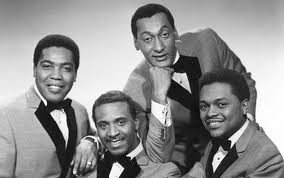
The Four Tops was a perfect example of a fantastic band. Not just a premier, Motown hit-machine, but a solid, long-lasting band; one that could only be separated by death. The Tops were together from 1953-1997. 1997 is when Lawrence Payton passed away. Today, only Duke Fakir remains. Sadly, both Obie and lead-singer Levi Stubbs have passed away in recent years. But, and I know this sounds awfully corny, the Four Tops created a legacy that transcends time and death.
When I think of Motown, I think of the Four Tops, The Temptations and The Supremes. These bands jump to the forefront of my mind because of their sheer level of success. In Berry Gordy‘s tightly run Motown machine, if you could snap your fingers and harmonize, you could almost be guarenteed a hit. He, and his illustrious group of songwriters and background musicians, pretty much created inevitable success for so many acts. The Four Tops had more success than most.
The reason for this can be boiled down to three reasons. Levi Stubbs’ vocal was distinctive, smooth, exciting, and a whole bunch of other adjectives. He certainly had one of the best lead vocals of all the Motown acts. Seriously, in my opinion, just as good as Diana Ross, David Ruffin, Smokey Robinson and Marvin Gaye. Perhaps, the two best voices to come out of Motown were a little young during the label’s glory days. That being Michael Jackson and Stevie Wonder. They would mature. Yeah, they had/have pretty amazing voices. Anyway, Levi Stubbs’ voice fit Motown R&B/Soul exceptionally well, and it worked even better with his bandmates. Number 2: the band was loose, fun, and performed with zany vigor. Number 3: The songs.
Today’s song of the day: “It’s the Same Old Song.” And it really is, trust me:
The dance moves are legit. Let me explain to you how this aptly title song got its apt title. You see, Berry Gordy, like I said above, ran a tight ship. After The Four Tops hit #1 with “I Can’t Help Myself” in June of 1965, Gordy wanted to reap the most out of the band as possible. So, he ordered a new song to be written for them in a day. That’s right, a day. Go! So Motown’s principal production team, the Holland brothers and Lamont Dozier, got to work. As Duke recalls:
“Lamont Dozier and I were both a little tipsy and he was changing the channels on the radio. He said, ‘It sounds like the same old song.’ And then he said, “Wait a minute.” So he took “I Can’t Help Myself” and reversed it using the same chord changes.”
Yeah, that’s it. And, keep in mind, “I Can’t Help Myself” is practically the same song as The Supremes’ “Where Did Our Love Go,” obviously one of the most inspirational Motown classics. The team worked around the clock creating the song, and by 3 p.m. the next day, the song was released and sent to radio stations, where it eventually hit #5 on the Hot 100 chart and #2 on the R&B chart. Yeah, it’s the same old song, but it is awesome.
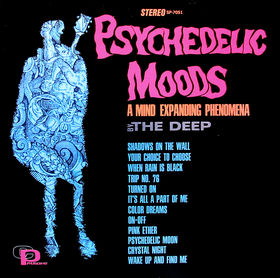
Are you in a psychedelic mood? Well, if not, let me get you in one. The Deep is a perfect example of an obscure classic rock band, one that has been often overlooked by fans of the protopunk and psychedelic genres of music. The band achieved virtually no success (unlike their Cameo-Parkway label mates Question Mark and the Mysterians who scored big with their 1966 hit “96 Tears”) and are rarely mentioned in today’s discussions about inspirational 60s bands. The Deep is categorically underrated and this is unfair. They only released one album (under the name The Deep) and it is quite possible that The Deep were more of a studio band; they did not tour to support their only release Psychedelic Moods. But that one album should have provided the band with a little more popularity.
The Deep was formed in Philadelphia during the mid-60s. Greenwich Village folk musician Rusty Evans (Marcus Uzilevsky) took on the role of lead guitarist and singer-songwriter. Past him, the identity of the rest of the band members is shrouded in a bit of mystery. We have names, but nothing is confirmed. Actually, folk musician David Bromberg is thought to have played on the debut release, but the tracks which he played on are unknown.
Psychedelic Moods does have one claim to fame. It was released in October of 1966. *Disclaimer* – this next comment is subject to an ongoing debate. The Blues Magoos’ Psychedelic Lollipop was released on November 1 of 1966 and The Psychedelic Sounds of the 13th Floor Elevators by the 13th Floor Elevators was released later in November. The Deep is thought to be the first band to employ the word psychedelic on an album name. Neat, right? It may or may not be true. Who knows? But it seems plausible. That is not why I think they should have received more attention. Why should they have? Their distinct blend of protopunk and psychedelic music was fuzzy, warm, infectious, and ahead of its time. That’s why.
“Color Dreams” is a great example of an experimental band. You can tell that they are mixing a concoction of psychedelic and garage rock/protopunk. It is tasty. The song’s base is a normal riff and vocal. Layered on this foundation, like moussakka, is a soft portion of strange noises, light piano, and muddled voices. In 1966, this psychedelic experimentation was fresh and exciting. The Deep was one of the first bands to capture this sound.
“Trip #76” is a repetitive piece that plays with a basic, somewhat shrill guitar riff. It reminds me a lot of music that the psychedelic band Love produced around the same time. Drawn-out poetry, repetitive riffs; garage psychedelia at its finest and earliest!
Last night, the Texas Rangers were within an out of capturing their first World Series title, twice. For those of you apathetic or unfamiliar with baseball, I will keep this simple. The Rangers should have won and they should have won twice.
But they didn’t. The Cardinals fought back. First, on a ball that should have been caught in the ninth (to end the game), and second on a single in the 10th. Then finally, the hometown hero, David Freese, won the game on a walk-off home run in the 10th, capping off a comeback that will forever be remembered as an immutable classic, a moment of sheer amazement for the Cardinals and one of pure anguish for the Rangers.
This was only game six, though. Back in ’86 after the Mets pulled off an unbelievable game six comeback, Vin Scully, who was broadcasting the game, said that the Mets were not only alive, but they were well, a line that has always stuck out to me because of its simplicity and candidness. Jack Buck, after Kirby Puckett’s walk-off home run sent a series to game seven twenty years ago, said to fans “And we’ll see you tomorrow night.” Buck’s son, Joe, was broadcasting last night’s game and repeated his father’s frank sentiment. Only in baseball, right?
The question of where this game will rank among the always discussed “greatest games ever” will be directly affected by the result of tonight’s game seven. That’s what is so utterly awe-inspiring about the game of baseball. If history has told us anything, the Cardinals will beat the Rangers and capture the crown, sending a downtrodden Ranger’s squad, who have never won a World Series in the history of their franchise, back home to Texas. But who knows? Maybe Texas comes out angry and wins by six. Unlikely, yes, but possible. Hey, anything is possible, even angels in the outfield!
Baseball is a game of thought, patience and momentum. Momentum has shifted to the red birds. It can be squashed, but it will be tough. If the Rangers win tonight, last night’s game six will still be looked at as a classic, but its heaviness and aura of ‘destiny’ will be replaced with the ineffaceable disclaimer ‘the cardinals lost to the rangers in game 7.’ It may never top Mazeroski’s game 7 series-winning home run for the Pirates in ’60 or even Gonzalez’ game seven walk-off base hit against the Yankees in ’01, because both of those hits won the world series for their respective teams. But the sheer greatness of the Cardinals’ comeback may raise it on a different pedestal more equal to the Mets’ ‘amazin’ ’86 game six.
Even though this sounds trite, history will decide. What I do take from last night’s game, is that baseball is still America’s pastime and, despite my almost equal love for football, I feel more of a connection to the diamond. I share memories with baseball that are indelible. I have actually somewhat learned patience, resilience, love, and misery through watching the Mets. It may sound sad, but it’s not. Baseball, and all sports, are steeped in their ability to make people come together and, despite their social economic status or party affiliation, root root root for the home team. Baseball is tradition and patience. It is euphoria and cold defeat. And, as my dad most aptly suggested, it goes by no clock of fixed time limit. The game persists in a tie. It does end, though. But it never truly does, does it? One game may end, but another one begins. It is the constancy of the sport that has captured our youthful vigor and awe. It keeps us young and full of hope, insatiable hope, unruly hope, seemingly never-ending blind hope, but hope.
As the great Babe Ruth said, “Baseball was, is and always will be to me the best game in the world.” That appears even truer this morning.
Now for your listening pleasure, here is the original version of “Take Me Out to the Ball Game.” This song, which has become synonymous with the seventh-inning stretch, was written by Jack Norworth (lyric) and Albert Von Tilzer (music) in 1908. Yes, the song is over 100 years old. Enjoy.






 The Music Court