Archive | Archives RSS feed for this section

Chris Clark – Herr Bar

12 Sep

I wish everybody had a happy Labor day and Rosh Hashanah vacation! It feels like summer vacation is just ending, and that first week of school was a week-long vacation from summer vacation. I mean that is what syllabus week is anyway.

So considering that Tomorrow will be the first day of school, I have a song that will get everybody pumped to educate. I heard it right before syllabus vacation and my ears exploded. Listening to it on the way to school made sitting in class and listening to professors explain their grading policies, mildly amusing. I mean this is the type of music that could make anything seem fun.

And that type of music naturally is jazz. But lo! It is not just simply jazz, but an unholy combination of jazz and IDM. For all of you that didn’t google IDM after reading my first post, it stands for intelligent dance music. In actuality, dancing to this type of music would be impossible without breaking a few joints.

Typically IDM is electronic music characterized by extreme speeds and tons of experimentation. I always notice that it tends to use every single rhythm know to man in a span of about 15 seconds. You be the judge.

And the IDM song I have in mind is by a Brit named Chris Clark. He sometimes shortens his artist name to just Clark, as is the case with this particular song. Its name is Herr Bar and it is off the album Body Riddle. This is the only album on which I have heard IDM-jazz experimentation, and let me tell you. It is an experience.

Although this particular bass and the chiming piano are seen in much new age IDM, this particular combination simply screams jazz. Like as if jazz was lying dormant waiting for someone to do this. However, it quickly reminds you that it is IDM, since it flies off into every single tangent it can find. I’ll bet you 5$ that you can’t find any parts which repeat.

Since IDM is technically the cutting edge of electronic music, it is a showcase of many new styles. My favorite, as seen in Herr Bar, is the simultaneous decaying and bending of notes which gives the synth such a dreary yet beautiful sound.

The second half of this song switches into a sort of psychedelic extended ending, losing the jazz but maintaining the level of experimentation. If you are into this song, I definitely recommend the entire album. It is definitely something to have, myself buying it as soon as money finds me.

…I’ll bet you 5$ that you will listen to this song at least 10 times within the next 24 hours. &)

-oko

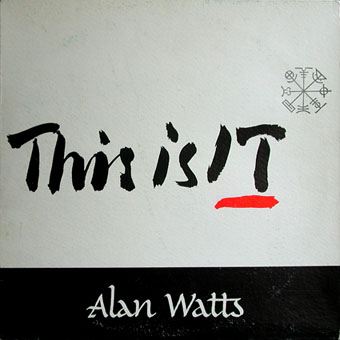
The Psychedelic Quest: “This Is IT” by Alan Watts

5 Sep

Let us embark on a psychedelic journey. Oko’s first “Journey to the Center of the Mind” post introduced his immense catalogue of psychedelic sounds that aurally stimulate him. The broad genre of pyschedelia is well-known, but esoteric, followed by a coterie of heightened music listeners who are unwilling to withstand normal pop/rock constructions. It is a type of abstruse music that is marked by true experimentation, tactile but teetering on the wavy line of incomprehensible. Psychedelic music frees listeners and enters them in a limitless, expanding universe of pulsating sound with no stable grounding. There is no gravity. Listeners float in a astral body where one can see, feel and hear the stars, but still not quite grasp their unknown wonder. Lost and found.

And, it is this concept of lost and found that I would like to explore this morning. Oko inspired me to search for the origins of psychedelic music. There was a moment in its foundation during the early 1960’s when psychedelia moved past its beat generation foundations of spoken word albums and the drug experimentation inception. It was during this brief point of time that listeners got their first taste of a true psychedelic album. And, no it was not the Beatles. It was even before the 13th Floor Elevators of Texas started advertising themselves as “psychedelic rock” in 1965. It was even before the LSD-inspired folk scene prompted the New York-based Holy Modal Rounders to use the word psychedelic in their version of “Hesitation Blues.”

This moment of time was 1962 and it emerged from the amalgamation of European/American researchers, artists and poets. In a quiet revolution, Western and Eastern thought merged with the controlled use of LSD to form a powerful energy that certainly could be looked at as a true predecessor of the musical revlotion that practically took over the United States and scared most of the country only five years later. And, at the forefront of this psychedelic movement was Alan Watts, an eloquent British lecturer who basked in his innate curiosity and weirdness and helped bridge the gap between London, New York and San Francisco (emerging psychedelic hotbeds) .

In 1962, Watts released his spiritual LP This Is IT, a rare, practically unknown release, that can truly be cited as the first psychedelic record.

Released in Sausalito, California this album of “Alan Watts and friends in a spontaneous musical happening”  is real psychedelia. It is more of a spacey, aural experience and it is impossible to grasp any structure. There is no need for structure. It is the psychedelic experience of zany instrumentation, conversation, and incantation. It is drums and chanting and evocations. It is pure psychedelic exaltation.

The album explores Eastern thought and sound and combines it with “controlled accidents” of sound explosions, random pockets of jazz, eerie piano, and lots of acid. It is the premier psychedelic soundscape. Go on and get this album and take a listen. This is 1962 we are talking about. The Beatles haven’t even released “She Loves You” yet. Jimi Hendrix was 20.

Watts’ exploration is a timeless example of psychedelia at its very best. It is the first example of the burgeoning genre of music and is still as complex and real today, as it was back when it was released in a very different American society. This Is IT wasn’t only it, but, IT was a start.

Here is Watts on the concept of Nothingness:

http://www.youtube.com/watch?v=dLrMVous0Ac

Hi!/Intro

3 Sep

Hi! I’m oko. My real name is Pete, and I listen to good music just like Matt. Thank you for letting me write on your blog Matt.

😀

I love modern psychedelic music, good electronic music, and generally good music, so think of anything jazzy or IDMy or trippy and yeah. It would sound like that.

Ahem.

I wish to share my library and my thoughts about it with the world, because more people need to experience what I have heard. I don’t have a top favorite artist, but rather three of them. So, I saw it be fitting to start off with one of them.

Dungen is the name of the band. They are a current Swedish psychedelic rock band which gave the country its 60’s. The man responsible for all of the music goes by the name of Gustav Ejstes and God bless him for his wintry jams and hipster fashion.

I decided to pick the first song off their album Tio Bitar, rightfully named Intro. I thought it would be a fitting intro for me as well.
Intro by okocim!
The song starts with siren horn wailing in the distance and an explosion of music which would make Jimi Hendrix smile. These Swedes are out on a mission raid your musical senses!

The guitar roars and snarls, meanwhile the drums and the bass madly help it drill through what seems a mountain. They seem without any cause known and flail wildly in all directions. As they near the other side they tire and slow down to brace themselves for the sight. Slowly their musical senses catch up to them and melody is formed. But too late, they have made it to the other side. That is when they drop their instruments; lose their breath, and their minds. They have just discovered paradise.

This is a band which has truly mastered creating mood via song. And while this one is a perfect example, some of their others do it even more craftfully, because they use Swedish lyrics which act as another level instrumentation for us English-speaking listeners.

The song is absolutely beautiful and laced with pure psychedelic sound. It ends with one of the grooviest chill-outs I have ever heard. The drums keep rolling, the bass strums happily away, and the guitar dances with that beautiful flute, reverb drowning the both of them in bliss.

I may be biased, due to passionate drug-induced dates with this music, but is it honestly not ecstasy? I personally own this album, and the transition into the next song Familj would seal my argument. But that it something you will have to explore on your own, because I have way too much music to cover, all of it this quality.

I will, however, most-definitely come back to this band at some point. Especially because they are releasing a new album very soon, and I need to wrap my mind around it. And, I mean, they are a favorite of mine.

And so this was my first post on this blog and thus I leave you all with this haiku I made up whilst listening to this song. I like the way it turned out, and probably will stick with them rather than the interpretive  music reviews I used to do on my blog…

Guns blazing

I storm in, to slow and sigh

Then Join

-oko

p.s.

Was this post too long? I have a notoriety for rambling on. But its the passion showing!!! Leave comments!

&)

Top 25 Guitarists of all time: #21 George Harrison

20 Aug

Hello everyone. As the summer sun begins to fade, allow me to introduce a man whose impact has no sunset: George Harrison.

Born in 1943, Harrison rose to become an amazing English rock guitarist, singer-songwriter, and of course, the lead guitarist of The Beatles. On this rare occasion, both myself and Rolling Stone magazine place Mr. Harrison in the #21 spot. With his innovative guitar work with The Beatles, it is no wonder that George finds himself on this list. Harrison favored Gretsch guitars during early recordings, usually with a Vox amplifier.

In 1965, Harrison got his first Fender Strat, which was used on the Rubber Soul album. Harrison did quite well for himself, and even had quite the desirable wife: Pattie Boyd. Some may recognize this name as the subject of “Layla,” a song by Eric Clapton. Clapton was in love with Harrison’s wife at the time, a situation that tested their friendship. I wish I were a fly on the wall when Clapton told Harrison this. Anyway, in 1997 Harrison was diagnosed with throat cancer, which he attributed to his smoking in the ’60s.

He eventually died from metastatic non-small cell lung cancer, the official cause of death written on his death certificate. On the first anniversary of his death, Royal Albert Hall hosted the Concert for George. The concert benefited Harrison’s charity, the Material World Charitable Foundation.

So, overall, Harrison finds himself on this list not because of his good intentions, but because of his pure skill and ability with a guitar. He has influenced countless musicians through his own work as well as his work with The Beatles.

Check out this video at the Concert for George, as his friends cover his song “While My Guitar Gently Weeps.”

Here is another version from when George was still able to play with his friends.

Top 25 Guitarists of all Time #22: Jack White

5 Aug

Hello everyone. I apologize for my absence. It started with finals week in school, and continued with MCAT preparation until a few days ago. Without any further ado, I’m back and ready to present to you all Jack White.

Born John Anthony Gillis in 1975, Jack White is an American. His rise to fame came from his work as a guitarist, pianist, and lead vocalist of The White Stripes. While many lists put White a bit higher on the list, I feel this is a very appropriate position for him. Extremely fond of Gretsch guitars, White catapulted himself to stardom with his distinctive sound. One might wonder how John Anthony Gillis came to be Jack White. Well, it begins at a Memphis smoke bar, where Gillis met his future, albeit ephemeral wife, Meg White. In an unorthodox fashion, a trait that adeptly characterizes Jack White, Gillis chose to adopt Meg’s last name. Interestingly, when White remarried, he kept his ex-wife’s last name.

So, why should Jack White be on this list. After all, a Top 25 list is very exclusive given the countless guitarists the world possesses. Firstly, Jack White seemed to have a magical, musical touch which he used to endow his bands with success and wonderful music. Jack White was a part of many bands, including The Dead Weather, The Raconteurs and, naturally, The White Stripes. White is an ingenious musician, a trait evident by one specific concert, in which The White Stripes played a very short concert. It was so short, that the whole concert consisted of one note. Jack White thinks outside the box, and lets his creativity take over. He does this even in his playing, as he uses his little finger to reach high notes, rather than the usual ring finger. Since his brothers would not teach him how, he taught himself. While technique may not always be certain, one thing is for sure. Jack White has certainly taught the music community a great deal.

Check out White’s spin on things…