I don’t talk about U2 much on this blog because I admit I am not the biggest U2 fan. They are just not exactly my cup of tea. That being said, I still recognize them as a fantastic band and lead singer Bono as one of the better frontmen ever. But I feel the need to post about them today after watching an inspirational and extremely heart-warming video from their recent concert in Nashville.
After U2 finished the concert and took a bow, Bono noticed a blind man in the crowd holding up a sign reading that he wanted to play a song for his wife. Many musicians, especially those who can sell out massive arenas, would most likely ignore the sign, throw a piece of memorabilia in the stands and then walk off stage to the catered post-show dinner. But, not Bono. Bono walked to the man and asked him what he would like to play. The blind man’s answer was “All I Want Is You.” Bono preceded to help the man onto the stage and provide him with his custom-made acoustic guitar to play. First Bono, and then all of U2 played “All I Want Is You” as the self-proclaimed nervous fan (I think I understand his jitters) strummed the chords on the acoustic. After the song, the man attempts to give Bono his guitar back, but Bono placed it back into the fan’s hands and told him to keep it. What a special moment.
That is beyond classy, it’s noble. It demonstrates Bono’s level-headed kindness. Star musicians like Bono can provide fans with lifelong stories through small, kind actions. Bono, though, took it a bit further, and for that he gets a standing ovation from me.
With magic fresh on our minds we walk across the war-torn elementary school field. Hues of red in the sky discolored the smoke which blocked our vision and filled our noses with the scent of burnt elements. Flashes in the sky hastened our wavering walk, our destination a celebration of a baby nation.
I felt like this song would be an appropriate one for today purely based on its title. Fireworks, by Animal Collective, is probably the most popular and likable song from one of their more bizarre albums, Strawberry Jam.
The song starts with a beat that could only make sense if you accidentally inhaled a lung full of salvia divinorum while watching an episode of Spongebob Squarepants, consequently forgetting to exhale. The vocals do their part to attempt to cheer you up as you spin hypnotically into a severe feeling of strangeness. You slowly realize that there is nothing to make out of this song, yet you won’t stop listening to it because you like it.
It is something in between the lyrics and that feeling that your insides are being twisted into rope which resembles the bulk of the song. The result is a mind-bending psychedelic horror which Animal Collective is rightfully and most of the time unknowingly known for. The transitions in this song float as if time were optional and the closer you listen to it the more bizarre and unearthly sounds you will uncover, a dirty pleasure sort of like philosophically pealing apart the essence of joy. The melodies are cute and friendly, but the way in which they are used can only be reminiscent of a horror house disguised as a sunny beach, waiting for you to fall asleep so that it can reveal its true face when you wake from a peaceful nap. It switches from being mellow and cheerful to intense and upbeat like someone actively splitting their personality so as to only keep you interested in what they have to say slightly longer.
Hopefully you watch some fireworks while listening to this song. The two go very well together. The song really isn’t even about fireworks, but every time that one line mentions fireworks, you will get a fuzzy feeling inside. And fuzzy feelings are sort of what fireworks are all about after all. Too bad my cats don’t agree.
Let’s press the trivia button and embark on a musical journey through thought-provoking music trivia questions. The first edition of music trivia was a success, garnering a good amount of attention from everyone. There is one rule, though, that I want to stress before getting to this week’s questions.
ATTENTION: After answering each question, POST your answers into a comment. Commenting on a post is simple. Click the quote bubble with the number next to the post’s name. It will ask for a name and an e-mail address. Follow those brief directions and post your answers. Therefore, I know who can be crowned the winner and, in the future, be eligible for PRIZES. If you don’t post your answers, I cannot recognize your intelligence.
Get it? Got it? Good. Let’s play!
The entire trivia game will not be patriotic, but since this is the fourth of July weekend we do need at least one germane question.
1.)“O! say can you see.” I am sure most of you can complete the lyric. Heck, you can probably explain to me that Francis Scott Key wrote the “Star-Spangled Banner” while detained on a British ship in September of 1814. But, lyrics aside, can you tell me where the melody of our National Anthem comes from?
2.) Randy California was the stage name of American guitarist Randy Wolfe. His work with his band Spirit was influential. He displayed tremendous technical skill and aplomb up to his untimely drowning death in 1997. If you have heard “Stairway to Heaven” by Led Zeppelin, which I’m pretty sure everyone has heard, the indelible guitar riff is strikingly similar to California’s guitar work on Spirit’s “Taurus.” But I’m not going to ask a question about the controversy. Instead, I want to know what American musician gave Randy California his stage name?
3.) Jimmy Page is often cited as the originator of using a violin bow on a guitar, but this is incorrect information. Who was the true FIRST guitarist to popularize this practice?
4.) Thunderclap Newman was a British band known for their one-hit wonder “Something In The Air.” How they were promoted is more interesting than the song. Newman vocalist/keyboardist John “Speedy” Keen worked as a chauffeur for a famous British band who’s guitarist thanked Keen by creating the band around him to showcase his work. What was that band?
There you have it. Four questions for your fourth of July weekend. Answers will be posted on Thursday of next week. Remember, after you select your choices on the polls, post your answer choices in a comment! I cannot stress this enough. And, hey, after you answer the questions if you cannot wait for the answers, look them up and use these fun questions to stump friends of families at your fourth of July barbecues. Have a great weekend!
“The Voice” blossomed into a constant show for my sister and I. It also worked as an inside joke because we just could not figure out why we taped and watched every episode. We concluded early on that it was for Cee-Lo Green‘s smooth colloquy and gaudy custom-made outfits. If The Voice did one thing, it proved the verdant creativity of Cee-Lo Green to most of the country. But we both know that it could not have been just Cee-Lo Green.
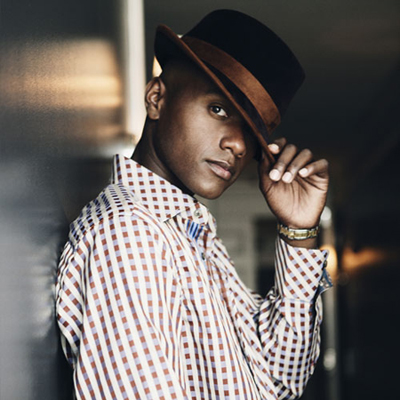
“The Voice” was the ideal 10-week publicity stunt for all four judges. If you are not familiar with the premise, basically the show saw four celebrity judges (Cee-lo, Adam Levine, Christina Aguilera and Blake Shelton) blindly choose eight singers by voice only for their teams. Then the judges and country narrowed it down to a top four (one from each team) and eventually a winner, Javier Colon, of Team Adam.
The show was awfully predictable, but it’s 10-week format was the correct length and it didn’t give the audience an opportunity to get completely sick of it. The reason we kept watching was the talent. Out of the 32 performers, five had serious, unadulterated talent. Four of those singers made it into the top four. How do you like that? It seems America has finally figured out how to vote in singing competitions. We have had enough practice. The winner, Javier Colon, may not be as quirky and marketable as the runner-up, Dia Frampton (no relation to Peter), but his natural voice is simply better. He was the best singer and he won the money and the recording contract. The show actually worked. I think that is why we kept watching. If the best singers were eliminated early, there would have been no reason to sit through the judge’s specious praise of bad performances. Well, I’ll be honest, we fast-forwarded a lot of the show.
Congrats to Mr. Colon and I wish him well. Unlike the last few years on American Idol, I can actually see myself buying his work and, shockingly, Dia Frampton’s albums as well. Here is Colon’s first performance, a tremendous version of “Time After Time.”
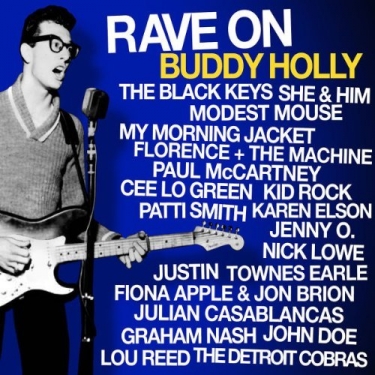
Buddy Holly is the quintessential example of an artist who was struck down in his prime. The Day The Music Died, the McLean term for the day when Holly, Ritchie Valens and The Big Bopper were killed in a 1959 Iowa plane crash, took Holly away when he was only 22 years old. I turn 22 in a month and that really gives some perspective. By the time Holly died, he released a good amount of material that would go on to inspire musicians like The Beatles. Holly’s rockabilly music was tinkering with what would become rock n’ roll. Rave On Buddy Holly, sees numerous performers, including Paul McCartney, re-imagine Holly songs. The album makes us ponder what would have happened if Holly did not die.
My favorite song off the album is Modest Mouse’s version of “That’ll Be The Day.” It is low-key and brilliantly original. Take a listen.
All songs have stories. But some indelible classics have something beyond a mere story of creation. They have evolutionary histories. The transformation of early folk and blues songs into modernized favorites is extraordinary. These are songs that are not bound by copyright laws because they, like fairy tales, have been passed along from generation to generation, each manipulation furthering the song like a game of musical telephone. Lyrics and rhythms changed but the original melody, like the moral of a story, stuck. There was no basis for comparison up to the early 20th century when these folk and blues songs were finally recorded and preserved. This is how we know them today. Yet, the first recordings are not what the mass populace listens to. “The House of the Rising Sun” is an example of such a piece. While the 1964 version by the Animals is clearly the most known, the song’s first recording happened 31 years earlier, and the roots of the song stretch even further back.
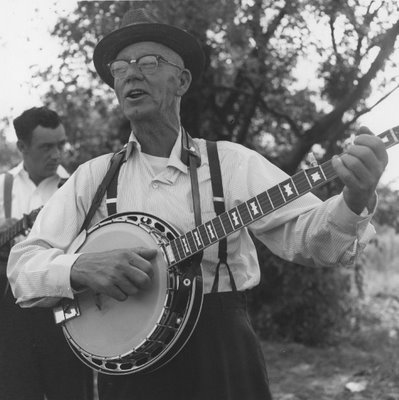
Clarence Ashley
We will explore the disputed meaning of the song later in this post. For now, I want to provide a summarization of the recording history of “House of the Rising Sun” prior to the Animals’ version. Sound boring? It’s not. A lot of popular musicians recorded this song prior to the Animals and reading on will abet your quest to stump your friends on music knowledge.
Clarence Ashley was a clawhammer banjoist and guitar player from Tennessee. In 1933 he and fellow Appalachian artist Gwen Forest recorded a slow version of “Risin’ Sun Blues” (House of the Rising Sun) which I am including below:
Ashley said his grandfather taught him the song. Does not sound like The Animals, does it? The song is classic folk at its finest, twangy voice paired with a blues-inspired chord progression. The lyrics are significantly different than The Animals version. The Animals changed the song’s protagonist to a male. The traditional song is about a woman and her life with her “sweetheart,” a gambling drunk. The song acts as a warning to not make the same mistakes that she has made. The question is what is the house they call the “rising sun,” and I’ll ponder the two theories in a bit.
After Ahsley’s recording, the song was forgotten about until it was revived by Alan Lomax, the famous co-curator (with his father) of the Archive of American Folk Song. In 1937, Lomax recorded 16-year-old miner’s daughter Georgia Turner performing a version of the song. He would later incorrectly credit her with creating the lyric, even though her interpretation can technically be considered original, I guess. Nobody knows who created the original lyric. And it doesn’t really matter because I guarantee that if the original lyric was over located it would bear little resemblance to “The House of the Rising Sun” we know. This is the natural progression of traditional music.
The song would go on to be recorded throughout the 40s by performers like Josh White (’47), Leadbelly (’44) and the fascist killer himself Woody Guthrie, who recorded the song in 1941. Guthrie’s version maintains the same lyric as Turner’s interpretation, but the verses are in different places. This is a key difference because Guthrie’s version is closer to The Animal’s verse placement. You can definitely attribute some of this inspiration to Woody Guthrie. His version is below:
The song’s simplicity is a huge reason why it has been able to transcend so much time. The chord progression is
Am, C, D, F
Am, C, E, E7
Am, C, D, F
Am, E7, Am, E7
There is nothing else to this basic chord progression in the scale of A-minor.
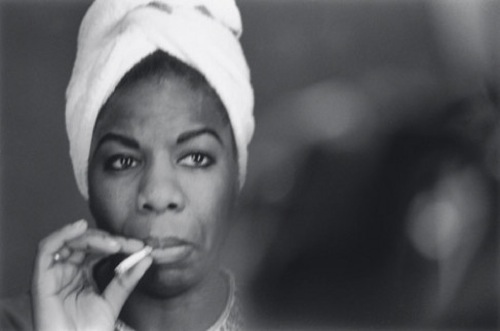
Nina Simone
At the corner of Thompson and Bleecker street in Greenwich Village, New York, stood a club called The Village Gate and in 1961, Nina Simone recorded a jazzy version of “The House of the Rising Sun” that is one of the most powerful and intriguing performances of the song ever recorded. Yes, I do personally prefer The Animal’s picked take on the classic, but Simone’s version accentuates the full flavor of the song. It is passionate, despite its methodical pace.
The lyrical transformation is minor. The true change came with The Animals’ version.
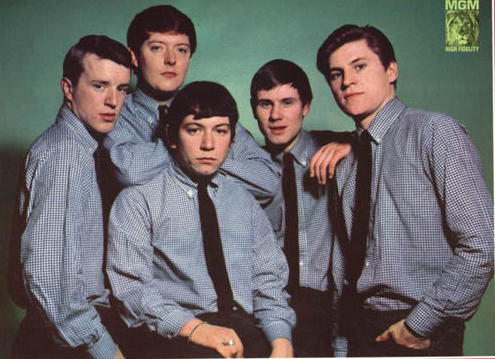
Bob Dylan, who recorded “House of the Rising Sun” a few months after Simone’s live version (sparking controversy with Dave Van Ronk who was mentioned in yesterday’s post, but let’s not delve on petty music controversy), is said to have “jumped out of his seat” the first time he heard The Animals’ version of “The House of the Rising Sun.” He would also never play the song again because fans accused Dylan of plagiarism. That is what The Animals’ did with “The House of the Rising Sun.” They sped it up, masculinized the lyric, and made the song their own. Eric Burdon’s voice significantly helped create that bluesy aura, but the intelligent decision to pick the song mixed with the keyboard’s distinct presence made the song a classic and one of the first folk/rock songs of the 1960s.
Okay, we got it with the recording history. Where did the song come from? What is it really about? Well both of these questions come with numerous answers. Where the song came from really is narrowed down to two potential answers. According to Alan Price of the Animals, the song is a 16th century English folk song about a brothel. Many other British folk aficionados claim that the song has a similarity to “Matty Groves,” a traditional English folk song.
Others believe that the song is an American folk tale, but it is certainly not out of the question that the folk song was brought to American by early settlers and then revised to fit the time period. What is the house, though? Many believe it is, like Price said, a brothel. Obviously, since it is in New Orleans, the lyric has been transformed to fit the area where it was popularized. We can then conclude that the version that stuck was first imagined in New Orleans or with New Orleans in mind. This would place it somewhere in the early 19th century. There was a small, short-lived hotel called the “Rising Sun” in the French Quarter of New Orleans in the 1820’s that burned down. It is quite possible that it acted as a brothel as well.
Another theory states that the House of the Rising Sun is actually a women’s prison. Van Ronk says that he saw a picture of a the old Orleans Parish Women’s Prison and the entrance had a rising sun decoration. That seems almost too convenient.
The House of the Rising Sun could also be a reference to a plantation. Like I said, there are many different possibilities. Reviewing the earliest lyric, I can see the song being about a prison or a brothel.
Perhaps we should just all listen to New Orleans’ Williams Research Center Research Librarian Pamela D. Arceneaux who wrote:
“Many knowledgeable persons have conjectured that a better case can be made for either a gambling hall or a prison; however, to paraphrase Freud: sometimes lyrics are just lyrics”

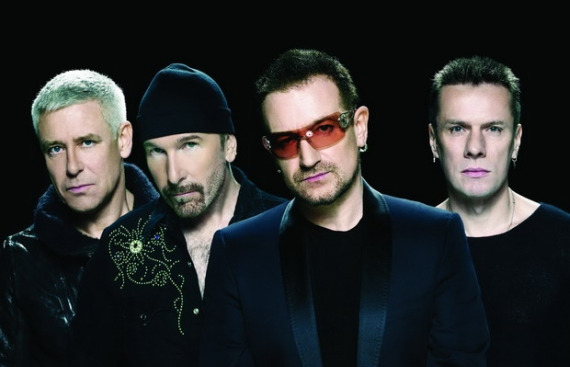 I don’t talk about U2 much on this blog because I admit I am not the biggest U2 fan. They are just not exactly my cup of tea. That being said, I still recognize them as a fantastic band and lead singer Bono as one of the better frontmen ever. But I feel the need to post about them today after watching an inspirational and extremely heart-warming video from their recent concert in Nashville.