In sitting down and thinking of folk artists I really like, it became apparent to me that folk is the red-headed stepchild everyone loves to criticize, but secretly enjoys. Very few artists are “folk.” James Taylor was clearly a folkie underneath his porous shield of vulnerability, yet he’s considered a singer/songwriter. The Byrds, The Band and Crosby, Stills, Nash and Young all were examples of bands that took folk roots (such as multi-part harmonies and 12 string acoustic guitars) and branched out into a more traditional rock sound and Johnny Cash first and foremost was country. But I am here to glorify some guys that, although they may dabble in other genres, are folk through and through.
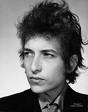
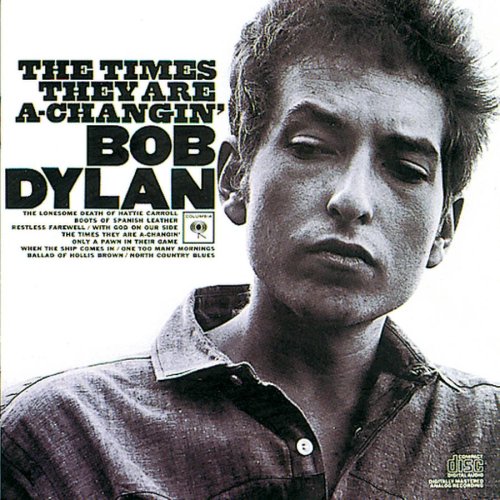
Bob Dylan is the most important single person in music since the 60s. Period. The Beatles may have been more popular, the Stones had more swag and Zeppelin was more talented, but as an individual no one influenced music more than Dylan. On one hand, he was a traditional folk singer, a common man against the world as he became a leader of the counterculture movement with such songs as “Blowing in the Wind” and “The Times They are A Changin”. Upon seeing just just how wild the Beatles could make the ladies, he went electric and spawned folk rock. Even later, Dylan borrowed the use of the 12 string guitar and helped to create yet another genre, country rock. That being said, Dylan remains a folk icon. (The video below is included just because it’s one of the funniest things I’ve seen).
Going in a whole new direction, Mumford and Sons are a folk band and one of my favorite bands of the past year or two. You may have just heard the name or maybe listened to “Little Lion Man” on the radio but I’m here to tell you to listen to more. The band has a unique lineup. Lead singer Marcus Mumford usually plays acoustic guitar, singing and also doing percussion with a kick drum (Letterman joked that they would take the money from going on his show to buy a real drummer) and the band also includes a banjo, stand up bass and a keyboardist. However, they still do change things up a bit as someone will sometimes get on the drumkit and the electric bass will occasionally make an appearance and in the following video, the electric banjo becomes something of an electric guitar.
“Come gather round people wherever you roam.” The opening lyric of Dylan’s ode to the 60’s generation is one of the most recognizable song openings in rock history. No guitar riff, just Dylan’s distinct croon. I bring up Dylan’s classic for somewhat selfish reasons. The waters around me have grown and come Tuesday I will begin a new stage of my life, shredding the title of college student and taking on the new label of employee. Yes, I will be starting a full-time job with Wolters Kluwer as an Editorial Assistant and I’m extremely excited.
Obviously, this means that the blog will be experiencing changes, at least on my part. I will make this pledge. The Music Court will remain a memorable music blog and the content will always be fresh and entertaining. While my posting schedule may transform because of time constraints, I promise to keep publishing exciting and passionate music content.
So, while the times may be changing, my undying love for music and writing will never subside and, with the help of the Music Court’s other faithful contributors, we will continue striving to achieve our goal of becoming one of the internet’s most viewed music blogs. Before I sign off for the night (and embark on a weekend trip to Civil War sites with the family) let me quote Aristotle – “Change in all things is sweet.”
All songs have stories. But some indelible classics have something beyond a mere story of creation. They have evolutionary histories. The transformation of early folk and blues songs into modernized favorites is extraordinary. These are songs that are not bound by copyright laws because they, like fairy tales, have been passed along from generation to generation, each manipulation furthering the song like a game of musical telephone. Lyrics and rhythms changed but the original melody, like the moral of a story, stuck. There was no basis for comparison up to the early 20th century when these folk and blues songs were finally recorded and preserved. This is how we know them today. Yet, the first recordings are not what the mass populace listens to. “The House of the Rising Sun” is an example of such a piece. While the 1964 version by the Animals is clearly the most known, the song’s first recording happened 31 years earlier, and the roots of the song stretch even further back.
Clarence Ashley
We will explore the disputed meaning of the song later in this post. For now, I want to provide a summarization of the recording history of “House of the Rising Sun” prior to the Animals’ version. Sound boring? It’s not. A lot of popular musicians recorded this song prior to the Animals and reading on will abet your quest to stump your friends on music knowledge.
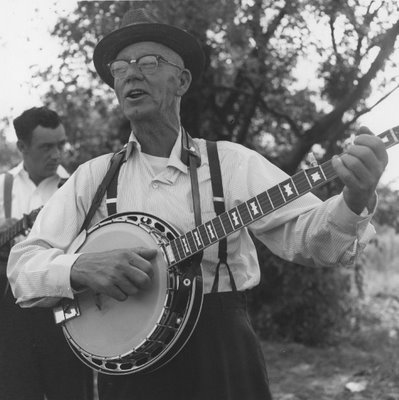
Clarence Ashley was a clawhammer banjoist and guitar player from Tennessee. In 1933 he and fellow Appalachian artist Gwen Forest recorded a slow version of “Risin’ Sun Blues” (House of the Rising Sun) which I am including below:
Ashley said his grandfather taught him the song. Does not sound like The Animals, does it? The song is classic folk at its finest, twangy voice paired with a blues-inspired chord progression. The lyrics are significantly different than The Animals version. The Animals changed the song’s protagonist to a male. The traditional song is about a woman and her life with her “sweetheart,” a gambling drunk. The song acts as a warning to not make the same mistakes that she has made. The question is what is the house they call the “rising sun,” and I’ll ponder the two theories in a bit.
After Ahsley’s recording, the song was forgotten about until it was revived by Alan Lomax, the famous co-curator (with his father) of the Archive of American Folk Song. In 1937, Lomax recorded 16-year-old miner’s daughter Georgia Turner performing a version of the song. He would later incorrectly credit her with creating the lyric, even though her interpretation can technically be considered original, I guess. Nobody knows who created the original lyric. And it doesn’t really matter because I guarantee that if the original lyric was over located it would bear little resemblance to “The House of the Rising Sun” we know. This is the natural progression of traditional music.
The song would go on to be recorded throughout the 40s by performers like Josh White (’47), Leadbelly (’44) and the fascist killer himself Woody Guthrie, who recorded the song in 1941. Guthrie’s version maintains the same lyric as Turner’s interpretation, but the verses are in different places. This is a key difference because Guthrie’s version is closer to The Animal’s verse placement. You can definitely attribute some of this inspiration to Woody Guthrie. His version is below:
The song’s simplicity is a huge reason why it has been able to transcend so much time. The chord progression is
Am, C, D, F
Am, C, E, E7
Am, C, D, F
Am, E7, Am, E7
There is nothing else to this basic chord progression in the scale of A-minor.
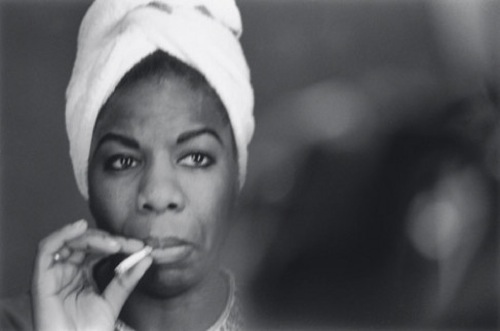
Nina Simone
At the corner of Thompson and Bleecker street in Greenwich Village, New York, stood a club called The Village Gate and in 1961, Nina Simone recorded a jazzy version of “The House of the Rising Sun” that is one of the most powerful and intriguing performances of the song ever recorded. Yes, I do personally prefer The Animal’s picked take on the classic, but Simone’s version accentuates the full flavor of the song. It is passionate, despite its methodical pace.
The lyrical transformation is minor. The true change came with The Animals’ version.
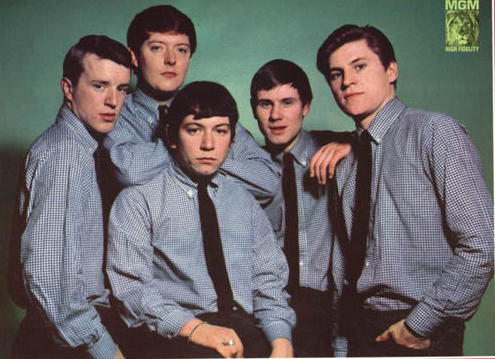
Bob Dylan, who recorded “House of the Rising Sun” a few months after Simone’s live version (sparking controversy with Dave Van Ronk who was mentioned in yesterday’s post, but let’s not delve on petty music controversy), is said to have “jumped out of his seat” the first time he heard The Animals’ version of “The House of the Rising Sun.” He would also never play the song again because fans accused Dylan of plagiarism. That is what The Animals’ did with “The House of the Rising Sun.” They sped it up, masculinized the lyric, and made the song their own. Eric Burdon’s voice significantly helped create that bluesy aura, but the intelligent decision to pick the song mixed with the keyboard’s distinct presence made the song a classic and one of the first folk/rock songs of the 1960s.
Okay, we got it with the recording history. Where did the song come from? What is it really about? Well both of these questions come with numerous answers. Where the song came from really is narrowed down to two potential answers. According to Alan Price of the Animals, the song is a 16th century English folk song about a brothel. Many other British folk aficionados claim that the song has a similarity to “Matty Groves,” a traditional English folk song.
Others believe that the song is an American folk tale, but it is certainly not out of the question that the folk song was brought to American by early settlers and then revised to fit the time period. What is the house, though? Many believe it is, like Price said, a brothel. Obviously, since it is in New Orleans, the lyric has been transformed to fit the area where it was popularized. We can then conclude that the version that stuck was first imagined in New Orleans or with New Orleans in mind. This would place it somewhere in the early 19th century. There was a small, short-lived hotel called the “Rising Sun” in the French Quarter of New Orleans in the 1820’s that burned down. It is quite possible that it acted as a brothel as well.
Another theory states that the House of the Rising Sun is actually a women’s prison. Van Ronk says that he saw a picture of a the old Orleans Parish Women’s Prison and the entrance had a rising sun decoration. That seems almost too convenient.
The House of the Rising Sun could also be a reference to a plantation. Like I said, there are many different possibilities. Reviewing the earliest lyric, I can see the song being about a prison or a brothel.
Perhaps we should just all listen to New Orleans’ Williams Research Center Research Librarian Pamela D. Arceneaux who wrote:
“Many knowledgeable persons have conjectured that a better case can be made for either a gambling hall or a prison; however, to paraphrase Freud: sometimes lyrics are just lyrics”
“Norwegian Wood” was released in the nascent years of psychedelic music, and, if not for a fortuitous sitar, this hit from Rubber Soul would not be psychedelic at all. It’s creation would still be interesting, but it wouldn’t be psychedelic. John Lennon was the primary writer for this piece despite the co-writing Lennon/McCartney label. He sites Bob Dylan as a big influence on the song. The verses are Dylan-esque, concentrating on an acoustic guitar driven melody and vocals that follow the rhythm. “Norwegian Wood” is about extramarital flings, and Lennon actually wrote it while on vacation with his wife. “Honey can you play me the new song.” Pretty dumb move on the part of Lennon, though he attempted to be subtle. The song’s creation is all well and good, but for the purpose of this post we must talk about the impact by George Harrison, who is the reason this song has a sitar and is psychedelic.
According to Harrison, he was inspired by Indian musicians on the scene of The Beatles‘ movie Help to start messing around with a sitar. This turned into a more substantial interest when he bought a Ravi Shankar record and purchased a cheap sitar in London. He had it with him during the recording of “Norwegian Wood,” and, you know what they say, the rest is history.
” It was lying around. I hadn’t really figured out what to do with it,” says Harrison in the Beatles Anthology. “When we were working on Norwegian Wood it just needed something, and it was quite spontaneous, from what I remember. I just picked up my sitar, found the notes and just played it. We miked it up and put it on and it just seemed to hit the spot.”
The sitar is very coordinated, and Harrison did not have the mastery to freestyle with the sitar, which would have made the song more experimental and psychedelic. But, it still maintains a hint of that psychedelic quality and that makes the song certainly worth the mention.
I remember going to Guitar Center in 10th grade to pick out my first acoustic guitar. I ended up with a starter set, but that is besides the point. When I was walking around the store, a customer was testing out a Gibson on a bench next to an amplifier. He was trucking through some noticeable riffs and performing them with technical proficiency. I feel like every aspiring guitarist has had this moment in their playing career. Someone at the music store serenading shoppers with their version of “Stairway to Heaven.” Well, for those who have mastered some of these famous riffs, a guitar store is a good place to go if you want to attract attention. It’s easy to plug in an expensive guitar and play. But, before you drive over to a music store, take a look at this list of top ten riffs to play with your borrowed gear.
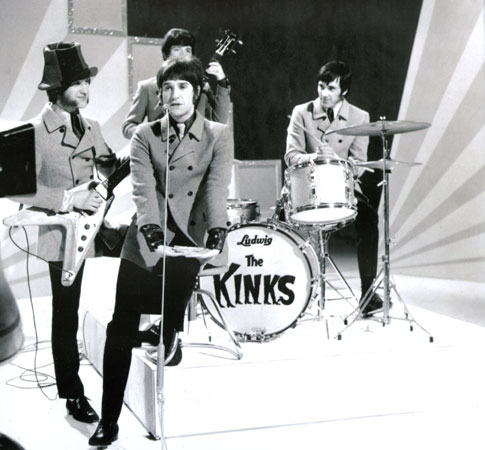
The Kinks potential reunion tour has been derailed twice over the past ten years. First, Peter Quaife developed kidney problems in 2000, and then talks of only three members playing shows were thrown off with Dave Davies‘ stroke in 2004. Quaife unfortunately passed away in 2010 and the band immediately went down to three. According to a Rolling Stone interview with Ray Davies, Ray is meeting with his brother Dave (now fully recovered). A potential reunion tour can be on the horizon, and, because of what seems to happen when reunion tours are discussed, it may be best for the band to immediately play some shows. I know fans would be on board for that.
Maureen Dowd is a great columnist for the New York Times. Her commentaries are thought-provoking and refreshing, and many rebuke her points of attack with intensity. On April 9, she posted a scathing column entitled “Blowin’ in the Idiot Wind,” where she calls Bob Dylan an ultimate sell out for allowing the Chinese Ministry to disallow him from performing his famous protest songs. Dowd reminds readers that Dylan did walk out on The Ed Sullivan Show when he was told he could not play “Talkin’ John Birch Paranoid Blues.” He was 22 years old back then. He is now 69.
I don’t know what to make of Dowd’s comments. She, in a sense, is completely correct. Dylan, who firmly warned against government oppression in his lyric, gave into China, the quintessential quiet oppressive government. You are told to practice what you preach, and Dylan did not follow this sentiment. Dylan was a protester. Dylan fought. But, that was over 40 years ago. Age is no excuse of selling out. I am not attempting to defend Dylan in my comments. Perhaps his reasoning for the China concert was pure selfishness. He is a consummate performer and maybe he just wanted to finally take his talents to China for a show, despite their restrictions. I am not sure. I do agree that he did sell out. I am just not sure to what extent.



 The Music Court