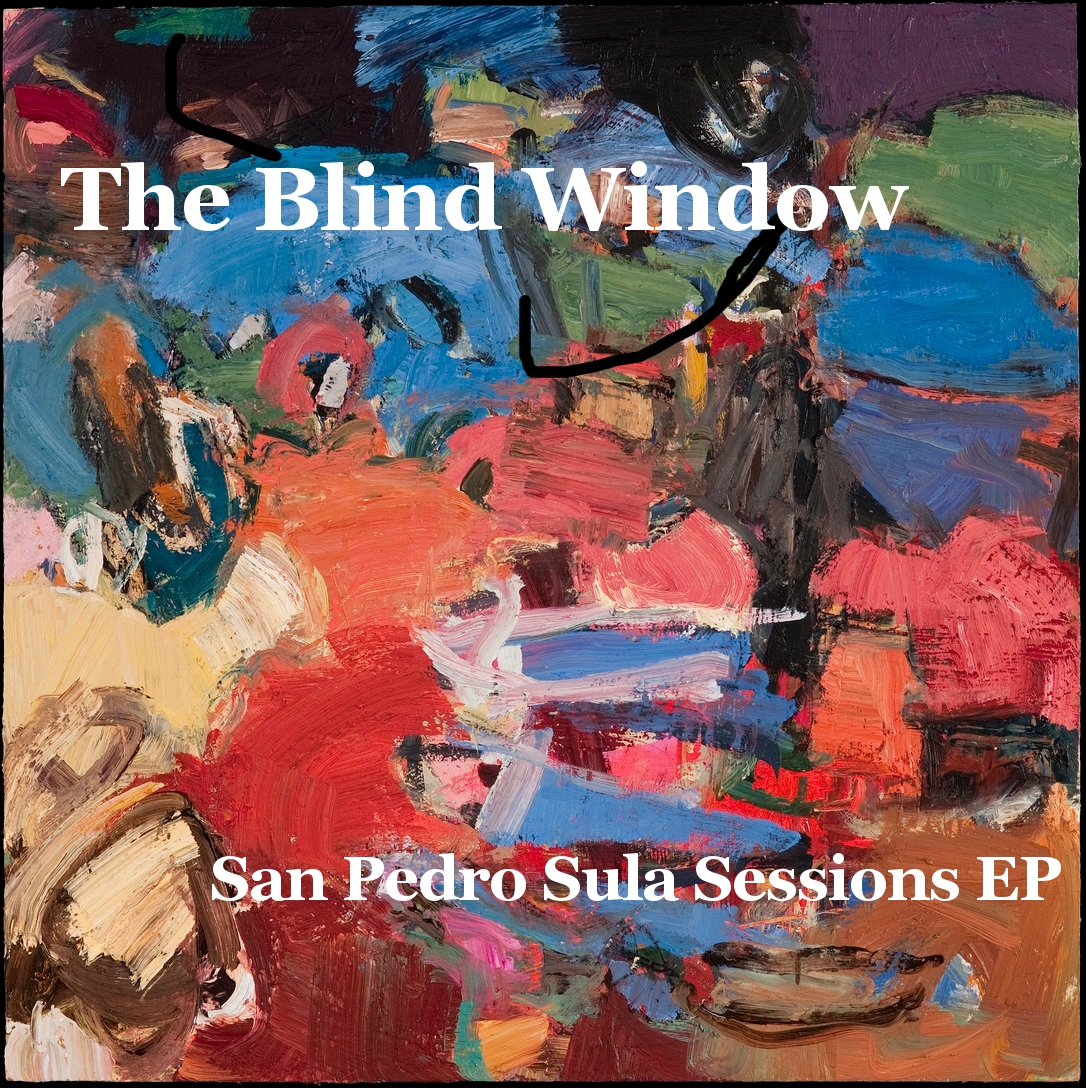
What happens when you combine Americana beats with troubadour inclinations, take the intriguing combination to the warm, mountainous highlands of Honduras, and base lyrics off of historical narratives that you just happen to be teaching to children in the country. Well, much in line with the album cover above, you get this odd mixture of brush strokes and colors that form a piece of artwork, both delicate and brusque, almost Hemingway-esque.
The Blind Window is led by multi-instrumentalist Brian Katz, a semi-finalist in the 2011 International Songwriting Competition, who created this blend of inspired music while working as a history teacher in Honduras from 2010-2012. In his surroundings, he found enough isolation to devote time to developing his craft. In his subject, he found ideas that he molded into songs of pain, expired youth, and loss.
His music is endearing. It mixes the midwestern Americana branded by Tom Petty and Neil Young with modern Dylan-inspired folk created by bands like Fleet Foxes.
San Pedro Sula Sessions is The Blind Window’s first EP. Released in mid-July, the album is being toured in the Toronto area. I want to target two tracks that I think you all will like, both of which (like the entire EP) are available for free download at The Blind Window’s Bandcamp.
In order to understand the lyric of “William Walker” it is first important to understand who Mr. Walker was. Let me brush up a bit on my history, and, Mr. Katz may need to help me a bit. Walker was a filibuster (idea of conquering Latin American land and creating new slave states to join the Union) who became president of the Republic of Nicaragua in the mid-19th century. He ruled until he was defeated by a coalition of Central American armies, and was executed by Honduras in 1860. Ah, so now the lyric, “Shot at the firing wall by Honduran guns,” makes sense. The song’s introduction combines a staccato acoustic rhythm with synth. It would be a disservice to just say it’s Indie. I catch a noticeable scent of modern Mountain Goats. The band layers elements before the vocals begin.
Katz’s vocal is certainly Neil Young-like. His voice can get up there and it rises in the verse skillfully and melodically. I absolutely love this crescendo. He possesses a vocal talent much like some of the better folk artists, and this elevates the music to an excellent level.
Now, with William Walker’s history in your mind, read the lyrics of the piece. In a small frame, Katz speaks on Walker’s last days, reminiscent and nostalgic. And, there are gem-lines like, “When I am freed, from this penitentiary, I will reach, my divine finality.”
“Lost Between the Lines,” begins with soft ahs much like Iron and Wine’s “God Made the Automobile.” This continues and rises over a guitar riff until it fades into a perfect harmonica. Gosh, Katz’s voice really does remind me of Neil Young. Sorry for repeating it, but I really think he has a similar voice. The song moves at a great pace, the harmonica fill my favorite portion. It is not difficult to recognize the talent of The Blind Window, and I look forward to hearing about them more soon.
Are you one of those people who think all of the songs on the Top 20 sound alike? Well, you may just be right. A team of Spanish researchers explored the extensive Columbia-born Million Song Dataset, a consolidation of one million songs of the last 50-or-so years into data bits, and found that music today has gotten louder and blander. Such plangent pablum can do a real doozy on your ears and your faith in the progression of music.
As the researchers told Reuters, “In particular, we obtained numerical indicators that the diversity of transitions between note combinations — roughly speaking, chords plus melodies — have consistently diminished in the last 50 years.”
You see, the problem is not so much the lack of creativity in music, but the minimal desire for anything different. I refuse to condemn the music industry for putting out the same junk over and over again, because that is the music making them money. If we as a collective music listening public demanded more create tuneage, we would get it. But that is long gone. Mainstream has turned away from anything different. To have a hit song today that will repeat on the radio around 15 times an hour, you need a simple, singable, loud song.
What caused this gradual “dumbing down” of pop music? I’m not sure. But sometime after around the early 70s, the mainstream stuff just started get worse and worse as a whole. Yes, there are always outliers. Even some well-written, creative pieces today slip through the seemingly impenetrable wall of uncreative song production and hit the charts. I will say, though, it is happening less and less.
All this talk about music copy cat syndrome got me in the mood for a little basic chord theory. It’s been a longstanding joke among guitarists that an individual can learn just four chords on the guitar and impress members of the opposite sex with sweet renditions of hundreds of songs. When we talk about that, the chord progression we are discussing is the insanely catchy I-IV-vi-IV progression, one of the oldest tricks in guitar book. The chords in this progression change by key but some popular examples are C – G – Am – F and D – A – Bm – G, the latter of which is used in the video I am about to show you below.
This is Axis of Awesome, an Australian comedy/music trio, that, in their song “Four Chords,” sample more than 40 songs that follow the same basic chord progression. “Four Chords” is an excellent example of what we discussed above. And, the singer looks a bit like Jack Black.
Go try it out for yourself. Turn on the popular music station in your area and see if you can pick out the basic chords being used. Because, let’s be honest, it may be the ones used in the video above. Oh, and don’t forget to turn it up. There you have it. The formula to create a great pop song. Add in a lyric about love, parties or loving to party, and you are set.
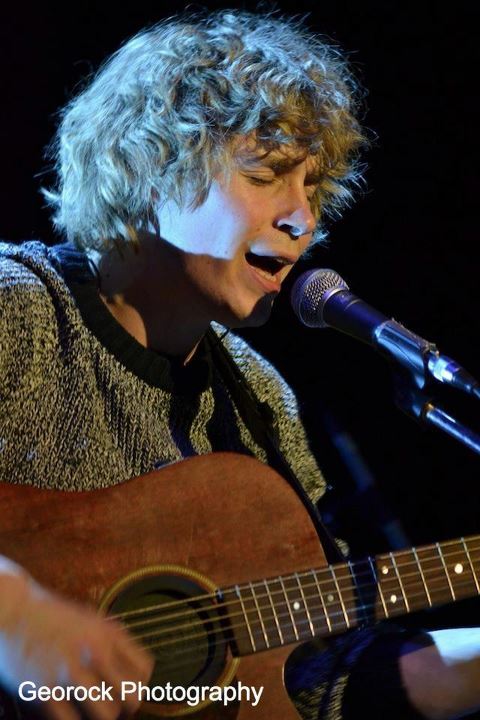
Liverpool based singer-songwriter Alex Hulme played for Sir Paul McCartney this year and Sir Paul enjoyed his performance. I can pretty much wrap up my review of the 21-year-old blonde shaggy-haired acoustic performer with that. Sir Paul isn’t usually wrong. I won’t close up my profile of Mr. Hulme that quickly, though, and I can assure you that the former Beatle certainly got it right with Hulme. His clean, breezy voice breaks through in his summer pop hit, “The Start,” just released on July 16. The song, like his voice, is refreshingly palatable, a simple catchy pop tune with solid production value.
Hulme is an artist who will certainly become more popular once he releases some more material. His youth plays to his favor in this respect. At this point in his young career, Hulme’s natural vocal talents are most impressive. His chops are subtly powerful and genuine. His looks are not going to hurt him either. He looks straight out of a Nickelodeon boyband. And don’t interpret that as an insult. He is good-looking and has an infectious tone to his voice. Those are two elements that can take him very far. You can purchase his new EP The Start on his Bandcamp.
I want to provide one more song for your listening pleasure. This is without production. It is simply Hulme and his acoustic guitar busking in a shopping area in Liverpool. I’m doing this so you can just see how naturally fine and mature Hulme’s voice is.
It is a vibrant, ebullient performance, and Hulme doesn’t let back. He belts out the song to the passerbys, and it is this candid performance that excites me more about Hulme’s future prospects in music. He has raw talent, and, for many modern musicians, that is something to be said.
You can find out more about Alex Hulme on his Facebook and Twitter
Let’s start this post off on a positive note. There are a lot of good cover songs out there. The formula for creating a good cover song is simple. Take the original song, transform it minimally, and voila, recycled music. If you look at some of the greatest covers ever, you come up with a list of artists who covered other artists within the realm of a similar genre. There are certainly exceptions to the rule, but with said exceptions the cover artist is usually quite talented (i.e. Johnny Cash covering NIN’s “Hurt”) and the song itself can be stripped to its bare bones and sound good (i.e. Johnny Cash covering NIN’s “Hurt”). Or, on the other hand, a song already bare, with let’s say solo acoustic backing, can be spruced up a bit and made into a fuller, more extraordinary piece (i.e. “All Along the Watchtower” by Jimi Hendrix, from Bob Dylan).
With covers, though, one thing generally remains essential. The performer covering the song is not only talented, but also a multi-faceted artist. One-trick ponies perform miserable covers. So, when, for example, a screechy rock band covers a folk artist (see below) or a voluptuous country star covers a rock band (Dolly Parton doing “Stairway to Heaven”), things can go bad. And like spoiled milk, when a cover goes bad, it’s really bad.
And, despite the fact that most bands have been guilty of it (see song two sentences ago), we are not talking about musicians who steal music and rearrange it because of creative laziness, musical greed, or unconscious “My Sweet Lord” moments (sorry George). That’s not a cover. That’s theft.
With this all in mind, I am going to provide you with five examples of vomit-inducing music covers, and I want you to tell me what is the worst cover of all time. Are there other awful covers? Yes. Many. Including some truly miserable Miley Cyrus “inspiration” covers that includes one of “Smells like Teen Spirit” which is mind-blowingly terrible, but I am going to let that sit there and age a bit before we conclude whether that was just a bad joke. If you like a cover song on this list, I apologize for verbally defecating on a song you enjoy. This is clearly just my (and many other’s) opinion. But I urge you, tell me why the cover is good. Seriously, because I think it is awful and destroys the original. A full list of the songs with some unflattering descriptions is below the poll jump. Read and vote! What’s the worst?
Britney Spears (The Rolling Stones) – “Satisfaction”
You know, for the first 30 seconds of the song it isn’t that bad. Remember, we are talking historically bad here so not that bad is still awful. There just isn’t much there. In a way, it seems like she is going to turn the song into one of her modern-day libidinous sex-slave pieces that paint her out like she is a voracious nymphomaniac. And then the song passes the 30 second mark and, well, listen. Why? Britney? Why? Did Mick Jagger insult you? The cover eliminates Keith Richards’ uber-famous riff and turns the famous rock song into a pop debacle that is not even good for Britney Spears standards. Have you stopped listening yet? The song somehow is more than four minutes long. I’ll never know how it ends.
Madonna (Don McLean) – “American Pie”
Madonna and Don McLean go together like Cheerios and jalapeno peppers – they don’t – yet the pop diva with the hilariously fake British accent decided to take on this American classic. By take on, I mean burn. In a similar manner to Spears’ awful cover of “Satisfaction,” Madonna’s “American Pie” starts off decently, with only a slight echo effect on her voice. And then, what the hell is that synth. Look, I totally understand changing up a song, and you don’t have to sit down with only an acoustic guitar and bang out the entire hit, but a synth only makes a song that deserves so much more sound like an 80’s sunshine track mixed with creepy Eiffel 65-like echoes and monotone Madonna plugging away at only one damn verse and the beginning and ending. I guess we should be thanking the Kabbalah that she didn’t record anymore of this washed-down piece of a junk cover.
Limp Bizkit (The Who) – “Behind Blue Eyes”
This one is more difficult to hate on at first, because Limp Bizkit doesn’t ruin it until later. The song is one of the Who’s most raw works, and the initial shock that Limp Bizkit, who, if you remember correctly, told us to shove a cookie up our collective yeah, would actually cover a serious song is odd enough. But initially the song is quite stripped down and actually halfway okay. It’s not a great cover. The vocals are nothing special. Vocal effects make it sound better, but, hey, everyone does that now’a’days. And then 2:30 comes along and you just shake your head at what the hell the band was thinking when they decided to put a robotic voice over an eerie whistle. They actually destroyed their already pretty bad cover.
Guns N’ Roses (Bob Dylan) – “Knockin on Heaven’s Door”
Guns N’ Roses’ cover of Bob Dylan’s “Knockin on Heaven’s Door” comes to us with more than eight million views on YouTube and more than 30,000 likes. Statistics like that make me question my faith in our population of music listeners. I’ve talked about why Guns N’ Roses’ cover of Dylan is overproduced garbage in the past. Allow me to copy and paste my thoughts on this from an article I wrote that you can view here.
“In 1987, the prototypical hair metal band decided they would start using it in their live sets. The song was then poisoned by the melodramatic, hyperbolic fingers of Axl Rose and a song loved for its downtrodden seriousness became the toy of unnecessary and cocky bedizenment. Guns & Roses destroyed a perfectly good song. Rose’s horrendous voice is so drawn out and fake it kills the song’s wonderment. “Knockin’ On Heaven’s Door” is somber. Guns & Roses’ version is an arena rock hugger-mugger that is vomit inducing.”
Shakira (AC/DC) – “Back in Black”
Shakira’s “Back in Black” is one of the worst things I’ve ever heard. There, I said it. She gyrates her way to an over-indulgent, incomprehensible, sheep-like, faux-jazz to power rock anthemic version of AC/DC’s hit. Now, don’t get me wrong, AC/DC was every bit difficult to understand, but their rock saturated original is purposeful. Shakira sounds like she just took seven shots and got up on a stand-up table at a bar/grill to sing and dance without music while her poor friends stare on in pain. Well, there goes Shakira again – someone should probably tell her to stop stepping on the nachos. And every time she sings black she sounds like a lamb out to slaughter. Stop it. Stop putting on the fake quiver in your voice. Your vibrato sounds like a farm animal. If she is back in black, I want to be as far away from her as humanly possible.
Have any other horrible covers in mind? Let us know about them in the comment section!
July 18 is a good day to have a birthday. Nelson Mandela, Screamin’ Jay Hawkins, Hunter S. Thompson, Richard Branson, Vin Diesel, are just some examples of individuals who blo(e)w at the candles on the hot mid-summer date. It’s an odd grouping of individuals, but days are not subjective. I am also a part of the July 18 b-day club. Yesterday, I turned 23, and celebrated it with Korean food with my girlfriend. I am back today, a full year older and wiser, to bring you the biggest hit recorded by Martha and the Vandellas, “Dancing in the Streets.” But why pick such a completely random song? It probably has something to do with July 18, right?
Right.
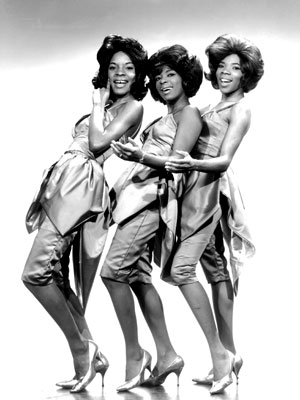
Martha Reeves, the Martha to our Vandellas, celebrated her 71st birthday yesterday, and we are going to celebrate a day later and wish her a belated birthday because we were too busy dancing in the streets yesterday. Actually, the song was first conceived by producer Mickey Stevenson after watching people cool off from open fire hydrants. He thought they looked like they were dancing. Such dancing did occur yesterday in New York, but, it was not only because of 100 degree temperatures early in the day, but also a hail storm in the afternoon that caused some cool duck-and-cover dance moves.
Stevenson wrote the song and showed the rough draft to Marvin Gaye who thought it sounded like it would be a great upbeat piece. Hence:
Martha Reeves was the second choice for the song. Kim Weston was originally proposed the song but declined it. Reeves arranged her own vocals and Motown songwriter Ivy Hunter was brought in to add a composition. The drum beat was added by Hunter. The song quickly became popular. It peaked at number two on the Billboard Singles charts, and was one of the fifty sound recordings preserved by the Library of Congress in 2006.
The song also represented more than the initial authors bargained for. While it was certainly a party song, many individuals construed it to echo the message of the burgeoning Civil Rights movement. The song took on a second meaning that it still carries today.