I have had a lot of internships. If internships were dollars, well, I’d have six whole George Washington’s. Okay. That doesn’t seem like a lot of money. Well, all of the internships were unpaid so I guess that analogy was somewhat fitting. Anyway, the point I am trying to make is that I have “worked” at many companies, but never truly worked at a paying job. Today, I was among the sea of suited individuals commuting to work in New York City on the 7:29 peak train to Penn Station. Today, I started my job with Wolters Kluwer health. No quotation marks around that one. My actual job.
I guess you could say I was a bit of a foreigner. Was there any doubt that I would not be able to turn this into some music reference? At Wolters Kluwer Health, I will be working as an Editorial Assistant for three health publications. Not very musical, I know, but that is what this blog is for. The reason I mention 70’s hard-rock band Foreigner is, well, I bet you could guess. I’ll give you a hint.
That was quite a hint! I felt like this song – title at least – was suitable for my first day. Now, I’m not a big Foreigner fan. No, late 70’s hard-rock treads the very thin line of corniness. Out of a list of these bands, Foreigner, mainly because of a couple of songs, stands out. Also, the band featured Ian McDonald for four years, and that is pretty cool.
With Foreigner, McDonald played guitar, keyboards and woodwinds. Trivia time. What band was McDonald in prior to Foreigner. The answer is…
King Crimson
McDonald played an active role in creating one of the greatest albums of all time – In The Court of the Crimson King (1969). So, do enjoy McDonald’s work with Foreigner and, oh, what the heck, here is one of my favorite songs of all time.
I think I am going to need to analyze this song at some point. I may have already done this one the blog, but, if not, be prepared for some epic Crimson talk!
I am a little late on this profile of JF Robitaille. He released the EP that I just acquired in 2006. Robitaille released his first full-length LP around a month ago, so I am comforted in the fact that I have not missed material in between, but I do still have to pick up the new album. I am a firm believer, though, that it is never too late to get into any musician (most of my favorite artists stopped recording music prior to my birth) and I follow my mantra today with the Canadian singer-songwriter JF Robitaille.
The Blood in my Body (EP) was Robitaille’s first release as a solo artist and its rich six-song bounty provided listeners five years ago with the same folk joy that it provides listeners with today. I am living proof. Robitaille is an up-and-coming singer-songwriter, already achieving comparisons to genre masters Nick Drake and Leonard Cohen. His smooth voice, creative lyric and acoustic verses certainly plant him in the cabbage patch of singer-songwriters. But in order to sprout higher than others the music needs a sticking factor, a charm that makes listeners want to listen to songs on repeat. Many cannot get over this hump. Robitaille has the talent to do just that.
(Song starts at 30 second mark)
“Morning After Morning” is a simple piece. Basic chords picked by Robitaille while the rhythm section keeps linear heartbeat-like percussion. Yet, and I’ve said this a good amount of times on The Music Court, simplicity is not a bad thing when the song’s tight structure is intriguing. “Morning After Morning” keeps your attention.
“New York” is not even two minutes long. It is also a much more frantic piece. The choral harmony is quick, but enjoyable. It is also fly-trap catchy. It is a good sticky though. The verses are carried by shortly stroked chords and fast-paced drums. The lyric is also noticeable.
“I died while I was dreaming,
For a second I stopped breathing and I woke up on the quiet side of town.
Didn’t sleep that year at all.
A haze of cigarettes and alcohol, this dust had settled in my eyes.”
The diction certainly hits hard even in this short piece.
Check out some more of Mr. Robitaille’s music by following this link to his website
Welcome all of you spectacular bundles of 1-dimensional vibrating strings! In this game of life there are games, some of them even containing games of their own! Meaning that we can at will play a game within a game within a game! And who knows if it even ends there? /inception
Today we will be talking about a particular game, one that employs video at that. Unless you have been living under a rock, or are downright ignorant, you probably have heard of video games… in particular the series entitled, The Legend of Zelda.
The Legend of Zelda is an action adventure series where you play as a boy named Link who is usually tasked with rescuing the princess Zelda and ridding the world of evils by combating monsters and solving puzzles. One could compare it to any other video game of the same genre, but then that person would have clearly never played this game.
The thing that differentiates this series from other action-adventure series the most, in my opinion, is the art style. Created by Nintendo, more specifically Shigeru Miyamoto, the series is essentially a Japanese take on traditional Western Fairytale. The result is a bizarre marriage of cultures and a breath of fresh air in the entire fantasy genre. And to top it off, the series also boasts some of the best music in the entire video game industry.
Music in video games serves multiple purposes. Aside from adding a bit of aesthetically pleasing noise, it can serve to set the tone of different parts of a game or to signify the type of area you’re in. For example, if you hear battle music, prepare for battle, and if you’re in a forest, you’re probably listening to the forest theme. In the case of the Zelda series, music is even entwined into the actual story, requiring you to play certain songs in certain situations to proceed. If only real life were like that.
Let me now show you a few of my personal favorite Zelda songs, all of which were composed by a man named Koji Kondo, who does much of Nintendo’s music.
Hyrule field is the large central field connecting all of the locations in the game The Legend of Zelda: Ocarina of Time. This is the song which plays whenever you are in Hyrule field during the day. The song is peaceful yet adventurous, perfectly befitting as you ride calmly on horseback to the next destination of your epic quest.
This version is played by an orchestra and I find it to be a particularly soothing version. The strings do a very good job of conveying the warmth of the song. In my opinion it is the perfect song to play while simply lounging in the sun.
This song is from my favorite Zelda game, Majora’s Mask. Probably the darkest game of the series, it features a world which is doomed to end in three days. It is impossible for you to save the world in these three days, so you are forced to replay them over and over until you do. As you do so, the routines of every single character are set to repeat exactly unless you interfere. And even if you do interfere, your efforts will be forgotten as soon as you reset the cycle. The Japanese sure know trippy.
The song of healing is played to cure the sick and wounded in this hopeless world. It conveys that perfect feeling of hope despite the unattainable odds. It is quiet and soft, yet strong and dignified. A perfect piano hymn for a world where certain doom is inevitable.
The Ancient Hero is actually a remix of sorts. The game The Legend of Zelda: The Wind Waker opens with a brief video explaining the central legend in the game. The video is set to a song named The Legendary Hero and is the main inspiration behind this remix.
It is pretty much a definition of epic. It open with soft harp which lays down this legendary tune. It is slowly joined by other instruments and before you know it is playing at full roar. The build is so gracefully executed that you almost don’t even need to play the game to understand the magnitude of the adventure you are about to undertake.
Music from video games is a strange thing. Standalone it is like any other piece of music, with a lot of it being compared to classical music for obvious reasons. But in the context of the game it comes from it becomes something new entirely. It becomes the feeling that holds the story together and the beat which paces the action.
As a kid, playing a Zelda gamewas basically a life changing experience. The way I see it, men growing up these days will be put into either one two categories – those that played a Zelda game as a kid and those who didn’t. A game itself can be a series of experiences, and that is what qualifies you in life. Who knows, maybe one day the experiences you put down on a resume won’t necessarily have to be real life. Besides, if life is a game, then are not games like lives?
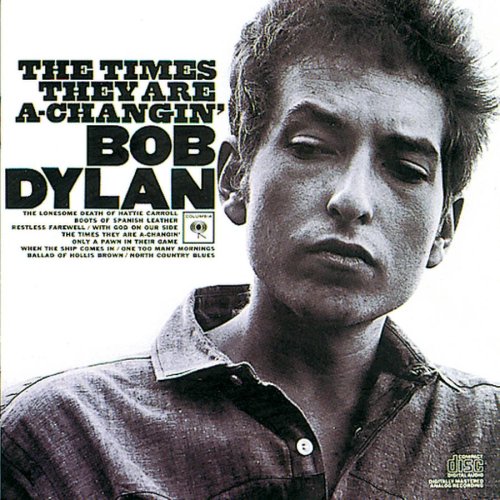
“Come gather round people wherever you roam.” The opening lyric of Dylan’s ode to the 60’s generation is one of the most recognizable song openings in rock history. No guitar riff, just Dylan’s distinct croon. I bring up Dylan’s classic for somewhat selfish reasons. The waters around me have grown and come Tuesday I will begin a new stage of my life, shredding the title of college student and taking on the new label of employee. Yes, I will be starting a full-time job with Wolters Kluwer as an Editorial Assistant and I’m extremely excited.
Obviously, this means that the blog will be experiencing changes, at least on my part. I will make this pledge. The Music Court will remain a memorable music blog and the content will always be fresh and entertaining. While my posting schedule may transform because of time constraints, I promise to keep publishing exciting and passionate music content.
So, while the times may be changing, my undying love for music and writing will never subside and, with the help of the Music Court’s other faithful contributors, we will continue striving to achieve our goal of becoming one of the internet’s most viewed music blogs. Before I sign off for the night (and embark on a weekend trip to Civil War sites with the family) let me quote Aristotle – “Change in all things is sweet.”
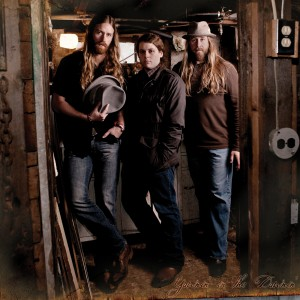
Never underestimate the power of music and brotherhood. The Barry brothers are proof of this sentiment. The band, Barry, was founded in 2011 by three brothers, who, despite having other commitments – like families, jobs and school – gathered in their self-made studio in Western, New York, and cut a fresh folk-rock album that oozes with such a cornucopia of sounds that I’m not sure how to label the music. The best I can do is alternative-inspired folk churned with harmony and a pleasant hint of country. I believe this description is suitable, but this is music you just want to lose yourself in. You can make your own judgment after experiencing their debut EP Yawnin’ in the Dawnin’ which was released on May 19. You can take a listen to some tracks below.
The Barry brothers are from Hume, New York. Just for some perspective, Manhattan is close to six hours away from Hume. New York. That is how far west they are. And I do think their location has an influence on their sound. It is agrestic, taking on the feel of rich farmland and open skies. Music like this cannot be created in a big city. This natural, old-time folk needs to bake in a town where the cacophony of screaming taxis and rumbling subways is not pervasive, and where when night falls true dark blankets the town.
The band is made up of Patrick Barry (Vocals, Guitar, Harmonica & Keys), Benjamin Barry (Bass, Vocals) and Bradford Barry (Drums, Vocals) and their musical maturity is on display throughout their first EP.
If I had to pick a favorite song it would be “Carnival(e).” The song combines two awesome elements. The verses are odd, but they match the carnival lyric well. The music moves up and down like a bouncing ball. The chorus strikes and the rhythm of the verse is replaced by a fast-paced rhythm and vocal harmony. This transition is skilled and much respected. “Three Years in Carolina,” another exciting song, displays Barry’s country influences. The chorus emits a southern effervescence and the well-placed harmonica helps carry the five-minute Carolina ode.

 I have had a lot of internships. If internships were dollars, well, I’d have six whole George Washington’s. Okay. That doesn’t seem like a lot of money. Well, all of the internships were unpaid so I guess that analogy was somewhat fitting. Anyway, the point I am trying to make is that I have “worked” at many companies, but never truly worked at a paying job. Today, I was among the sea of suited individuals commuting to work in New York City on the 7:29 peak train to Penn Station. Today, I started my job with Wolters Kluwer health. No quotation marks around that one. My actual job.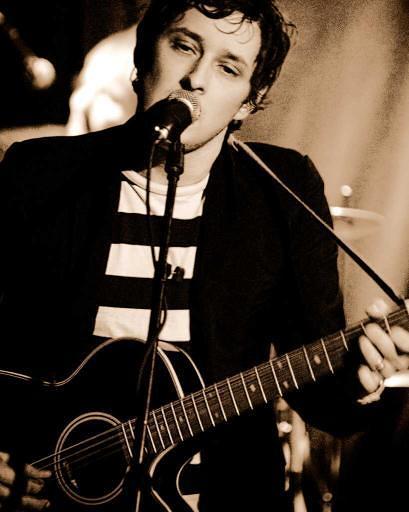




 The Music Court