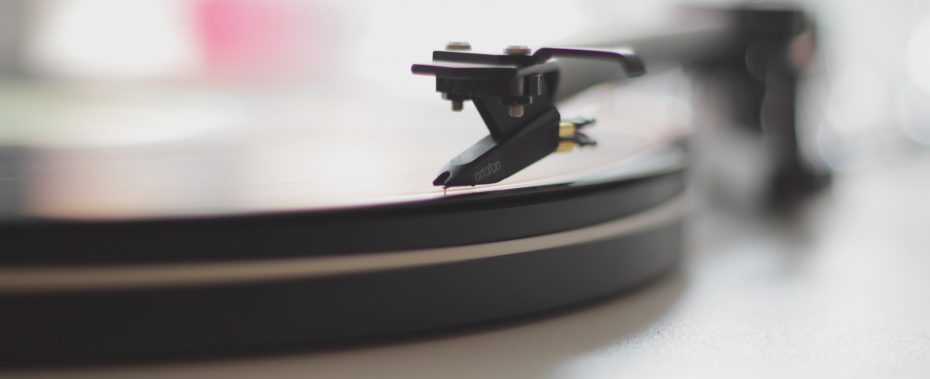
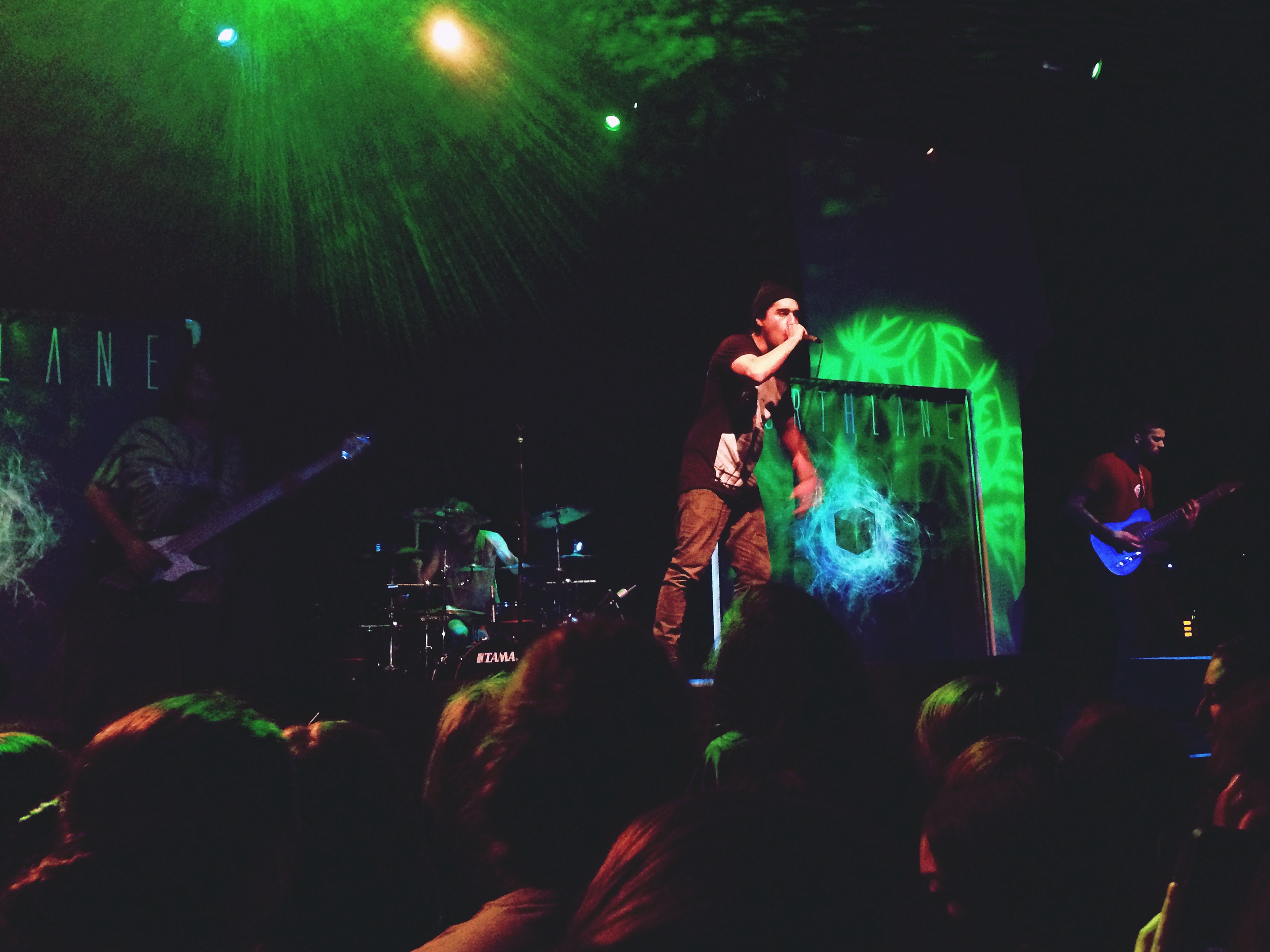
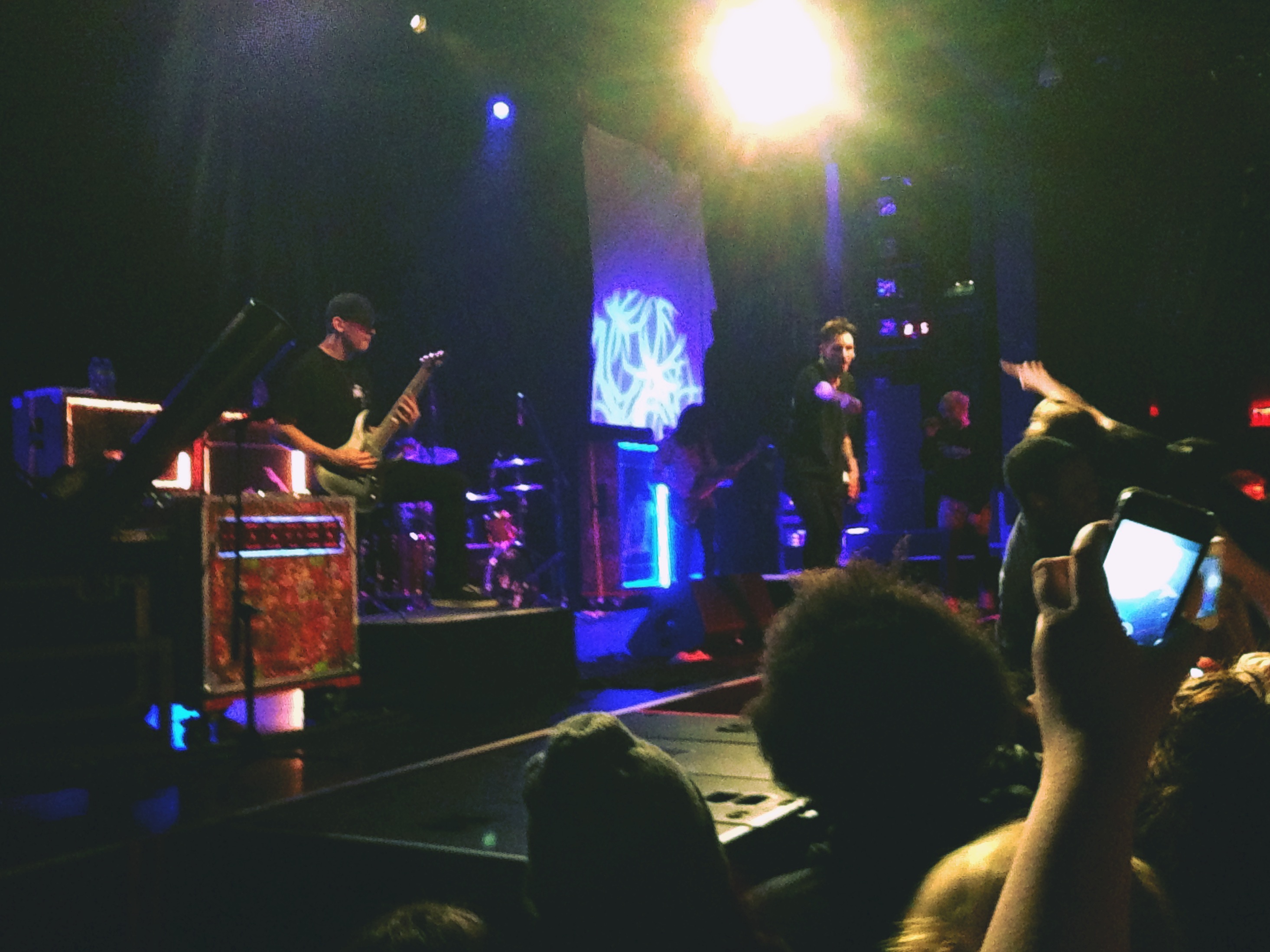
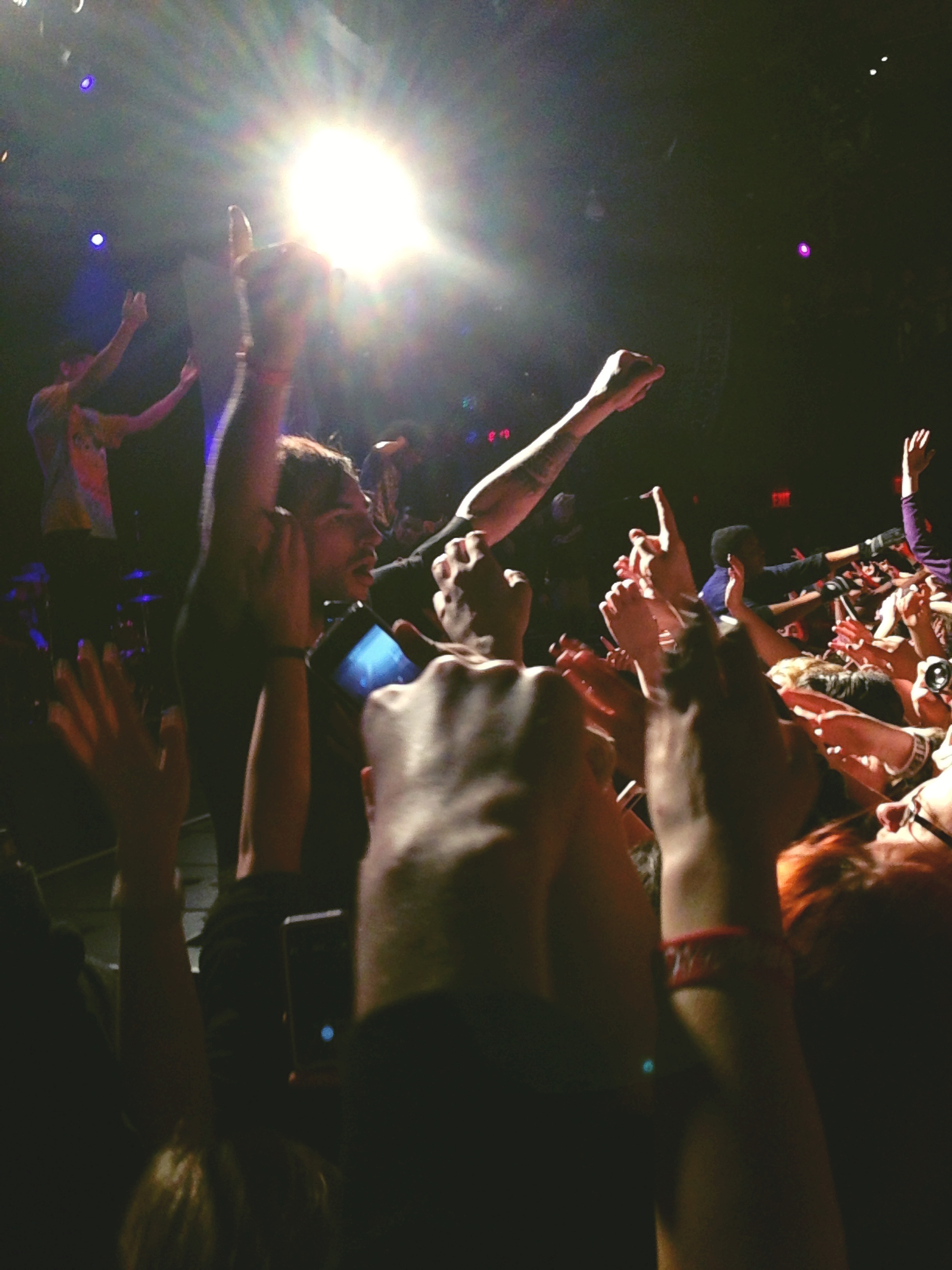
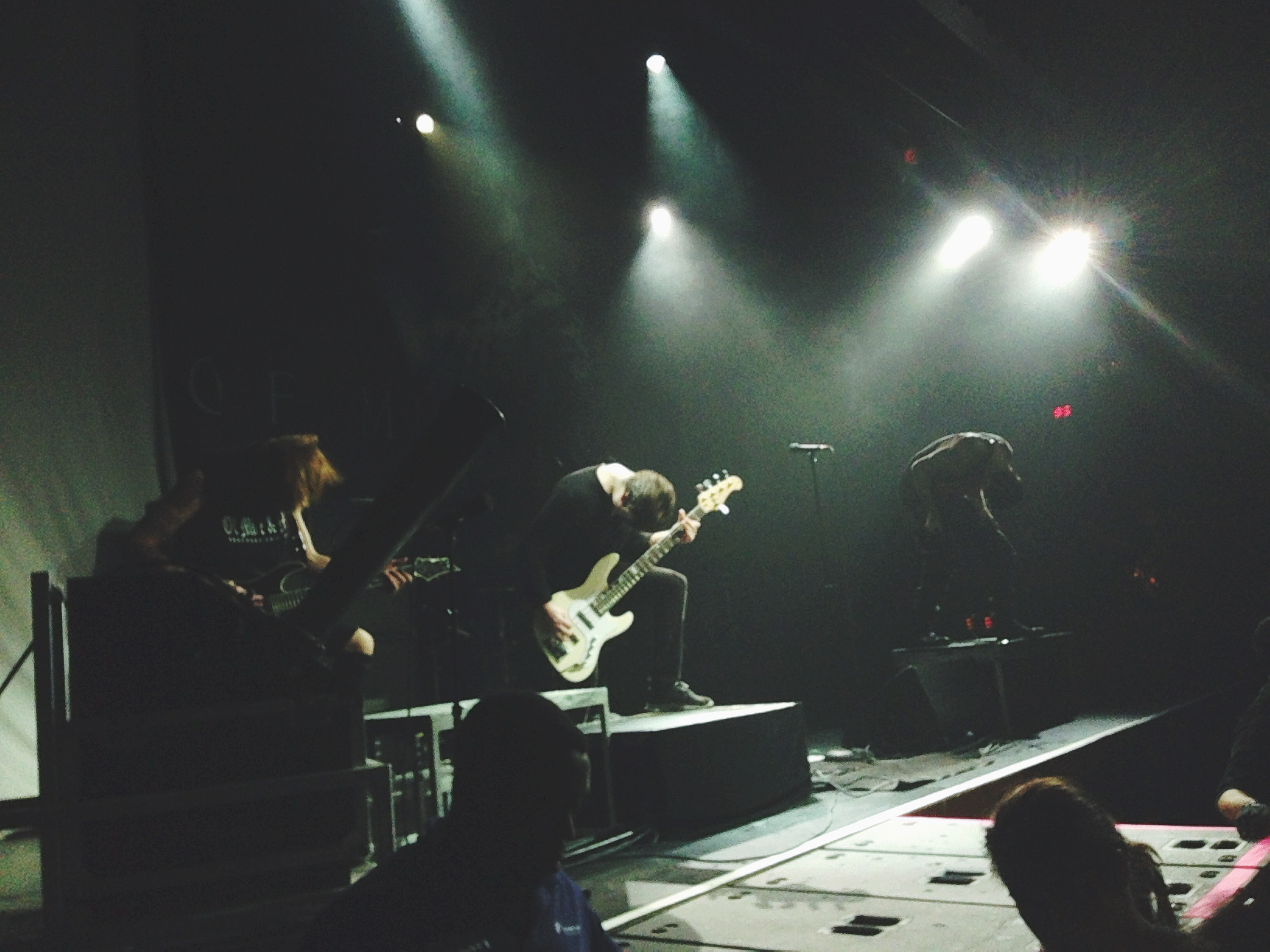
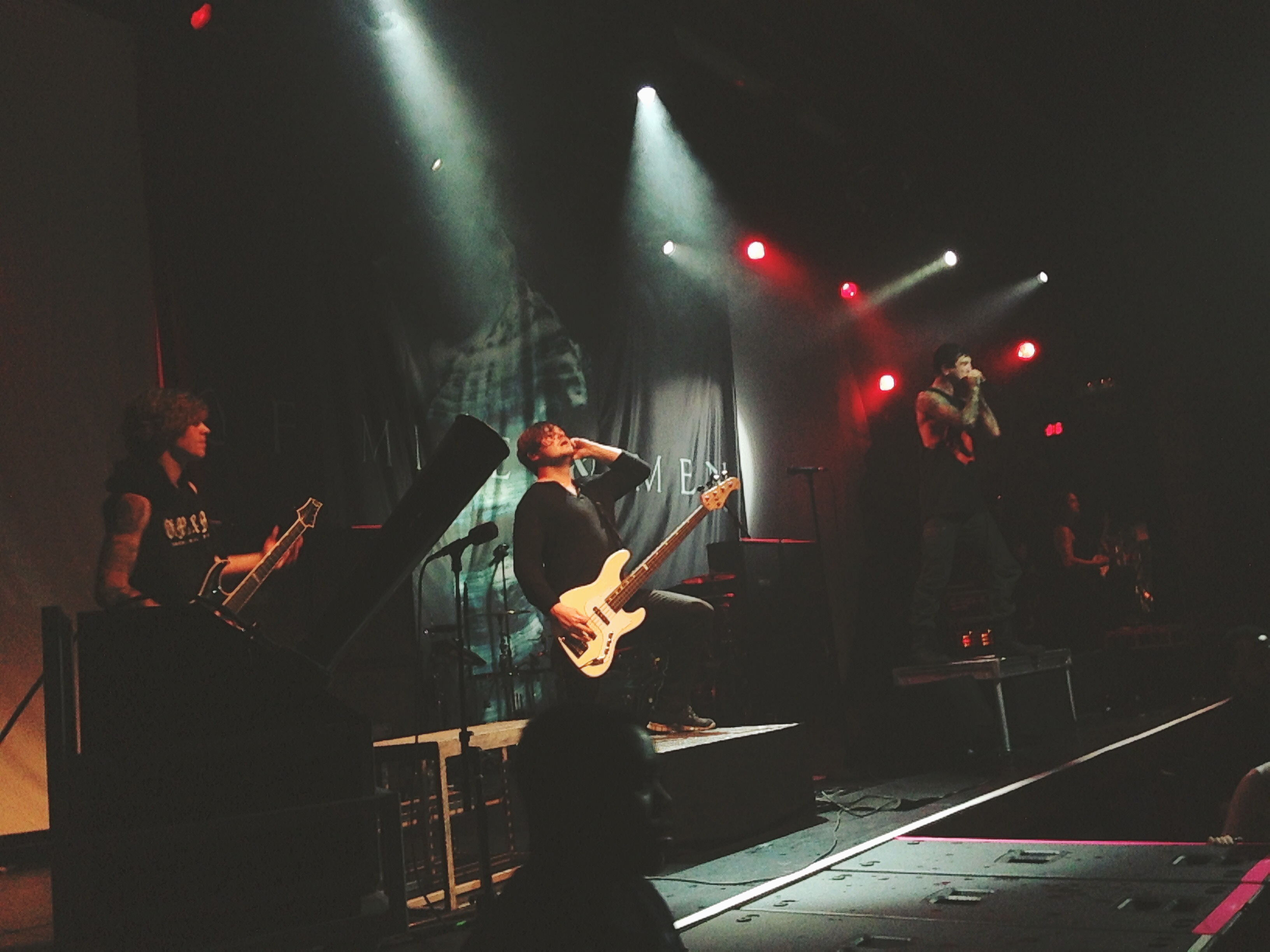
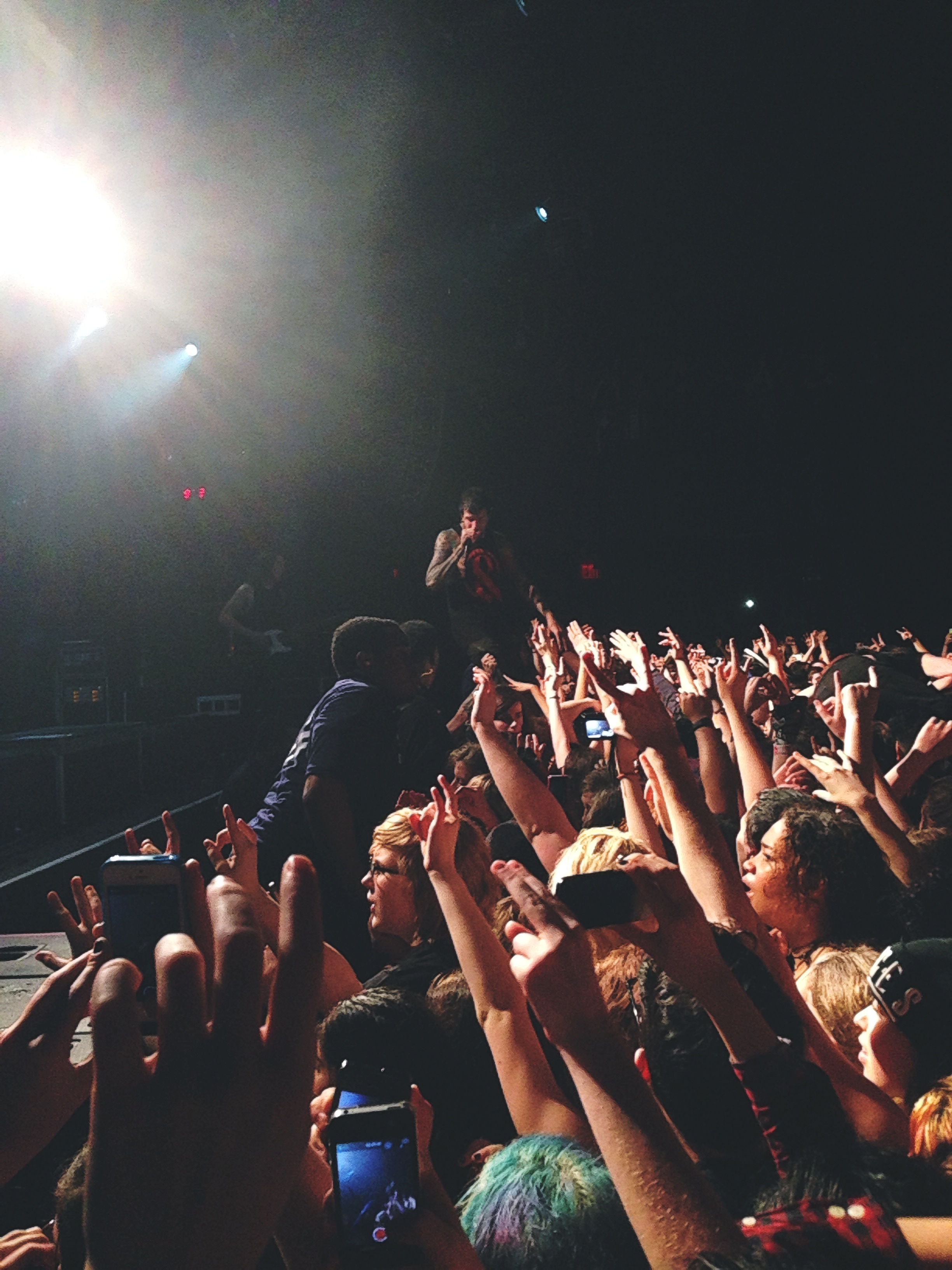
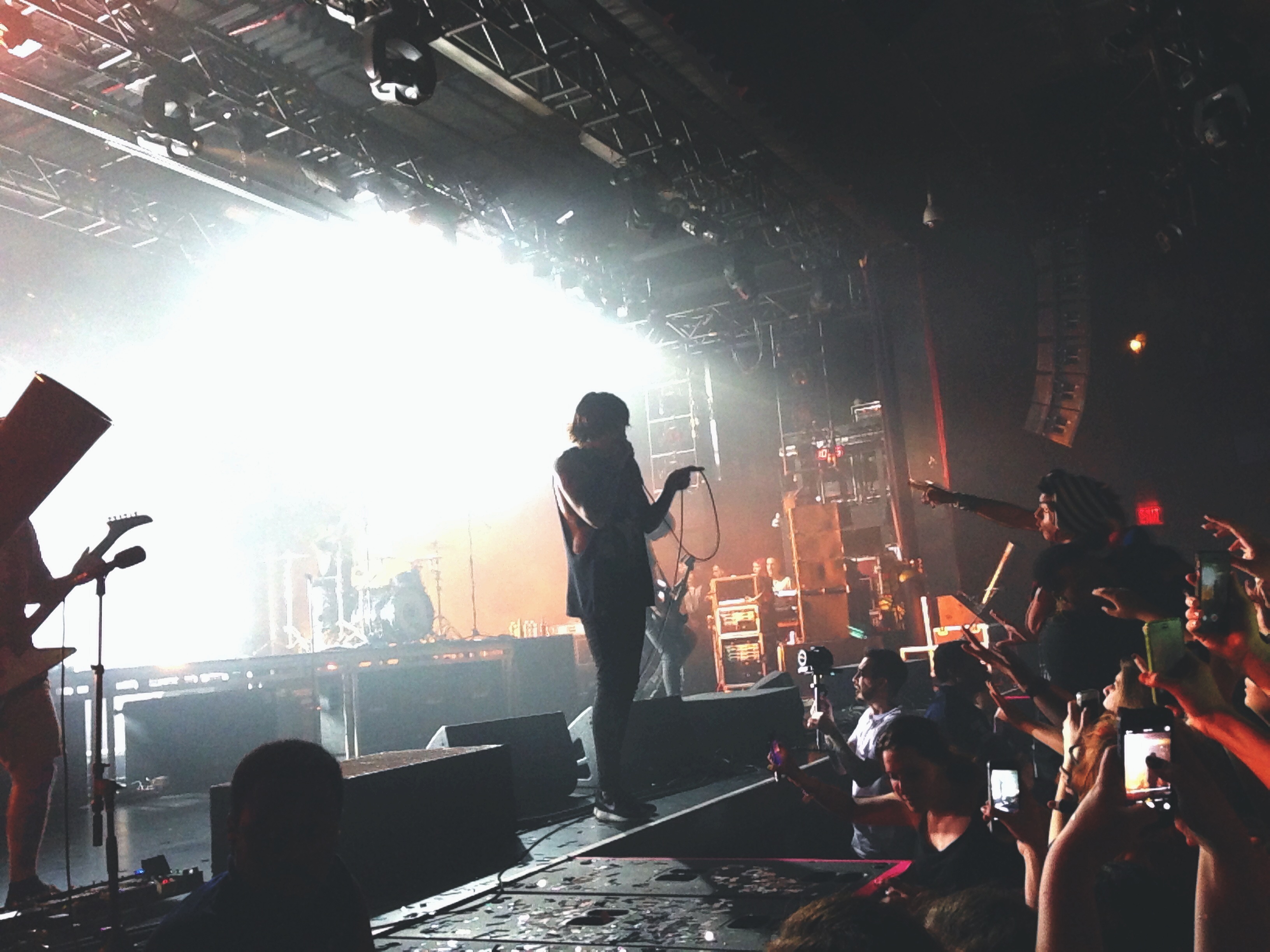
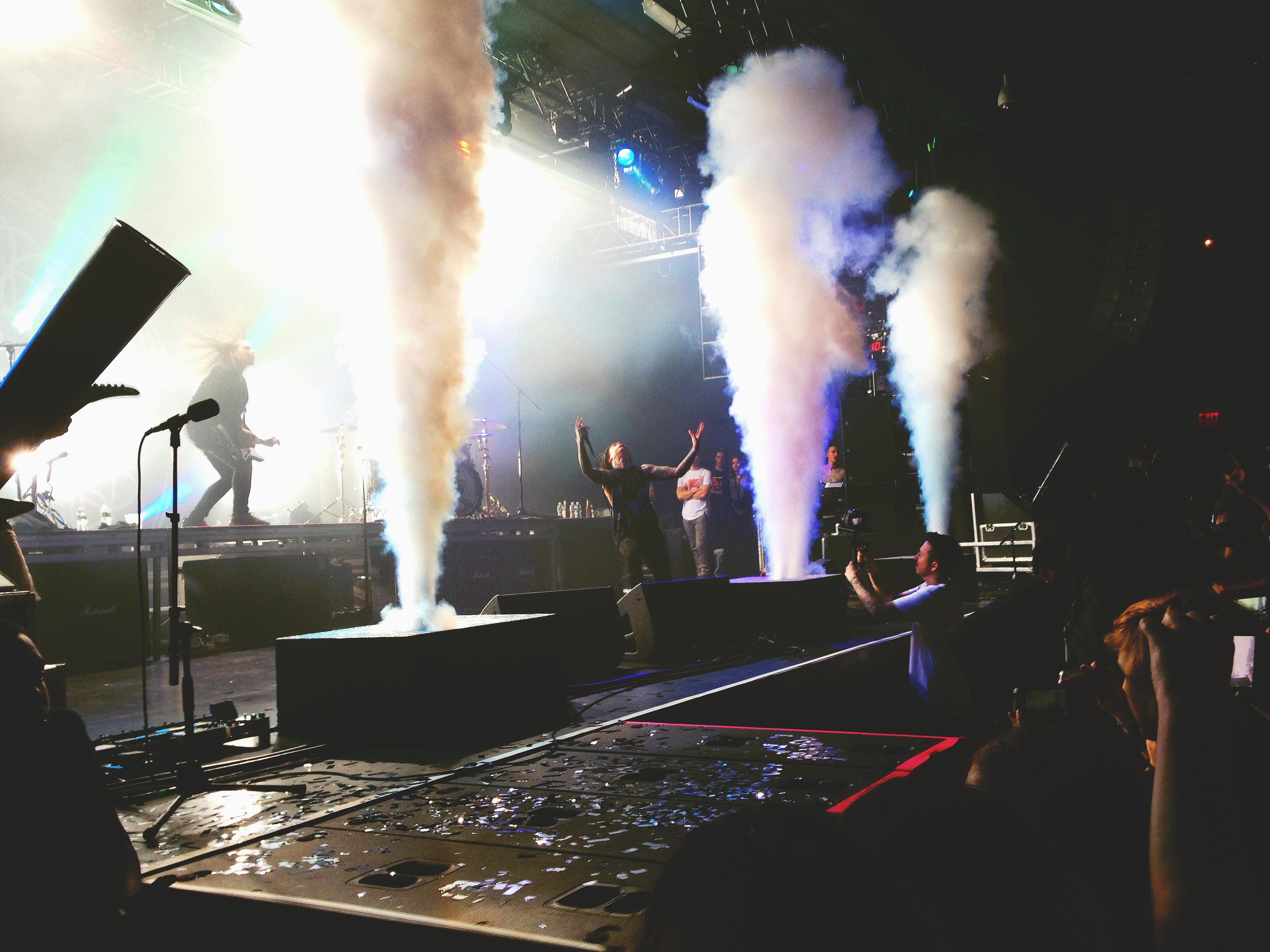
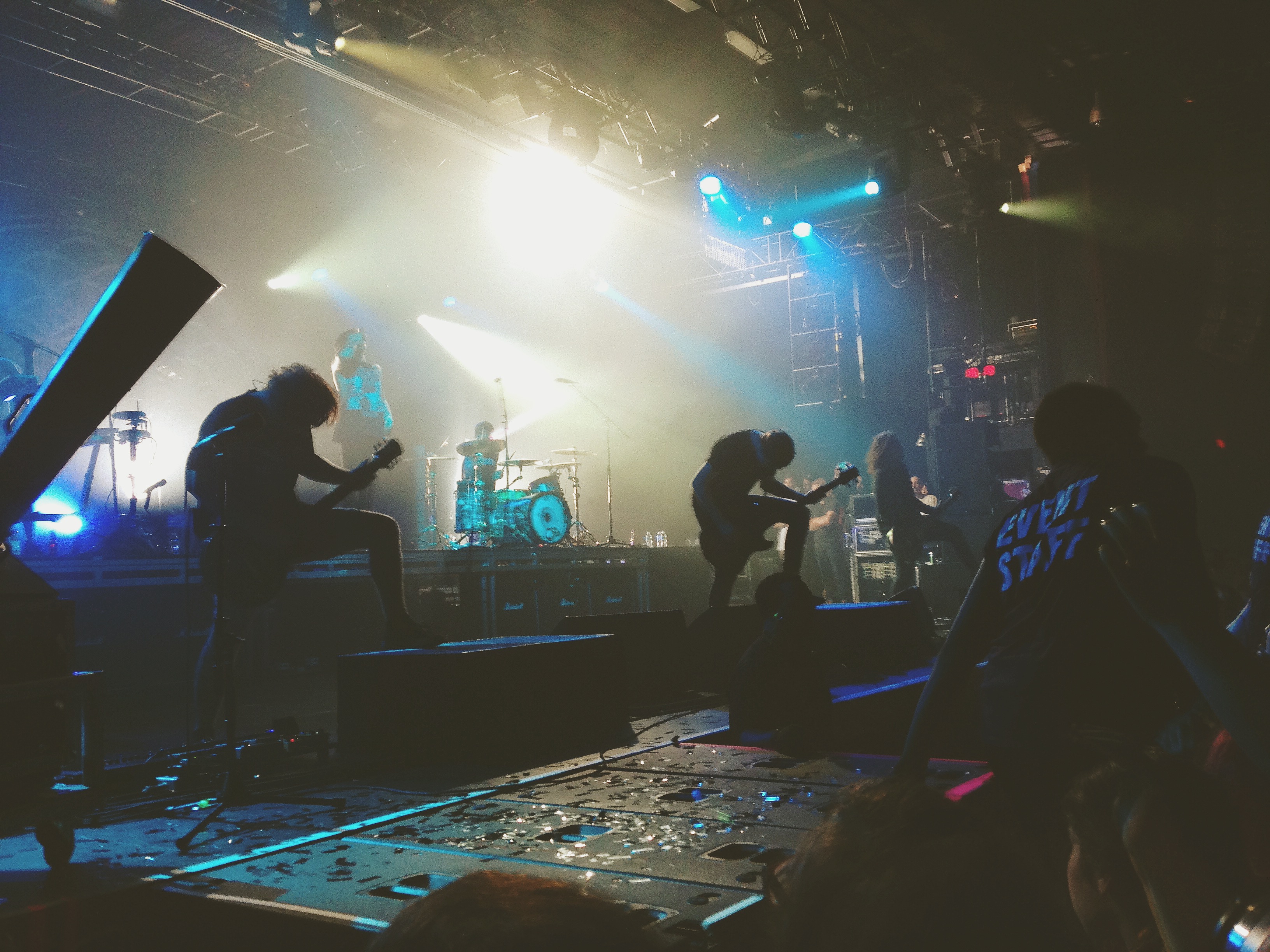
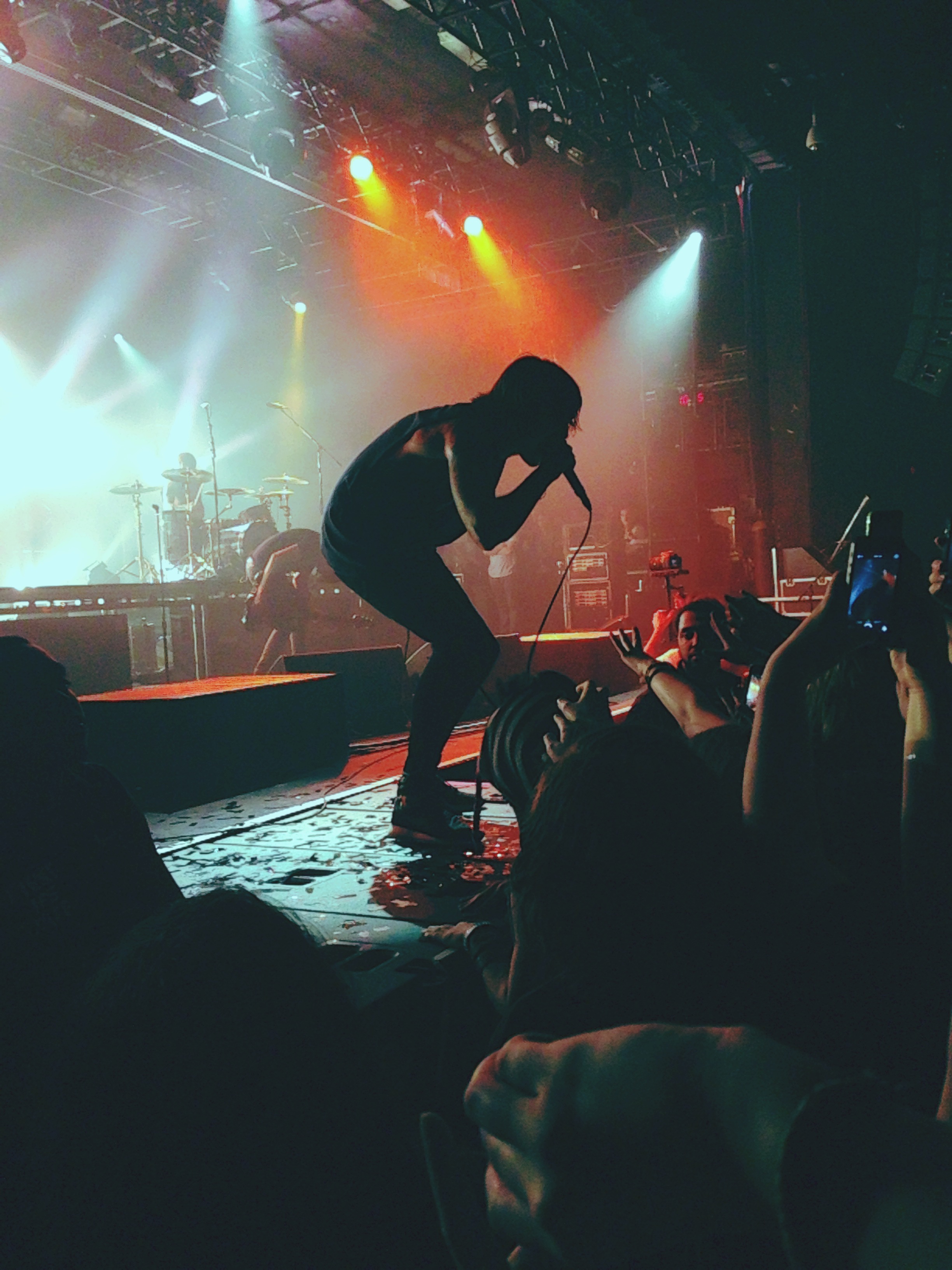
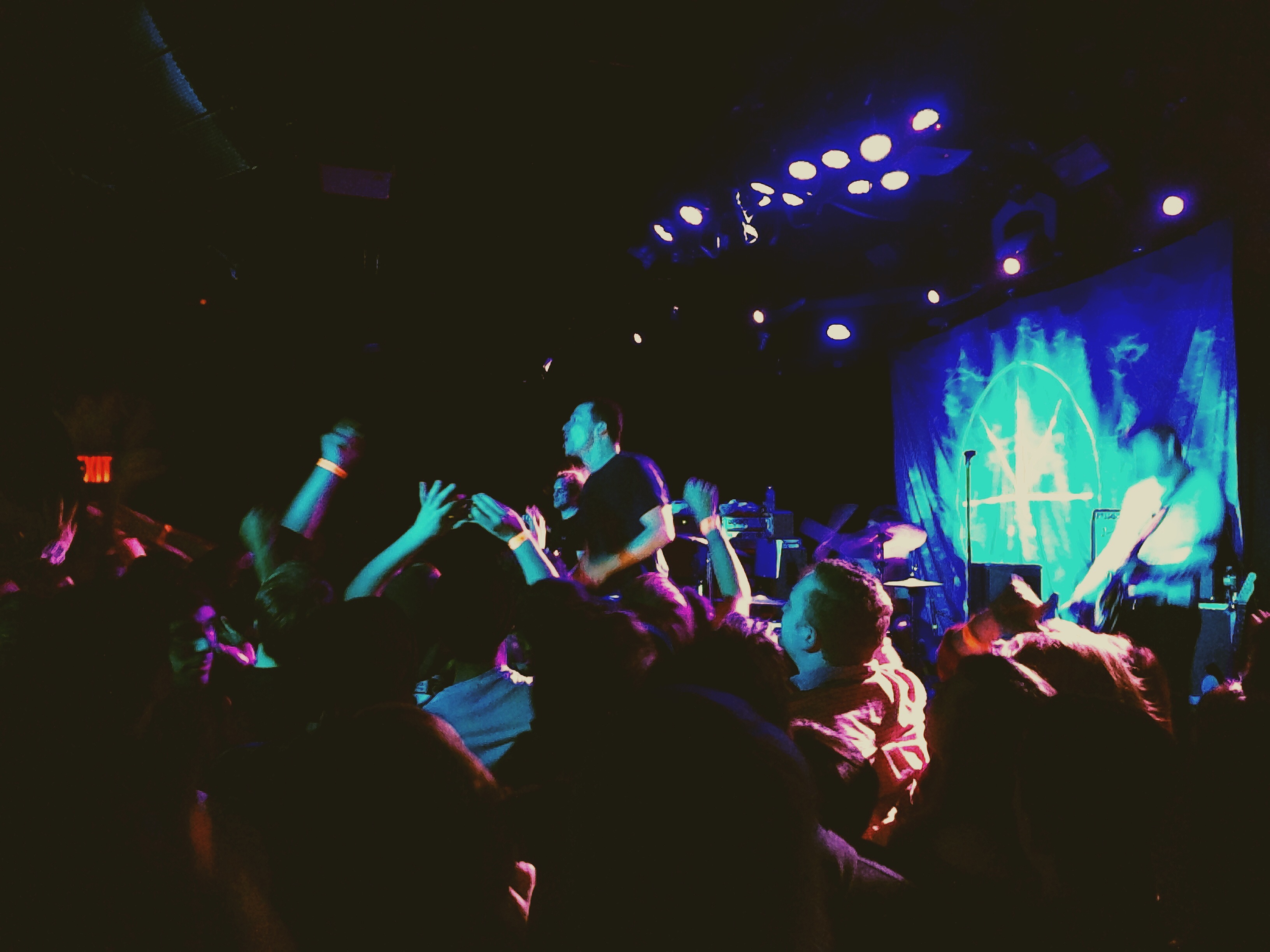
On 2/28, I was, once again, without camera, but have to say I’m pretty satisfied with what my phone did manage to capture. I went to Best Buy Theater for The American Dream Tour, enduring an hour in the literally freezing cold before managing to get inside. The venue was packed for the night’s sold out show. After a long period of confusion, during which the crowd managed to spot BryanStars in the balcony, Northlane was finally on as the opener. The Sydney based metalcore band had a strong set, closing with “Quantum Flux,” a definite crowd pleaser. Next was ISSUES, featuring a bright neon stage set up on their equipment. They played songs from their new album, including “The Settlement” and “Stingray Affliction.” Tyler Carter’s vocals have only gotten better since his days in Woe, Is Me, as have Michael Bohn’s. They had a live turntable set up for the scratches and electronic components of their songs, manned by Ty Acord. They had an energetic set, which, for myself and most of the crowd, felt much too short.
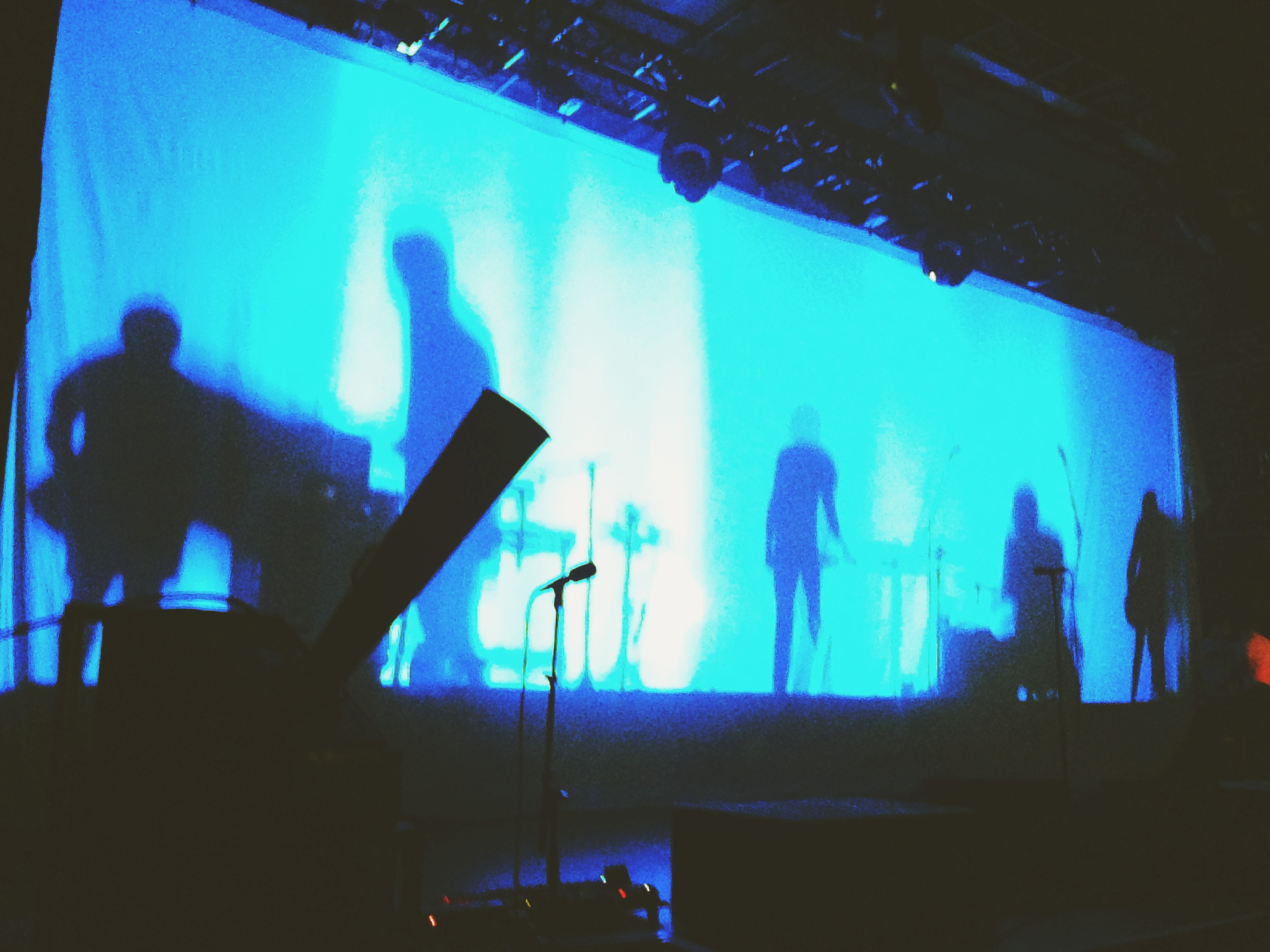
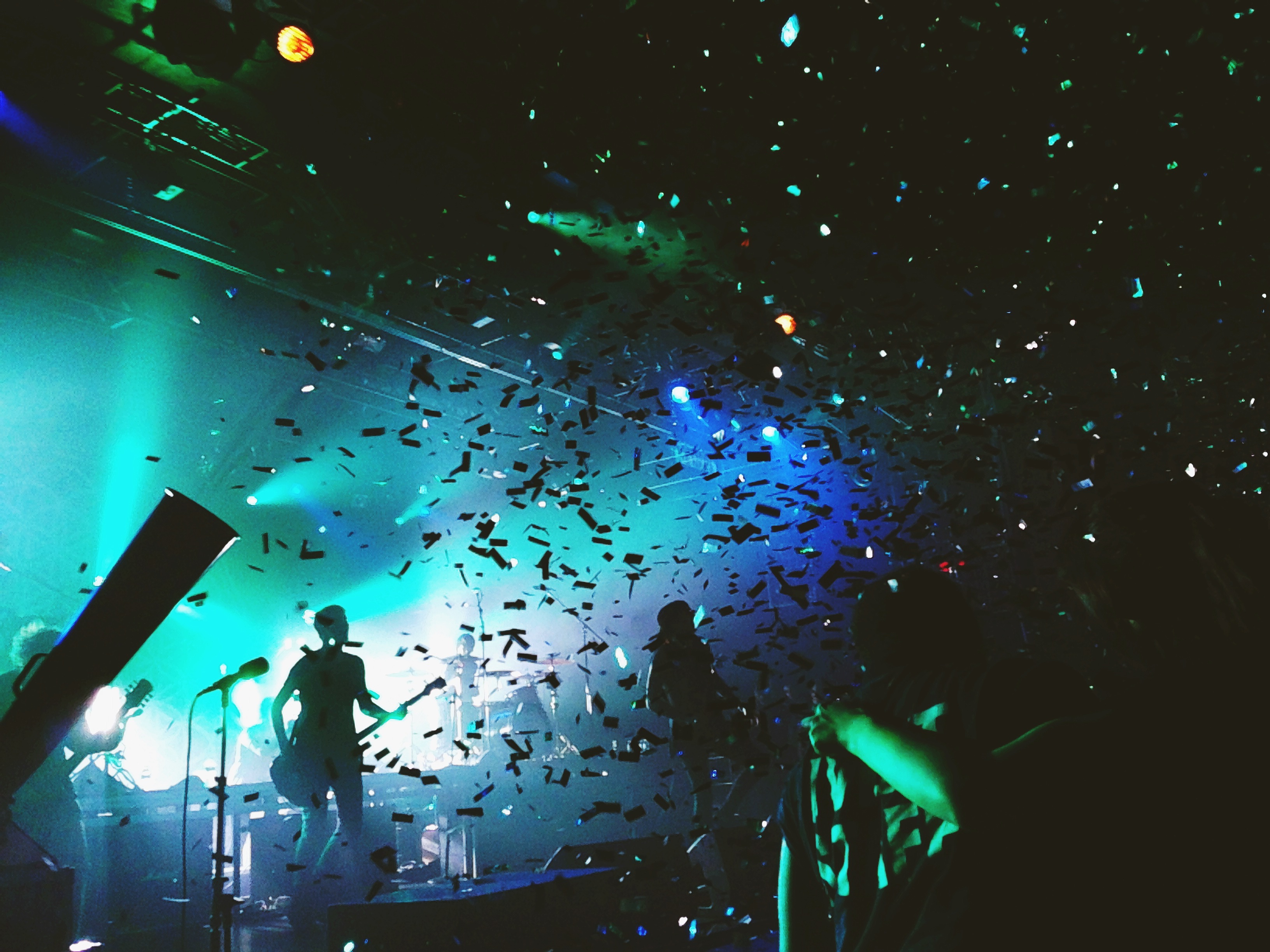
Next was Of Mice & Men, with a backdrop of their new album artwork for Restoring Force. They had a mix of songs from their new album as well as The Flood, but disappointingly, songs from their self-titled were nowhere to be seen. Aaron Pauley proved his vocal capabilities on both their new and old songs, and singer Austin Carlile’s stage presence was powerful and interactive as always. Their set too felt too short, but they managed to pack an immense amount of energy into a short amount of time. The crowd had been becoming progressively more aggressive during this time, and during Bring Me The Horizon’s soundcheck people were rushing to leave the sea of people. They opened from behind a large sheet that had previously been behind Of Mice & Men’s backdrop, using strobe lights and smoke to create shadows from behind the sheet. Oli Sykes chastised the crowd’s use of their phones during the first part of the set, encouraging that we live in the moment instead of behind our screens. They used smoke and confetti cannons throughout their set, along with a fast paced light show in the background. They closed with “Sleepwalking” and more blasts from the confetti cannon, putting on a frenzied, high energy show as always.
People have criticized Sykes’s live performance in the past, but his vocals on the new album Sempiternal certainly prove how much his range and vocal quality have improved, along with how dynamic they truly are. Having seen both Of Mice & Men and Bring Me The Horizon before this review may be admittedly biased, but this was truly an incredible show, and the next day’s soreness was most definitely worth it.
On 2/26, I found myself at (Le) Poisson Rouge to see Caravels, Seahaven, mewithoutYou, and Touché Amoré. In the hopes of being able to photograph I called them, only to be told that “no cameras with removable lenses would be allowed.” Turns out that there was no bag check, and I definitely could’ve brought, or at least snuck in, my camera. All camera related disappointment aside, the show was an incredible one, as to be expected.
Caravels, a self described post-hardcore band from Henderson, Nevada opened first, a five-member band with a focus on shouted vocals. After that came four-member Seahaven, from Torrance, California. They are along the same strains as Brand New and Citizen, and closed their set with the slow, heartfelt track “Honeybee.” Next was mewithoutYou, who managed to combine sleigh bells and acoustic guitar with spoken word and screaming in an eclectic mix. Parallels can easily be made with La Dispute, as they share a very similar sound.
The pit at this point was fully open, and had spread around to the entire front half of the crowd. Finally Touché Amoré was on, and the excitement from the crowd could definitely be felt. Though there were some technical difficulties with the microphone, lead singer Jeremy Bolm managed to power through, with the crowd shouting along every lyric. For such a powerful vocalist, his stage presence by contrast is extremely humble and reserved, only to be replaced moments later by his blistering screaming. This was most certainly the most energetic and intense show I’ve ever been to, but this was no surprise. I left with an even greater appreciation of the bands that had performed that night, along with the hardcore genre itself.
On 2/20 I went to the Bowery Ballroom to shoot INTER ARMA, KEN Mode, and Russian Circles. I will admit I had no previous knowledge about these bands, but after a quick perusing online I discovered they were roughly in the genre of metal. I went in with an open mind, as I had no clue what to expect. INTER ARMA is hard to put into a genre, but they’re classified as “sludge” and “black” metal. Regardless, it was a great performance, and eventually the crowd warmed up to them and started to become more involved in the music.
Next was KEN Mode, a Canadian hardcore noise rock band, which for only three members had an impressively large sound. The trio works together incredibly well, balancing rapid-fire beats with blistering vocals. The headliner, Russian Circles, was a Chicago based three-piece band, with an instrumental rock and metal sound, and uniquely no vocalist. Their set up featured an extensive pedal board for both the bass and guitar, which allowed for a multitude of sampling and looping throughout the live performance. For a metal band, all of the members look surprisingly “un-metal,” and from appearances only they could very likely pass as an indie outfit. Overall, they displayed their technicality and musicianship very well, and their ambient sound closed out the sold out Bowery Ballroom.
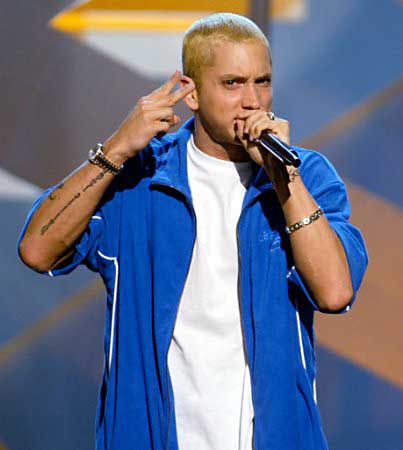
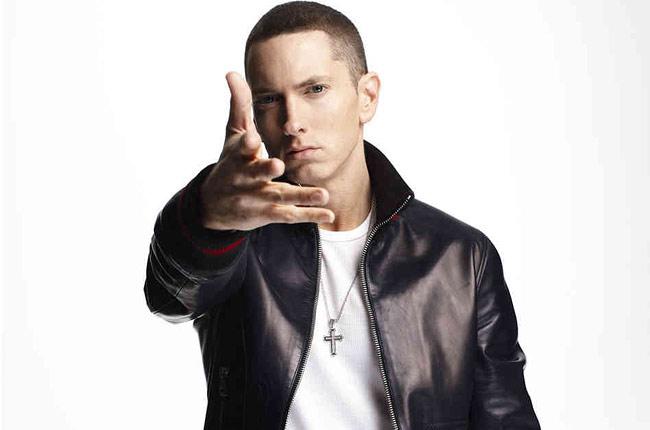
In this column, we continue looking at established artists by going through their career, album by album. Last time it was Foo Fighters. Today it’s the turn of one of the most widely sold and critically acclaimed artists of all time – Marshall Mathers, better known as Slim Shady or Eminem.
Note – due to space, I’m sticking to his ‘official’ studio albums and missing out his demo album, Infinity, as well as side projects like 8 Mile and Bad Meets Evil. If you’d rather read more about more obscure records next time, let me know in the comments.
Debate has raged for years over Eminem (real name Marshall Mathers): was he successful mainly because he was white? The answer’s yes – but not for the reason you think. His skin colour locked him out of the profitable gangsta rap market, and rapping about crime or drug dealing would have caused many listeners to accuse him of being inauthentic. He couldn’t even drop the ‘n word’ which most rappers throw around like sweets. Instead, he was forced to invent new ways to shock and outrage middle America. Enter Slim Shady.
The twisted alter ego of his stage name Eminem, Slim Shady said and did everything controversial you ever thought about. He baited politicians, outraged parents, made kids laugh and brought in a whole new demographic to rap music. Marshall Mathers also had another trick up his sleeve so not to alienate more hardcore listeners: his ferocious wordplay and rhyming. Casually dropping multi-syllable rhymes into the middle of lines were nothing to him. When his music first came out, they began describing him as one of the greatest white rappers ever. They quickly dropped the ‘white’.
The Slim Shady LP (1999) – The Blueprint
The story behind Eminem’s first album reads like a movie script: an unknown Detroit rapper gets his break by getting producer Dr Dre to hear his tape, and in a matter of months becomes a superstar. However if the Slim Shady LP is any genre, it’s a horror. While playing Slim Shady, Eminem wasn’t afraid to get cynical, provocative and very, very violent. It’s difficult to know what are scarier – the over-the-top gruesome fantasies, or vivid descriptions of being down and out. Nowhere is his dark persona better show than on Guilty Conscience, where Eminem and Dre trade verses as a devil and angel respectively. In the final verse, Em manages to provoke Dre – the former bad boy of rap – into losing his cool, effectively passing the torch onto his protégée.
The Marshall Mathers LP (2000) – The Masterpiece
This is without a doubt his darkest album. With a front cover of him huddled near the fireplace of his abandoned home, it dealt with subjects like his many family problems, drug use and his ‘corruption’ of teenage youth. He was accused of homophobia and misogyny, and did little to convince people otherwise. Even on his poppier tracks, he set out to offend as many celebrities as possible for the enjoyment of his listeners. However, he proved impossible to pin down. Whenever critics were prepare to write him off after his harrowing song about murdering his wife, he would release something like Stan, a touching and tragic tale of a deranged fan. His incredible wordplay and rhyming abilities were almost a footnote after his song topics. Nevertheless, it remains the best album of his career.
The Eminem Show (2002) – The Political One
After the madness of his last album, Eminem decided he had some growing up to do. That’s not to say it had no sense of humour – far from it – but Eminem was keener than ever to satirise the world at large. He was always a joker, and like Batman’s nemesis, he was skilled at holding up a mirror to society and saying: “You think I’m crazy? You made me this way!” There were still zany moments like Without Me, but the tone on a whole was more mature. He even confronted his troubled relationship with his mother and how rap music can save troubled kids. For most fans, it’s his most personal and powerful album, even if a few weaker songs kept it off the top spot.
Encore (2004) – The Disappointment
Perhaps based on expectations, Encore received rave reviews as usual when it was released, yet listening to it today, it’s hard not to wonder what went wrong. The highlights were his reflective songs – Like Toy Soldiers and Mockingbird – and his anti-Bush rant also deserves a few listens, but everything else verges on terrible. His lead singles still had a juvenile sense of humour but no meaning or purpose. His usually dexterous, quick-witting flow sounded stumbling and amateurish. Most of this was down to his increasing pill addiction which meant he was barely getting two hours sleep a night. If it had been a true encore, it would have been a terrible way to end his career.
Relapse (2009) – The Pretend Comeback
Eminem may have never been subtle, but it was a little on-the-nose to call a record Relapse while as in rehab. Thematically, he resurrected his Slim Shady character and tried to imitate the darker content that had launched his career. However, most songs sounded insincere compared to the passion of his earlier work. Many fans also complained about his constant use of accents. Eminem would later say the last two albums didn’t count as ‘Encore I was on drugs, Relapse I was flushing ‘em out.’ Either way, a slight improvement was good enough for fans after a long break from music.
Recovery (2010) – The Real Comeback
His true resurrection came in 2010 when, finally clean, he set out to work out what a ‘grown up’ Eminem album would sound like. The violent skits and songs poking fun at pop culture were gone – in their place were inspirational songs with positive messages. Both Not Afraid and Won’t Back Down were well received and showed how Eminem had changed his outlook. The lyrics were much tighter, although his duet with Rhianna showed he could still put himself in a dark place when needed. It was more earnest than his earlier work, and he still had the technical skills and wordplay to deliver his message well.
The Marshall Mathers LP 2 (2013) – The Legacy
Sequels usually suggest creative bankruptcy. Nevertheless, with some of biggest producers in music (including Dr Dre and Rick Rubin) behind him, Eminem could hardly fail. He managed to create an organic-feeling continuation of his most acclaimed song, Stan. He also produced some of the fastest, most intricate rapping of his career in Rap God. At one point, he was rapping an astonishing 10 syllables per second – not good for casual listeners, but music to the ears of his core audience. After seven albums and 16 years, he had reached the point where he could legitimately call himself a Rap God.
OK. I’m here. I’m typing. This is a good sign. I have been immersed in a lot of work lately, and thus have not had the opportunity to post to my beloved Music Court in a few weeks. I do very much hate falling into long posting droughts, and for more than four years I have prided myself on posting at least once a week (every week). Unfortunately, as they say with going to the gym, when you fall beyond 3-4 days of not posting (going), it is hard to pick back up again. You see, one of my main tenets on the Music Court is not dreck content. Meaning, I will not post for the sake of posting. I’m afraid today’s post falls into that blasphemous category. But, I had to prove to you all that I am alive and well!
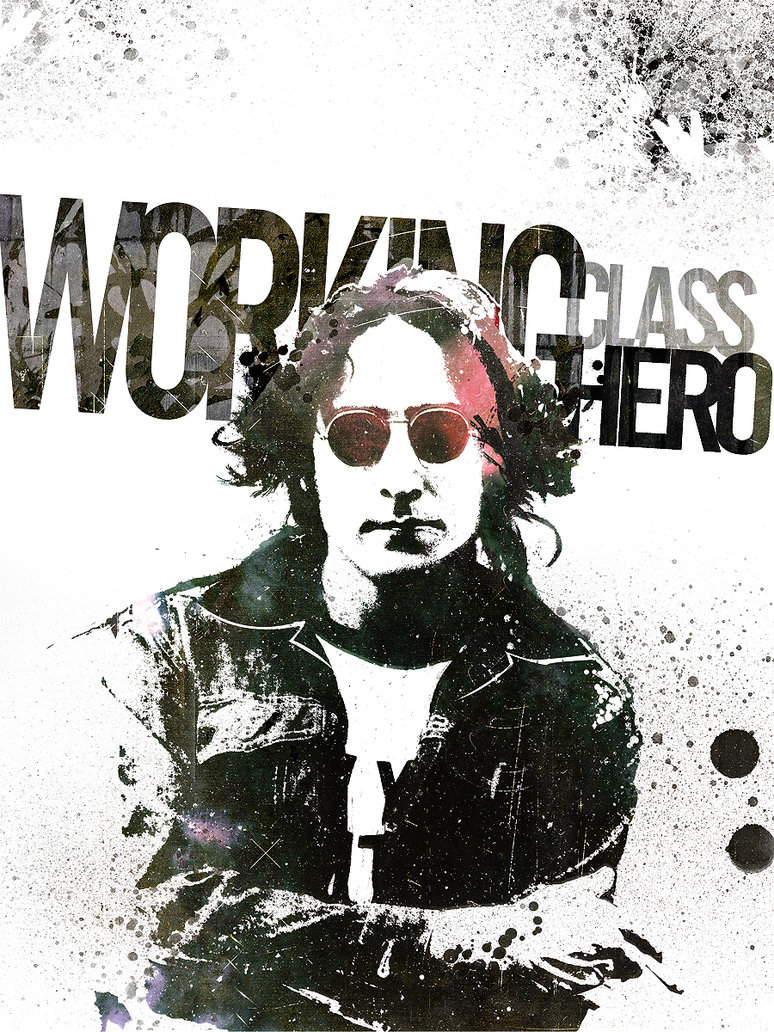
Although this post is rather impromptu (and I promise I will be back posting regular content soon), I figured I might feature some John Lennon. This song came up on shuffle the other day as I was driving home from Connecticut, and I just spent the few minutes of mindless driving listening to the lyrics of the piece. Yes, I have heard it several times before, but often times you hear a song and do not truly listen intently to the lyrics. I am continually struck by two elements of this piece. One, this is one of Lennon’s angriest songs – perhaps his angriest. His use of imprecation is at an all-time high and once you get past the fact that he once sang “Love Me Do,” you realize just how incredibly diverse he was as an artist. While the song may seem a bit strange coming from the deep pockets of John Lennon, he accurately represents the utter droll of middle class monotony and subtle, tortuous mayhem. Look, Lennon was a tremendous song writer. Tremendous is an understatement. But this song is perhaps the apex of his melancholy look at the machinery of the “working class hero.”



 The Music Court