Tag Archives: Music

Climbing Mt. Everest Cale

24 Aug

Everest Cale

Sometimes a band is just meant to be. Everest Cale is one of those bands. Composed of a group of college friends from South Carolina who journeyed north to the Big Apple, Everest Cale came together because of persistence and the joint desire to produce good music. The friends, Brett Treacy (vocals, guitar), Jeremy Kolmin (guitar) and Aaron Nystrup (bass), added drummer Nate Becker and keyboardist/vocalist  Ryan Roets, to round out the rock quintet. Since 2010, Everest Cale has played clean blues-inspired rock with 70’s inspired edginess and noticeable modern sentiments. On Sept. 4, they release their first EP Beast, and in anticipation of the release let’s take a listen to the band’s self-titled single.

The song begin’s with a softly-plucked guitar backing Treacy’s vocals. Treacy’s vocal has an intriguing quality to it. It is noticeably powerful, but it maintains a tenderness that is refreshing. It is recognizable, but original to Treacy. The progression of the song is smooth. One of the most attractive aspects of Everest Cale is that they play a refreshing blend of music that is skillful, organized, and precise. As the band demonstrates with the feedback and rock breakdown at the end of the song, they certainly know how to let loose and “rock out,” but they do that in a mature, unphased way. They are in charge of their music, and that is something that makes for an enjoyable listen.

Everest Cale plays their release show at Rockwood Music Hall, Stage 2 (New York) on Sept. 1. I am eager to listen to the rest of the EP.

You can keep track of the band by visiting their website and following them on Facebook and Twitter

Quintessentially Quintus

22 Aug

Quintus

In a way it is rather fitting that Quintus is named, well, Quintus. For all of you up on your Latin, Quintus means fifth. It took five years of recordings and the near death of the band before Quintus was able to piece together their first full-length compilation and follow-up to their 2006 EP The Shape We’re In. Was it worth the wait? Absolutely.

Back in 2006, Levon Helm produced Quintus’ EP The Shape We’re In and called the band one of his favorite new acts. The upbeat, country/folk album recorded in Levon Helm’s Woodstock barn, was never officially released because of a dispute with Downtown Records, the band’s label at the time, which was a shame because the album deserved to garner more ears than it did. Helm lauded the band’s maturity, and that attribute is evident in the tracks, all neatly developed, catchy, and exciting. The fire should have been warmed on Quintus, but it wasn’t.

Fast forward some years later, and I am writing to introduce the aptly titled Start All Over Again, which I hope is the beginning of a long career for the talented band led by producer, vocalist, and multi-instrumentalist Reuben Chess. The 11-track album does not have a dud, which is difficult enough to accomplish. Every song has its own flavor, some touching on the Country elements of their first release and others toying with a folk-inspired poppy Indie rock that combines horns and acoustic instrumentation with old-fashioned rock n’ roll beats. They are a throwback making modern music. There is an inherent contradiction in that statement, but I don’t hear it.

“Just the Same”  is a good example of what I just mentioned. The song’s sprightly rhythm combines with Chess record piano (what a coincidence – much in the vein of Lafayette Leake) and even a taste of Travelling Wilburys. Chess even adds in Buddy Holly’s trademark late 50s stutter. The horns are added delicately and fall behind a harmony straight out of the 90s. The song is such a wacky combination of elements, and it works exceptionally well. Credit to Mike Riddleberger – drums, percussion, vocals, David Dawda – bass, acoustic guitar, ukelele, banjo, piano, vocals, and Dan Kreiger – keys for their tremendous work in this excellent song that is a great expression of the band’s talent.

“To The Fillmore East” immediately follows “Just the Same” on the album. Chess begins the song with a moaning harmonica that leads into his powerful croon over a crafty acoustic guitar that follows the vocal to a tee. The song collides at close to the one minute mark and the full ensemble introduces itself. Quintus’ harmony is strong throughout the album, but this song features it specifically well. The song even takes on a pre-Magical Mystery Tour Beatles feel or, better yet, a California Beach Boys feel. The breakdown at 1:40 is wonderfully original. The song is a tremendous joy to listen to, even featuring an untampered electric solo and a cajun-saturated vocal echo, finishing with a fluffy harmonica and whistle.

Levon Helm was right. Quintus is a special band. It’s time for them to get the notoriety they surely deserve. So, go on, tell your friends.

The album can be purchased at the band’s Bandcamp and you can catch them on Facebook or Twitter

Coldplay Plays the Izod Tonight – August 3 – Great Cover of Fix You

3 Aug

Why does Coldplay get such a bad rap? It’s an odd phenomenon. I’ve heard a lot of “old” Coldplay fans say that current albums have become loud, mainstream messes, and thus they have been turned off by the band. You see, I actually see it differently. I think Coldplay is a perfect example of a band that can bend mainstream music to fit their own brand of piano-infused spacious rock. I think they have found a way to be mainstream relevant (duets with Jay Z and Rhianna, for example), and still extraordinarily talented. Since 1996, Coldplay has been creating infectious pop/rock tunes, and they have gained a growing following that mixes young and old listeners. Their music is enjoyable and marketable. We should be commending them, not censuring them.

I will be making the traffic-fueled trip from Long Island to New Jersey tonight to see Coldplay on night one of their two-day sojourn at the Izod center. I have peeked at the set-lists of recent performances, and they perform a mix of material from their new album Mylo Xyloto and some staples like “Fix You,” “The Scientist,” and “Clocks.” I wonder if they might change it up a little bit since they are performing two nights. As long as they play my favorite Coldplay song, “The Scientist,” I will be happy.

To prepare myself for the concert tonight, I’ve been listening to some Coldplay songs (even though it does seem rather ridiculous because I am going to hear them all again later). As I was listening to “Fix You,” I came across an excellent cover performed by Boyce Avenue, a band of three multi-instrumentalist brothers from Florida. They play this cover of “Fix You” with Tyler Ward, and demonstrate excellent vocal harmonies. And, damn, it doesn’t matter who performs it, that climaxing guitar riff in the middle of the song is so incredible. It was really a strike of genius from Coldplay. Chris Martin, lead vocalist of Coldplay, wrote this lyric for his wife, actress Gwyneth Paltrow, when her father died.  He has called the song, “the most important song we’ve ever written.”

Here is the cover by Boyce Avenue. Enjoy.

A Window to Honduras – San Pedro Sula Sessions

1 Aug

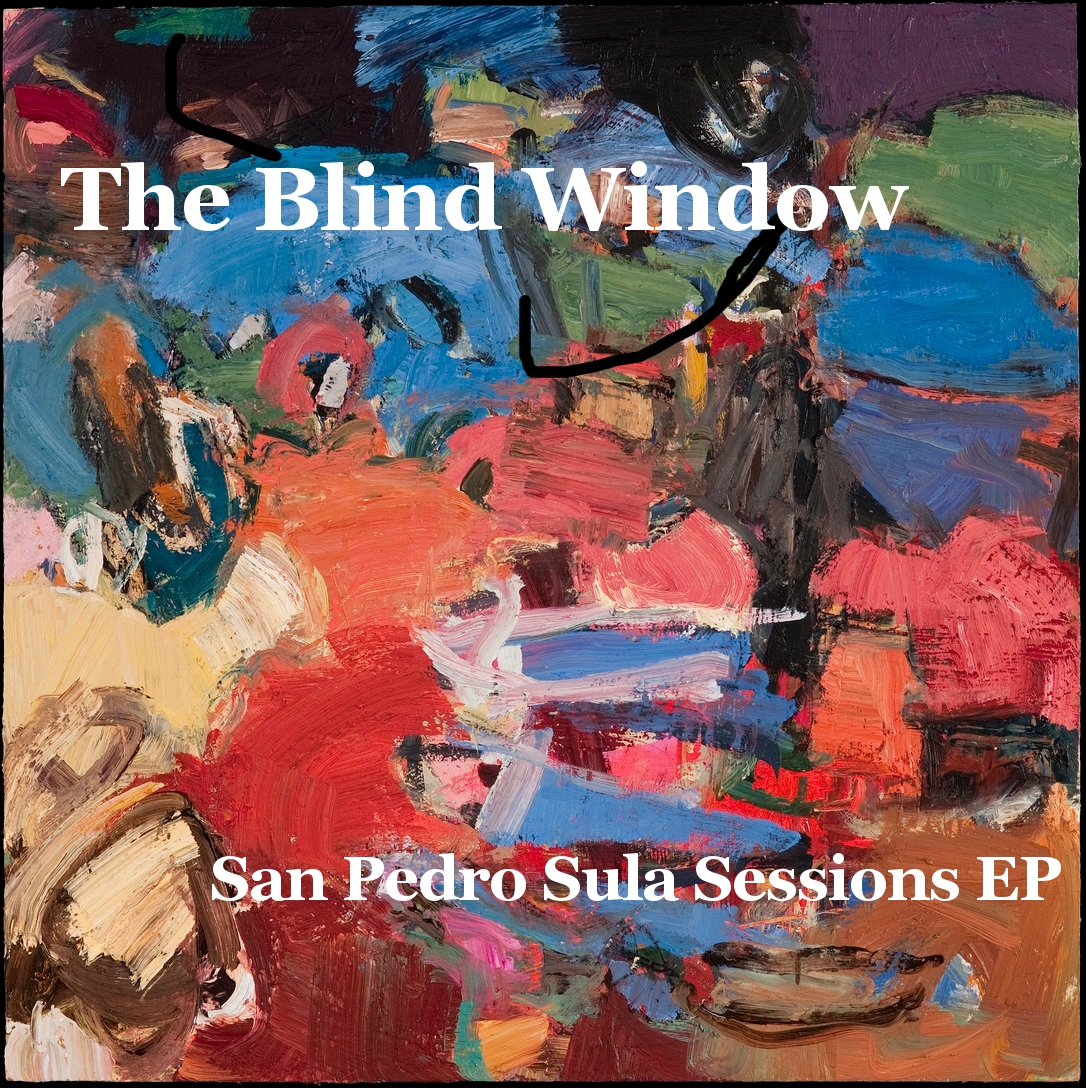
What happens when you combine Americana beats with troubadour inclinations, take the intriguing combination to the warm, mountainous highlands of Honduras, and base lyrics off of historical narratives that you just happen to be teaching to children in the country. Well, much in line with the album cover above, you get this odd mixture of brush strokes and colors that form a piece of artwork, both delicate and brusque, almost Hemingway-esque.

The Blind Window is led by multi-instrumentalist Brian Katz, a semi-finalist in the 2011 International Songwriting Competition, who created this blend of inspired music while working as a history teacher in Honduras from 2010-2012. In his surroundings, he found enough isolation to devote time to developing his craft. In his subject, he found ideas that he molded into songs of pain, expired youth, and loss.

His music is endearing. It mixes the midwestern Americana branded by Tom Petty and Neil Young with modern Dylan-inspired folk created by bands like Fleet Foxes.

San Pedro Sula Sessions is The Blind Window’s first EP. Released in mid-July, the album is being toured in the Toronto area. I want to target two tracks that I think you all will like, both of which (like the entire EP) are available for free download at The Blind Window’s Bandcamp.

In order to understand the lyric of “William Walker” it is first important to understand who Mr. Walker was. Let me brush up a bit on my history, and, Mr. Katz may need to help me a bit. Walker was a filibuster (idea of conquering Latin American land and creating new slave states to join the Union) who became president of the Republic of Nicaragua in the mid-19th century. He ruled until he was defeated by a coalition of Central American armies, and was executed by Honduras in 1860. Ah, so now the lyric, “Shot at the firing wall by Honduran guns,” makes sense. The song’s introduction combines a staccato acoustic rhythm with synth. It would be a disservice to just say it’s Indie. I catch a noticeable scent of modern Mountain Goats. The band layers elements before the vocals begin.

Katz’s vocal is certainly Neil Young-like. His voice can get up there and it rises in the verse skillfully and melodically. I absolutely love this crescendo. He possesses a vocal talent much like some of the better folk artists, and this elevates the music to an excellent level.

Now, with William Walker’s history in your mind, read the lyrics of the piece. In a small frame, Katz speaks on Walker’s last days, reminiscent and nostalgic. And, there are gem-lines like, “When I am freed, from this penitentiary, I will reach, my divine finality.”

“Lost Between the Lines,” begins with soft ahs much like Iron and Wine’s “God Made the Automobile.” This continues and rises over a guitar riff until it fades into a perfect harmonica. Gosh, Katz’s voice really does remind me of Neil Young. Sorry for repeating it, but I really think he has a similar voice. The song moves at a great pace, the harmonica fill my favorite portion. It is not difficult to recognize the talent of The Blind Window, and I look forward to hearing about them more soon.

Follow the band on Twitter, Like them on Facebook, or Visit their website

It All Sounds the Same – Pop Imitation

30 Jul

Only three chords to go

Are you one of those people who think all of the songs on the Top 20 sound alike? Well, you may just be right. A team of Spanish researchers explored the extensive Columbia-born Million Song Dataset, a consolidation of one million songs of the last 50-or-so years into data bits, and found that music today has gotten louder and blander. Such plangent pablum can do a real doozy on your ears and your faith in the progression of music.

As the researchers told Reuters, “In particular, we obtained numerical indicators that the diversity of transitions between note combinations — roughly speaking, chords plus melodies — have consistently diminished in the last 50 years.”

You see, the problem is not so much the lack of creativity in music, but the minimal desire for anything different. I refuse to condemn the music industry for putting out the same junk over and over again, because that is the music making them money. If we as a collective music listening public demanded more create tuneage, we would get it. But that is long gone. Mainstream has turned away from anything different. To have a hit song today that will repeat on the radio around 15 times an hour, you need a simple, singable, loud song.

What caused this gradual “dumbing down” of pop music? I’m not sure. But sometime after around the early 70s, the mainstream stuff just started get worse and worse as a whole. Yes, there are always outliers. Even some well-written, creative pieces today slip through the seemingly impenetrable wall of uncreative song production and hit the charts. I will say, though, it is happening less and less.

All this talk about music copy cat syndrome got me in the mood for a little basic chord theory. It’s been a longstanding joke among guitarists that an individual can learn just four chords on the guitar and impress members of the opposite sex with sweet renditions of hundreds of songs. When we talk about that, the chord progression we are discussing is the insanely catchy I-IV-vi-IV progression, one of the oldest tricks in guitar book. The chords in this progression change by key but some popular examples are C – G – Am – F and D – A – Bm – G, the latter of which is used in the video I am about to show you below.

This is Axis of Awesome, an Australian comedy/music trio, that, in their song “Four Chords,” sample more than 40 songs that follow the same basic chord progression. “Four Chords” is an excellent example of what we discussed above. And, the singer looks a bit like Jack Black.

Go try it out for yourself. Turn on the popular music station in your area and see if you can pick out the basic chords being used. Because, let’s be honest, it may be the ones used in the video above. Oh, and don’t forget to turn it up. There you have it. The formula to create a great pop song. Add in a lyric about love, parties or loving to party, and you are set.