Tag Archives: Music

Pulling Out an Upset Victory

19 Oct

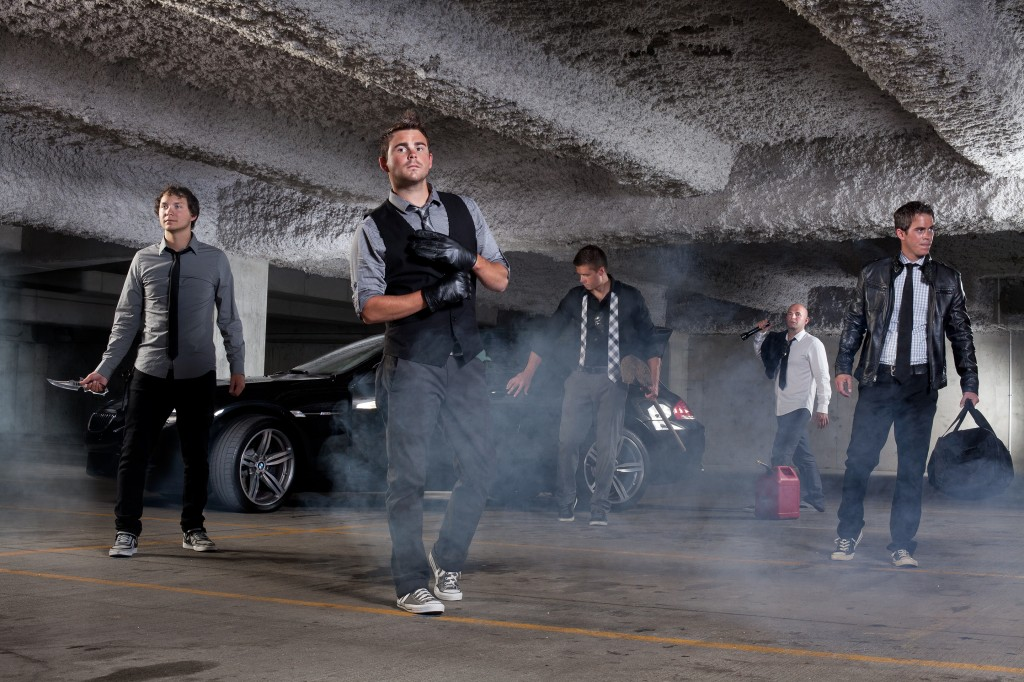
This is not a scene from an upcoming action flick starring Jason Statham. It does look like it could be, right? Although the picture may not depict the latest box office gem, it is an accurate symbolic depiction of the band that enters the New Band Palace today. Like the image of the band depicted above, The Upset Victory is a high-energy rock outfit that punches the listener with edgy vocals, speedy riffs, robust percussion, and stout guitars. The group has quickly sped out of the parking garage and onto radio stations throughout their home base of Cincinnati.

The Upset Victory was founded in 2006 by Stephen Campbell (guitar), Frank Hammonds (guitar/vocals), Eric Vice (bass), Jason Dill (vocals), and Aaron Roy (drums). They released a self-titled EP on Takeover Records. After a few more EP releases, The Upset Victory released their first full length, Before the World Ends, in May of this year.

So why should you spend your time reading about and listening to the Upset Victory (besides from the band photo above). There is a refreshing quality to their music. The tunes invoke memories of heavy punk/rock bands from the early 2000s, but, the band does not lose sight of melody and lyric, putting great care into impressive harmonies and a dual-guitar attack. The Upset Victory employs effects skillfully. Besides from the clear talent of the musicians, the music itself is tightly arranged and recorded. Every vocal shriek, mini-riff, and drum fill, is organized. The vocals are most impressive. They thrive in the music, taking on the guitar riffs like a prize-fighter.

“The Worst in Me,” track two of Before the World Ends (which you can buy here), initially gives off a Living Colour impression, but quickly separates itself from funk/metal and enters into straightforward, hard-hitting, toe-tapping rock. If you like the brand of rock that you can move to, this is the band for you. Listen to some more of their material at their Soundcloud page. Check out their website and Facebook.

Nearing 1000 Posts – The Future Direction of the Music Court

16 Oct

Hiatus may not be the correct word, but it is the closest “music-related” term I can use to describe my lack of activity over the past several weeks. This is no excuse, but I have been busy. Work, school, and travel have occupied my time, and this activity has taken my mind off of posting. When I started the Music Court more than three years ago, I wanted to be different from other music blogs in both content and care. My material was to be fresh, well-written, and different. Since this initial proclamation, I have grown as a writer and listener. I hope that the blog has consequently and consistently improved. I also agreed that I would never just throw a post up for the sake of content needs and, with some exceptions, I have not done this. I will not start now.

That being said, these last few months have certainly cut down on my available posting time. Plus, in my opinion, the blog has not had much coordination or constancy. I have not been able to focus on developing exciting new topics and engaging reads. Some posts have been effective. I have grown to love reviewing fledgling bands, and I hope this assists them in their musical endeavors. New bands, don’t fret, still send your material. I am looking at it, and plan to review it. I have a list created and will make my way down it soon. Sorry for any wait that may occur.

What am I trying to say? While I may not be posting much now, I envision some time on the horizon, and with this time I will focus on lifting this blog from the doldrums of inconsistent posting to a hybrid schedule again. There will be more of a focus of spreading content throughout social media. There will be more activity in general. Until then, I urge you, please hold on. The next few months may remain busy, but I will find time to continue to post. Soon, though, more posts will come!

Also, I will make my usual plea. Are you interested in writing for a music blog that emphasizes creativity, humor, and passion? Explore writing for the Music Court. E-mail me at musiccourt@gmail.com if you are interested. Let’s get to talking!

The Dunwells are Doing Just Fine

3 Oct

The Dunwells

Every band goes through a point early in their career when they must make a decision on whether or not their music is worth being pursued. It’s a dreaded decision.

That point in the Dunwells’ young career came when the well ran dry and they were without consistent shows. A fortuitous UK tour, an invite to perform at the Folk Alliance Conference in Memphis (which they took advantage of and flew in across the pond for despite their lack of funds), and the subsequent winning of the ‘break-out band’ title at the conference, turned around the favor of the British folk band, and since then, dare I say, they are doing quite well.

The Dunwells are one of the more intriguing bands I have profiled in a while. They display an authentic brand of organic Americana (despite their Leeds roots) and their powerful harmonies trump folk contemporaries like Mumford and Sons. The band also demonstrates a keen interest in creating variety in their music. Acoustic ballads much akin to Justin Nozuka or even Eric Hutchinson are followed by toe-tapping, riff-smashing Tom Petty-like songs. If I have one criticism with several folk bands today, it is with their lack of variety. The Dunwells crush that convention and then let their skillful harmonies do the rest of the talking.

The band was formed by Joseph and David Dunwell, two brothers and former solo performers, in October of 2009. They recruited friends and local musicians to complete their band, eventually ending up with a lineup that consisted of them, Jonny Lamb (drums), David Hanson (lead guitar), and Jonny Lamb’s cousin Rob Clayton (bass). They released their debut single (“Elizabeth” – below) in 2010 and it achieved moderate chart success. Eventually, they were recognized for all the skills mentioned above. It just so happened it came by way of former Cutting Crew keyboardist Tony Moore, who spotted the band and invited them to the folk festival in the United States which then led to them being signed by Austin, Texas-based label, Traffic Records.

The Dunwells released their sweet debut Blind Sighted Faith on February 14, 2012. They are now making their rounds touring, and recently were showcased on the Jay Leno Show (their television debut) in August of this year.

This is a great sample of why I am so high on this band. This is one of those acoustic ballads I mentioned before. At first listen, I was blown away by the Backstreet Boys harmonies. Seriously, they are that smooth. But do you know what’s scary? There are no effects added to this piece. This is purely acoustic. They are naturally this talented. The song itself is soothing and constructed well. The vocal interplay later in the song is fresh and skillful. It is actually difficult to not like this song.

And then BOOM. You are hit square in the face by a song that you could swear is by another band (until you hear the harmonies). The blues-saturated, powerful folk/rock song features instrumental breakdowns, vocal repetition, and a damn effect-driven electric guitar solo. It is an example of a band that knows hard work, exasperation, and, well, good music. No, great music. The inter-connectedness and fortitude supporting the band is refreshing, and I am excited to hear more from them in the future. This is most certainly a band to watch.

Find out more about the band by following their Facebook or Twitter. You can also check out their website

Many Matches in the Matchbox

4 Sep

It’s often shocking how often you find yourself unknowingly enjoying a modern incarnation of a song that has its roots embedded in the past. Covers are great, but they spawn histories that are often forgotten. The Blues Evolution is The Music Court’s attempt to combine two engaging topics, music and history, and share tales of popular blues songs that were first recorded before the first rock n’ roll song was ever created.

Today’s song of choice is “Matchbox,” a blues song born in the 1920s and covered 30 years later by Carl Perkins (and later the Beatles). It is also a great example of musical telephone, where Perkins was forced to guess on the lyric of the decade-old blues song, thus creating an entirely new song that simply held the original’s foundation. So, if you will oblige, let’s take a trip down the long stretch of road that is blues history.

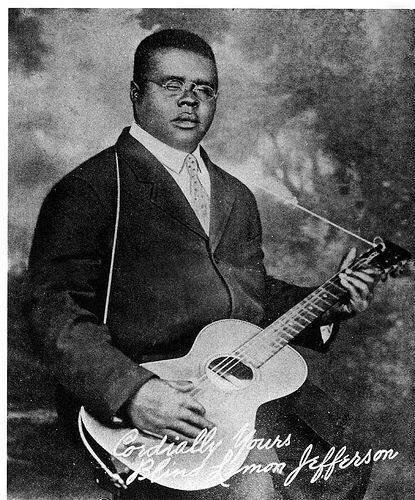
Blind Lemon Jefferson

It all begins with Blind Lemon Jefferson. Well, kind of. Blind Lemon was just one of the many ultra-talented blind blues musicians who inspired the eventual creation of rock n’ roll, but he developed “Matchbox” because he was inspired by a lyric in a Ma Rainey song. Blind Lemon, who has been called the Father of Texas Blues, was inspired by Ma Rainey – “The Mother of the Blues.” The blues ancestry works much like mythology, it seems. Blind Lemon and Ma Rainey inspired Robert Johnson, Howlin’ Wolf, and many, many others.

In Ma Rainey’s 1924 record “Lost Wandering Blues,” she sings, “Lord, I’m standing here wondering, Will a matchbox hold my clothes. I’ve got a sun to beat, I’ll be farther down the road.” In a pre-sampling example of sampling, Blind Lemon took that lyric and wrote, “I’m sittin’ here wonderin’ would a matchbox hold my clothes.
I ain’t got so many matches but I got so far to go.” Quite similar, indeed. Blind Lemon’s version of the lyric became more popular, but credit must be given to Ma Rainey as well.

There is Blind Lemon’s high croon and traditional Texas acoustic blues guitar. Gosh, pre-rock n’ roll blues is just awesome, isn’t it? This song was recorded several more times through the 30s and 40s but to no true popularity, though it was through one of these covers that the song was reintroduced to the public.

Thirty years later, Carl Perkins’ father suggested he cover the song in a December, 1956 recording session. Perkins’ father, Buck, was a student of old country music, and several country musicians covered the Blind Lemon song in the 1930s and 40s. He only remembered a few lines of the song. Carl decided to try his luck, and the session pianist, Jerry Lee Lewis (not a bad session pianist!), played a boogie rhythm on the piano. Perkins transformed the song into fast-paced rockabilly…with completely different lyrics.

The line that Blind Lemon adopted from Ma Rainey is still there. It is the only similarity that remains. The song, which Blind Lemon made about a mean woman, became a about a poor boy a long way from home. Here is Carl Perkins performing the song with Johnny Cash and Eric Clapton because we can!

The Beatles, who were inspired by Perkins, had received a request to record a Perkins song, and in 1964 they recorded the song with Perkins himself standing by. Yes, he was invited to the session, and did jam with the band (just not on the track). Ringo was tasked with the vocal responsibilities, and he sang the song while playing his drum set.

From the mother to the father to Mr. Blue Suede Shoes to the greatest band of the 20th century. And to think, I’m sittin’ here wondering if a matchbox will hold my clothes.

The Mountain Goats Talk Growing Up in “Cry for Judas”

29 Aug

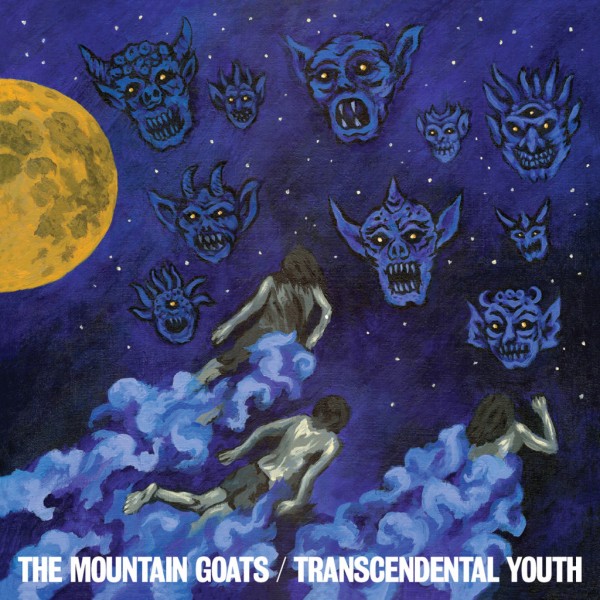
Transcendental Youth

John Darnielle and his band of Mountain Goats will release their 14th studio album, Transcendental Youth, on October 2. I know I mentioned this before on the Music Court, but I feel like I have a duty to mention it again. The album is sure to be awesome – like all of Darnielle releases – and it would surely be a shame if you missed out.

As a commenter on Darnielle’s tunes said recently, “nobody is better than Darnielle at writing such happy songs about utter hopelessness.” I agree and disagree. You see, this comment is true a lot of the time. Heck, if there is any hope in “No Children,” well, I haven’t found it yet. Still looking, though! But in Transcendental Youth, at least in the first song released from the album, there is a subtle hint of growth under the lyric. Darnielle paints a messy portrait of an adolescent teen struggling with growing up in the society he is surrounded by, a candid autobiographical depiction of Darnielle. And, to assist in my description of the song, here is a segment from The Mountain Goats’ website about the song – in Darnielle’s words.

“Cry for Judas,” it is about survival but that’s kind of an oversimplification, it’s also about building a vehicle from the defeated pieces of the thing you survived and piloting that vehicle through the cosmos, it’s kind of complicated but people who know what I’m talking about will kind of intuitively get the idea and the rest of you will I hope be able to get a sense of it through the song.

When people talk about surviving adolescence, they are not joking. There is innate passion, awkwardness, struggle, all inherent in the process of growing. And in the end you are you, and you survived as you. Time to pilot the vehicle. The lyric repeats the couplet (Long black night, morning frost, I’m still here, but all is lost). The important part is our protagonist is still there. It was a long black night, but despite the feeling that all is lost I can’t help but thinking that the character is just growing up. Look at the album title.

The Mountain Goats are also growing, somehow still maturing and falling into new sounds. The horns give the acoustic guitar a full sound, and then there is the bass guitar which provides an almost funky rhythm. The song itself is excellent. But, I mean, I wasn’t expecting any different.